6

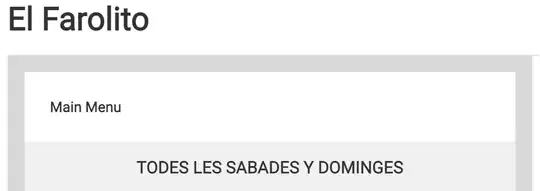
I am looking at this restaurant menu and I see a heading that says "TODES LES SABADES Y DOMINGES":

TODES LES SABADES Y DOMINGES screenshot

Why does it say "Todes les Sábades y Dominges"? I would expect "Todos los Sábados y Domingos".

I know that it is a recent trend to make Spanish words gender-neutral by changing their "o" and "a" endings to "e", but why are they doing it here? Is this some sort of deliberate effort to prevent people from perceiving Saturdays and Sundays as male?

Elias Zamaria
  • 209
  • 1
  • 6
  • 1
    I see that you live in San Francisco, so why not just go over and ask them? I gave them a call, but the person with whom I spoke didn't know anything about it. – Obie 2.0 Sep 26 '22 at 05:16
  • 2
    Anyway, it does not make much sense to me. In San Francisco, making fun of inclusive language on one's menu cannot make good business sense, but nor have I seen any kind of inclusive language that tries to make inanimate nouns gender-neutral, which in any case goes against the many other gendered Spanish words on the menu. The only think that I can imagine is that (a) the owners are trying to make a statement in favor of gender-neutral language without actually claiming that "domingo" is sexist in itself, or (b) they are trying to use inclusive language, but have misunderstood what it is. – Obie 2.0 Sep 26 '22 at 05:20
  • 3
    I have read it as very bad catalan - (correct it would be: "tots els dissabtes i diumenges") – Carsten Hagemann Sep 26 '22 at 09:42
  • 3
    @CarstenHagemann - Does it seem likely that a Mexican restaurant would put random misspelled Catalonian words on its menu, though? – Obie 2.0 Sep 26 '22 at 15:06
  • They just did it fast and are probably not paying attention/are not well educated. Why don't you call them and ask them? The phone number is there. – Lambie Sep 26 '22 at 16:48
  • 2
    @Lambie - That would be some impressive consistency for a mistake. A bad spell-checker, perhaps, trained on a dataset with a larger number of gender-neutral constructions, could make such a mistake. – Obie 2.0 Sep 26 '22 at 19:31
  • 1
    @Lambie - Though perhaps that would be a good spell-checker in some ways.... – Obie 2.0 Sep 26 '22 at 19:44
  • An impressive consistency for a mistake? There is no consistency. – Lambie Sep 29 '22 at 18:32
  • 3
    @Lambie - Well, sure there is. It's "todes les sabedes," not "todes los sábados" or something like that. That means that if a spell checker caused it to be like that, it had to do it three times. – Obie 2.0 Sep 30 '22 at 01:17
  • A spellchecker that can't get todos los sábados is not a good spellchecker. There is not gender-neutral issue here at all. Anyway, here is their website: https://elfarolitosf.com/ It's has various locations and that thing you posted is just wrong. – Lambie Sep 30 '22 at 15:56
  • @Lambie - No escribí la pregunta. Con respecto al resto, puede que no entiendas porque no trabajas en el aprendizaje automático y la ciencia de datos. La mayoría de los correctores ortográficos ya no utilizan listas de reglas, ni matrices aleatorias, sino que son transformadores o redes neuronales recurrentes que se entrenan con una cantidad de datos etiquetados. Como consecuencia, si los datos de entrenamiento no contienen oraciones neutrales bien construidas, es probable que el modelo no produzca nada que se parezca a una palabra neutra, ya sea correcta (les niñes) o incorrecta (les sábades) – Obie 2.0 Oct 04 '22 at 00:05
  • 1
    No obstante, si las oraciones que se usan para construir el modelo sí tienen algunas que utilizan palabras neutras correctas, es posible que el modelo sobregeneralice: es decir, puede imitar la construcción de las palabras neutras en contextos donde no quepan. Por lo tanto, un error como "todes les sábades" podría indicar un buen corrector en el siguiente sentido: sería evidencia de que la persona que hizo el modelo había pensado en el lenguaje inclusivo en lugar de pasarlo por alto. – Obie 2.0 Oct 04 '22 at 00:08
  • I just went to El Farolito and asked the cashier about this. He said he didn't know why they are doing this, and he didn't know who would know. – Elias Zamaria Oct 05 '22 at 02:22

2 Answers2

11

The phrase:

"Todes les sábades y domingues" (there should be a "u" after "g" for "g" before "e" to sound as it would before "o")

might be used:

  1. to laugh at those using "español inclusivo" (according to inclusive Spanish rules, an "e" should be used for the plural of personal nouns/pronouns, not for inanimate nouns such as the days of the week)

  2. to indicate that the owners accept or respect all genders

  3. to show that the owners are in keeping with current trends

There is, in any case, a humorous purpose.

Note: Here I found another menu from the same restaurant where there is a still more inconsistent, as well as incorrect use of the gender in exactly the same phrase. At the bottom we can read:

TODAS LOS SABADAS Y DOMINGOS

Gustavson
  • 30,244
  • 2
  • 28
  • 69
  • I understand all 3 of those ideas, but why would they do it there, in such a strange way???

    For some reason, the menu is mostly in English with only a few Spanish phrases, so I can't say anything about whether they usually write this way.

    – Elias Zamaria Sep 25 '22 at 23:16
  • 9
    Not sure if it's clear from the post, but "lenguaje inclusivo" isnt real Spanish, it doesnt follow the morphology of Spanish, it isnt accepted by the Real Academia Española, and it isnt based in Spanish, but in an adaptation of an ideology created in United States in the 70's for English, that it was adapted to Spanish by argentines if I recall correctly. – Pablo Sep 26 '22 at 02:27
  • @Pablo Of course I agree that the so-called "español inclusivo" amounts to an awful distortion of the language. – Gustavson Sep 26 '22 at 17:18
  • @Gustavson well, you know, there is people who thinks languages "evolve", and that they can turn into whatever, but if a language changes to distort the morphology of it, it can't be considered the same language. BTW, here they don't call it "español inclusivo" but "lenguaje inclusivo", I guess at least they recognize it isnt Spanish. – Pablo Sep 26 '22 at 18:44
  • @Pablo "there is people who thinks languages "evolve"" You don't? – njzk2 Sep 26 '22 at 19:33
  • 2
    @Pablo - Really? Is this Spanish, then: En vn lugar de la Mancha, de cuyo nombre no quiero acordarme, no ha mucho tiempo que viuia vn hidalgo de los de lança en astillero, adarga antigua, rozin flaco y galgo corredor. Vna olla de algo mas vaca que carnero, Salpicon las mas noches, duelos y quebrantos los sabados, lantejas los viernes, algun palomino de añadidura los domingos, consumian las tres partes de su hazienda. El resto della concluian sayo de velarte, calças de velludo para las fiestas, con sus pantuflos de lo mesmo, y los dias de entre semana se honraua con su vellori de lo mas fino. – Obie 2.0 Sep 26 '22 at 19:38
  • 1
    Look at all those morphological changes. I bet it was written by some progressive Argentine-American that wanted to destroy the Spanish language. – Obie 2.0 Sep 26 '22 at 19:38
  • 1
    What linguists say is that morphological changes take place over time, not the way inclusive Spanish supporters claim by wanting to impose such a drastic change without a real linguistic need. – Gustavson Sep 26 '22 at 20:27
  • 1
    @Obie2.0 I see changes in words, not in morphology. – Pablo Sep 27 '22 at 10:35
  • 1
    @obie2.0 btw, I challenge the notion that a language which has undergone morphological changes it's the same language. It isnt sustainable by any objective means to differenciate some of them as new languages, by some sort of "amount" parameter that's never measured, that all of them. – Pablo Sep 27 '22 at 10:40
  • 1
    Languages evolve mostly by usage, much less by a small group of people setting up arbitrary rules (as an obvious example, the RAE says "la covid", but the usage is "el covid"). Some people use the languaje inclusivo, some people don't. Time will tell which one remains, but RAE will certainly have nothing to do with it. – njzk2 Sep 27 '22 at 20:52
  • 2
    @njzk2 Sounds familiar: the Académie française promotes la covid while almost everyone else say le covid in France. – jlliagre Sep 28 '22 at 16:22
  • 2
    La neutralidad de género, también conocida como neutralismo de género o movimiento por la neutralidad de género, es la idea de que las políticas, el lenguaje y otras instituciones sociales (estructuras sociales, roles de género o identidad de género)1​ deben evitar distinguir roles según el sexo o el género de las personas, a fin de evitar la discriminación derivada de la impresión de que existen roles sociales para los que un género es más adecuado que otro. https://es.wikipedia.org/wiki/Neutralidad_de_g%C3%A9nero sábado y domingo no son personas. – Lambie Sep 30 '22 at 19:14
  • 2
    @Lambie as described, "Neutralidad de género" only makes sense in a post-sexist society. Your argument is invalid. – njzk2 Oct 01 '22 at 09:13
  • @njzk2 Nothing like ignoring what the meaning of neutralidad de género actually applies to. It does not apply to words like domingo and sábado and it most certainly would not be found on a crummy website that is badly done. – Lambie Oct 03 '22 at 15:15
  • 2
    @Lambie - Literalmente no hay nadie aquí que haya dicho que el sitio web está correcto o que es un ejemplo del español inclusivo bien formulado, ni yo ni njzk2 (aunque puede ser que njzk2 haya malentendido tu comentario). Solamente se discrepa con la afirmación de Pablo que sostiene que el lenguaje inclusivo en general no es español e incluso es un insulto. – Obie 2.0 Oct 04 '22 at 00:15
  • "Domingas" would have put them in big trouble though – David Oct 06 '22 at 20:09
-1

¿Por qué dice "Todes les Sábades y Dominges"? Esperaría "Todos los Sábados y Domingos".

La respuesta corta es que no cabe duda de que el propietario o el que realizó la confección del anuncio gráfico del menú esta utilizando el lenguaje inclusivo para llamar la atención.


Leyendo el comentario de Obie 2.0, recordé haber visto un texto que trasladaba el lenguaje inclusivo al mismo enunciado expuesto por Obie 2.0;

En vn lugar de la Mancha, de cuyo nombre no quiero acordarme, no ha mucho tiempo que viuia vn hidalgo de los de lança en astillero, adarga antigua, rozin flaco y galgo corredor. Vna olla de algo mas vaca que carnero, Salpicon las mas noches, duelos y quebrantos los sabados, lantejas los viernes, algun palomino de añadidura los domingos, consumian las tres partes de su hazienda.

Al final pude encontrar el artículo narrativo donde se utiliza este lenguaje inclusivo, en él se hace referencia a Sábados y Domingos como Sábades y Domingues, de esta forma creo que se puede contestar a tu pregunta. Por otro lado, compárense en general ambos textos.

En une lugare de le Manche, de cuye nombre ne quiere acordarme, no ha muche tiempe que vivía une hidalgue de les que lanza en astillero, adarga antigua, rocín flaque y galgue correder. Une olle de algue más vaca que carnere, salpicón les más noches, dueles y quebrentes les sábades, lentejes les viernes, algún palomine de añadidure les domingues, consumían les tres partes de su haciende. Por: MDG. Irma Carrillo Chávez

”.

http://strategamagazine.com/el-quijote-incluye/


La Real Academia Española no acepta el lenguaje inclusivo.

La Real Academia Española (RAE) ha expresado su rechazo ante el uso de palabras aceptadas en el lenguaje inclusivo o no sexista. Santiago Muñoz Machado, director de la RAE, dijo en una entrevista con EL PAÍS Semanal que el desdoblamiento gramatical del lenguaje inclusivo altera la economía del idioma.

Todes somos compañeres”: el lenguaje inclusivo desata polémica entre los expertos en lingüística. La variación morfológica y sintáctica del español que busca dar cabida a otras identidades de género más allá de hombres y mujeres levanta un debate en las redes sociales.

https://elpais.com/mexico/2021-08-27/todes-somos-companeres-el-lenguaje-inclusivo-desata-polemica-entre-los-expertos-en-linguistica.html#:~:text=La%20Real%20Academia%20Espa%C3%B1ola%20(RAE,altera%20la%20econom%C3%ADa%20del%20idioma.


P.D. No se en otros países pero en España estamos ya un poco cansados, no se que expresión utilizar, de este "continuo machaqueo".
Diego
  • 6,122
  • 1
  • 5
  • 18
  • No es tan obvio que el menú pretenda emplear un lenguaje inclusivo; por lo menos, si bien no lo descarto tampoco lo doy por sentado. Y es que no mencionas que hay otras versiones de la carta que utilizan frases como "todas los sábadas" o que simplemente tienen errores. Tampoco mencionas que el artículo que aportaste no pretende ofrecer una traducción neutra del Quijote, sino que busca mofarse del lenguaje inclusivo, y por tanto no sirve como ejemplo de una pauta que pudiera haber seguido quien redactó el menú. – Obie 2.0 Oct 04 '22 at 17:26
  • 1
    Por lo incoherentes que son los menús, sigo pensando que lo más probable es que el lenguaje se deba a algún traductor automático, o quizás a algún programa de reconocimiento de imágenes que elaborara el menú en línea a partir de una imagen de alguna copia impresa. – Obie 2.0 Oct 04 '22 at 17:32