How y, ll are pronounced
In >90% of Spanish dialects1, ⟨ll⟩ and ⟨y⟩ represent the same sound /ʝ/ (like an English y) 2. This is probably the sound most learners of Spanish will want to use, unless you want to emulate a specific accent.
These are the various ways the letters are pronounced around the Spanish-speaking world (along with examples of the sounds in English):
- ll, y =
/ʝ/ (i.e. yellow) most of Latin America; Southern Spain "yeísmo"
- ll, y =
/ʒ/ (i.e. seizure) much of Central, Western Rioplatense "zheísmo"
- ll, y =
/ʃ/ (i.e. sheep) Buenos Aires; Río de Plata; Uruguay "sheísmo"
- ll =
/ʎ/ (i.e. million)
y = /ʝ/ (i.e. yellow) Much of Northern Spain 3
Maps of regional pronunciations
Note, these images do not distinguish between yeísmo/zheísmo/sheísmo.
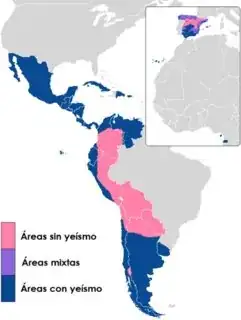
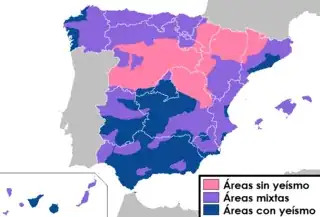
Regions with the merger in dark blue, and regions with distinction in pink.
Notes & sources
1. Valoración socioeconómica de los rasgos fonéticos dialectales de la lengua española, German
Coloma (2011)
2, In emphatic speech, word initially, or after an n, m or l, the y sound in Spanish can affricate, sounding as [ɟʝ] (similar to a less 'forceful' version of an English j e.g. jug).
This is analogous to /b/, /d/, /ɡ/ being realized as approximants [β], [ð], [ɣ] in all but these contexts in Spanish.
3. Also found in areas of:
• Bolivia, Colombia, Ecuador, Paraguay, the central Andes, Andean and Northeastern regions of Argentina, southern Chile and the Philippines
• in some rural areas of Castille and León, Castilla-La Mancha, Murcia and Extremadura,
• in some bilingual speakers of la Comunidad Valenciana, Cataluña, Asturias, Galicia, Navarra and the Basque Country




/ʎ/. – hippietrail Nov 15 '11 at 23:13