As you point out yourself it is extremely difficult to measure the number of people studying constructed languages and especially difficult to measure the degree of language proficiency. Among all constructed languages only Esperanto has an examination system that is aligned to CEFR and certified as a UniCert course (CEFR is abbreviated in Esperanto as KER). However, there is a very small amount of people who pass these examinations, because professional language proficiency and certification thereof is not a goal for most Esperanto-speakers.
Traditionally in Esperanto they use the number of people who are members of UEA, the Universal Esperanto Association, the main organisation for Esperanto speakers. Here is the graph of UEA members over the last 100 years (taken from here):
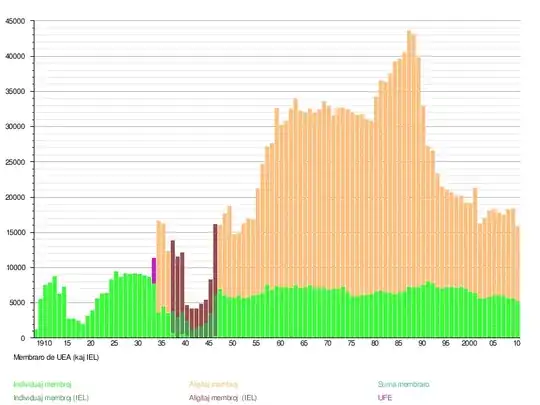
Green bars show individual members, the red bars stay for associated members (meaning if an organisation joins UEA and pays membership fee all members of this organisation are associated members). As you can see from this graph, the number of UEA members seems to have retracted in recent years.
Another metric is the number of people who participate in Universala Kongreso -- the annual world conference of Esperanto-speakers. I don't have a diagram for this statistic, but you can see the numbers here. The fluctuations here are much bigger and there is no clear trend -- either increasing or decreasing -- seen there.
On the other side, membership in UEA and participation in congresses targets mostly established Esperanto speakers. Therefore another statistic was compiled taking into account the number of participants in popular Esperanto meetings in Germany:
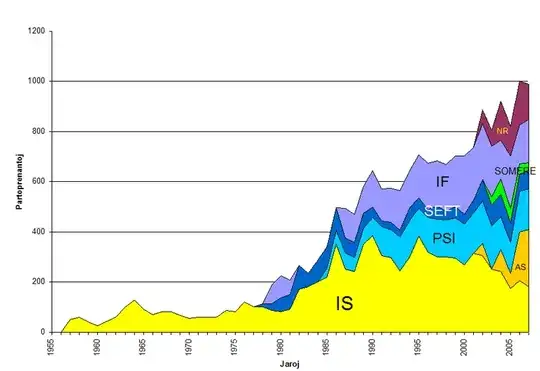
Here you can see that the number of participants seems to increase over recent years.
In conclusion, it is indeed difficult to estimate the current trend in numbers of people learning Esperanto.


