It seems you don't understand the difference between Morphology and Phonology and therefore, the difference between morphemes and phonemes.
The basic definition for morpheme is basically this one: "the smallest element in a word or in a statement that carries meaning and that cannot be further split (into smaller parts)".
Take for example this word in italian :
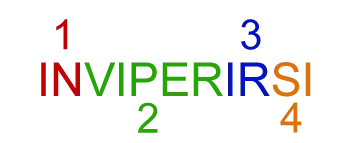
The meaning is roughly "to turn nasty". But let's focus on the numbers:
- Prefix: The prefix in- in italian makes a verb out of a noun or an adjective;
- Root: The root carries the basic meaning of the word, in this case a verb; vipera in italian is a snake, the viper.
- Verb Ending: This tells us without ambiguity that it's a verb, belonging to the third conjugation (Italian has 3 infinite endings: -are, -ere, -ire. This one is the third one).
- Reflexive particle: This tells us that the action of the verb affects the subject itself. In other words, it's the subject that turns nasty, and not someone else because of the subject's action.
This is what a morpheme is. There is still a lot to say about it, but I think this is enough to give you a basic understanding. In English a morpheme is the -s for the third singular person of each verb. It tells you it's the "third person singular"; same goes with -ed which forms the past forms for the regular verbs in English. But what is a phoneme instead?
To better explain what is a phoneme, let's compare it to a phone. A phone is a sound in a given language, it carries no meaning. A phoneme instead, carries meaning, and it's useful to find minimal pairs as in your question.
Cot and cat differ for one phoneme, not one phone, because that different sound, brings different meaning. As in "lip" and "rip". You just changed one sound, from /l/ to /r/, but this was enough to change the meaning.
Take the standard pronunciation of a word and its slang pronunciation. They differ, but the word won't change its meaning.
I kept it fairly simple and standard without going into details, but I hope it helps you give a better grasp. Just remember that it doesn't end here, if you want to go further, check the links for phonemes and morphemes.


