this type of research of relating video games to computational complexity is quite intriguing but it is also quite new, generally less than a decade old. I will argue here there is subtlety that is sometimes being missed in the current analyses [have not seen/noticed this pointed out in the cited paper or other papers so far] and that impedes answering the stated question definitely.
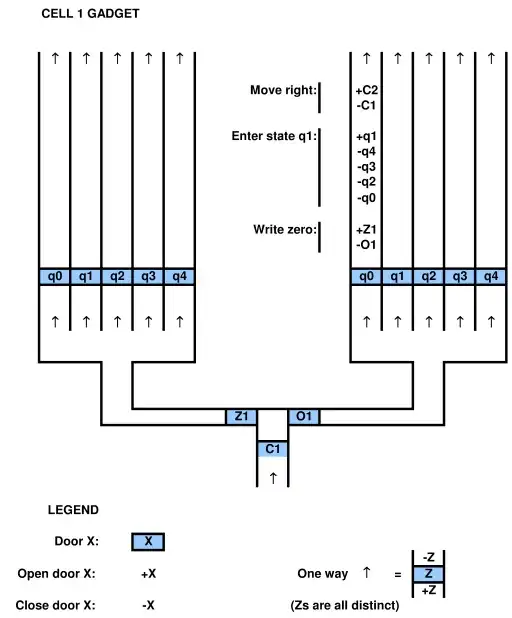
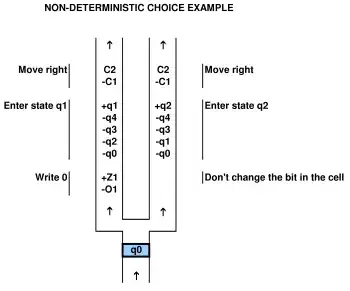
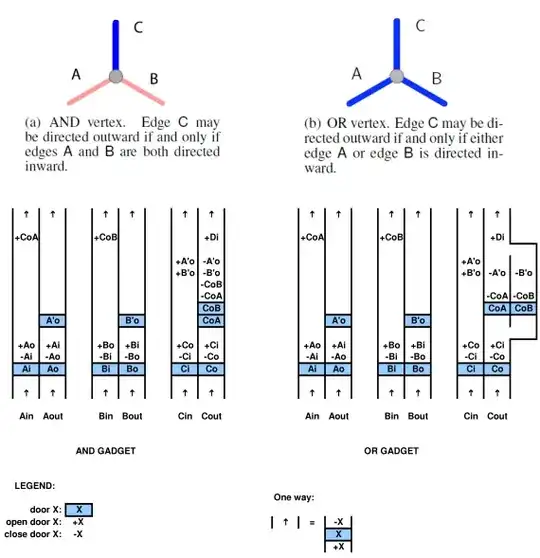
to prove a relation to a computational system, one must be able to map the computational system onto the game and vice versa. for example in the above cited paper by Viglietta there is a concept that pressure plates and doors (ie the pressure plates control doors) can be "like" QBFs. this analogy is certainly viable as they have mapped it out. one can use a QBF to solve a game with pressure plates and doors.
however, here is the subtlety. in a given game, the layouts of the game are basically fixed. in video game design the concept of different layouts is called "layout design" and is not a "given" of all games. for example in the groundbreaking game Doom, the level design tools were open-sourced ie made available to players to use. in other words arbitrary level design can be regarded as part of the game. but in other games considered in papers, the video games as originally built have fixed levels. the papers are sometimes not explicitly taking this into account.
therefore there is a strong argument to be made that in most games without level design, or random layouts, levels are fixed, and this has a big impact on the actual complexity of solving the "game". ie, what exactly is the "game"? does it include random layouts, and/or level design possibility? is level design part of the computational mapping? these issues are glossed over somewhat in current papers.
taken to the opposite extreme of the papers, one could argue that all real video game implementations are solvable by FSMs because they have finite memory!
for there to be real computational mappings, basically one must generalize the game to involve
- levels with arbitrary size! so that this can be mapped to TMs with arbitrary/unlimited size "input" tapes.
- level design that allows creation of these levels.
a slightly similar mapping issue arises in CA/Cellular Automata research where there are ideas about using infinite periodic patterns on the CAs as "starting patterns" to prove TM equivalence/completeness.
so in general your question is not strictly defined until you clarify better (ie more formally/mathematically define) what you mean by "in a game with doors and pressure plates" and in a way that even the paper does not apparently strictly define, esp wrt to ideas about level design, unlimited size levels, etcetera. but notice that the "games" defined with these features then have been abstracted away from the actual/real video games in a very significant way.
so in short I think this is interesting/worthwhile research, even though starting out as somewhat informal, and deserves further advancement, but to some degree its formalization must be made more strict esp in basic definitions if it is to advance further. it must make a more strict/formal/transparent distinction between the implementations and the abstractions.