46

Had a dream that I was the size of an ant and I was being chased by spiders and other small horrors. I created a campfire and was able to scare off the insects. When I woke up I came up with a TTRPG campaign that is basically 'Honey I shrunk the Kids'. But when I thought about it I was ever wondering if a fire at that level would even be possible.

So that led to my question, could you create a small campfire if you were that small? Thanks for my random question.

VedHanna
  • 597
  • 1
  • 4
  • 12
  • 2
    Wood ants or common black ants? It's a very different scale. For the chemical reactions to work to allow miniaturized people, the laws governing combustion would probably be a bit different. – DWKraus Sep 20 '22 at 00:01
  • 8
    It's less impossible to have an ant-sized campfire than it is to have an ant-sized human; so I'd say if you want to do this, just go for it and don't worry about the realism. – kaya3 Sep 21 '22 at 03:52

10 Answers10

39

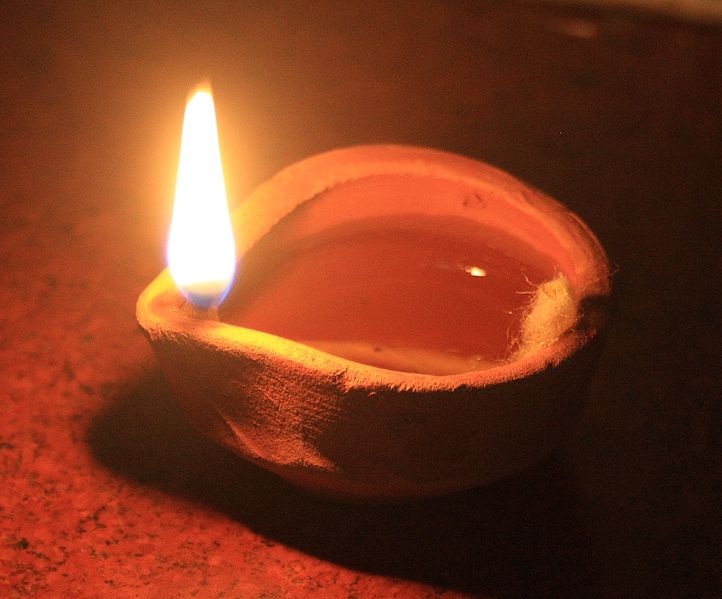
Wood at that scale would not be manageable, but an easy alternative would be oil lamps:

Oil lamp image thanks to: https://commons.wikimedia.org/wiki/File:DiwaliOilLampCrop.JPG

At this scale, the small flame from the oil lamp is more than enough to warm dozens of ant scale humans. It's also much easier to set up and control for long periods of time, unlike a small pile of wood which will flame out quickly.

SurpriseDog
  • 3,883
  • 4
  • 21
  • 35
  • 3
    Great answer. How small do you think you could make a small oil lamp? For instance, if you had a strand of clothing do you think a flame could be that small or would it need to grow larger? – VedHanna Sep 19 '22 at 19:36
  • @VedHanna with the wicks I have that are made for oil lamps, you could get about a 1/2 inch flame. Any smaller and they become rather unreliable (go out quickly). I'm not sure how thin you can get the wick before it doesn't burn properly, but I would think narrower than about the width of an earbuds cable won't work very well. – Esther Sep 19 '22 at 21:25
  • 3
    A flame can be smaller if a high-pressure or high-oxygen atmosphere is available. The flame size is almost inversely proportional to the oxygen partial pressure. – fraxinus Sep 20 '22 at 10:06
  • 23
    A birthday candle is about as small as a wick-based flame can get in Earth's current atmosphere. Try making a lamp out of fine cotton sewing thread, and you'll find it doesn't work -- once again, square-cube law. You can't draw enough fuel through the wick to feed a flame that can replace the heat it loses through convection and radiation below a certain wick size. – Zeiss Ikon Sep 20 '22 at 11:09
  • 2
    @ZeissIkon Maybe with some clever engineering of a heat reflector or pre-heating the incoming air (and of course wind protection) we could get (a bit) smaller. But also further away from "just a fire" – Hobbamok Sep 20 '22 at 12:09
  • 5
    It is not the wick that limits the flame size. It is the heat production vs diffusion. Again square-cube, yes. – fraxinus Sep 20 '22 at 14:27
  • @Hobbamok But how would you heat the incoming air? If you already have a heat source, the flame might be unnecessary. (Assuming we're still talking about OP's question here :-)) – bornfromanegg Sep 23 '22 at 08:48
  • @bornfromanegg I'd heat the air from the flame itself somehow. Like a heat exchanger that cools the outgoing (oxygen-depleted) air a bit in order to heat the incoming fresh air. I'm not good enough at engineering to imagine how such a contraption would look like but it'd definitely be feasible with a bit of copper or even heatpipes and air tubes. The fire would have less perceived output, but better than no fire I guess – Hobbamok Sep 23 '22 at 09:01
33

More than a campfire, it might be possible to create a spark: considering the size of wood chip a creature the size of an ant can handle, it won't last much more than a spark.

Additional problem, the combustion heat might be sufficient to lift it in the air, which is not exactly handy if it has to be used to fend off attacking animals.

L.Dutch
  • 286,075
  • 58
  • 587
  • 1,230
  • Do you think a spark at that size (even a littler cinder) could cook food? – VedHanna Sep 19 '22 at 19:33
  • 8
    @VedHanna The important part of L.Dutch's answer is, "it won't last much more than...." No, it wouldn't cook food. It would only last a fraction of a second. – JBH Sep 19 '22 at 20:51
  • 12
    Square cube law strikes again! – DKNguyen Sep 20 '22 at 03:46
  • 15
    the square-cube law has already killed you from hypothermia, but stand next to the camp fire and your corpse will also be roasted all the way through. – Jasen Sep 20 '22 at 07:07
33

I just realized that I wrote a verbose version of L.Dutch's answer. I upvoted his answer. You should, too.


It's amazing how often I've used the following quote on this site....

Can you launch an ICBM horizontally?

Sure. Why would you want to? (The Hunt for Red October)

Can you shave a piece of wood so small that it could be used for a campfire by an ant-sized human? Sure! Why would you do it?

Here's the problem: rate of combustion. It doesn't matter if you're burning wood or oil or anything else. The simple truth is that the smaller the combustible item is (i.e., the less you have of it), the faster it will be consumed.

As in... fractions of a second.

I'm fond of another quote by Harold Ramis about the original Ghostbusters. During the scene when the giant Stay Puft Marshmallow Man is walking down the street, kicking over (among other things) fire hydrants, the special effects experts used very finely ground sand for water. Why? He explained...

You can't miniaturize water.

It's true. You can see every time a movie puts a model of something (like a ship) in water for filming. The water is the wrong size. It's motions out of proportion with the object of our focus. It can't be miniaturized.

Neither can chemical reactions.

And that's the problem. Yes, they could have a campfire. For a fraction of a second. If they added fuel fast enough to keep the reaction going, they'd burn themselves up (or ignite whatever was around them).

So, from a practical perspective, no... ants can't have campfires.

But that shouldn't stop you. This stack is dedicated to building imaginary worlds that need not conform to Real World physics. If you want your ant-sized humans to have campfires, let them have campfires. It's not as if there's a secret cabal of fanatic bibliophiles out there ready to unleash their zombie hordes when they discover (gasp!) that you've written a story that doesn't conform to real-world physics.

P.S., it's worth noting that there may be some chemical compound that could ignite easily and burn slowly enough that mere grains could be used by the ants as a campfire. Such a combination of chemicals won't be available just anywhere, suggesting that they can't be used as a campfire, so I ignored that possibility. But that could, itself, be an interesting idea for a story. Is there a compound that is easy to ignite and yet mere grains could burn for a specified time (you'd need to specify that)? Hmm...

CGCampbell
  • 250
  • 1
  • 7
JBH
  • 122,212
  • 23
  • 211
  • 522
  • 1
    Thanks for this awesome response. I guess my hunch on fires at that size was pretty close. Id love to know if you find any substance that does burn like explain there. – VedHanna Sep 20 '22 at 02:54
  • 5
    I always wondered what horror awaited the shrunken kids after they ate the cookie bits. Having sugar molecules in your blood three orders of magnitude larger than normal sounds like a thing that happens to nameless crewmembers on Star Trek. –  Sep 20 '22 at 04:13
  • 4
    @Nohbdy Forget cookies. What about the air they're breathing? – DKNguyen Sep 20 '22 at 04:16
  • 24
    "But that shouldn't stop you." It definitely did not stop Sponge Bob from having a camp fire at the bottom of an ocean. – Anketam Sep 20 '22 at 11:10
  • 1
    Harold Ramis must have read Danny Dunn and the Shrinking Machine when he was young. Things like finding a drop of water and having to use tools to break the surface tension to get a drink. The shrunken kids wouldn't have to worry about being poisoned by 1000x sugar molecules -- there's no way they'd digest that stuff with their teeny-weeny enzymes and intestinal membranes. At least Asimov (and Marvel!) required shrunken characters to bring their own shrunken breathing air (though Asimov missed what would happen to exhaled bubbles when the shrink wore off). – Zeiss Ikon Sep 20 '22 at 11:14
  • 5
    I feel like the "that shouldn't stop you" point is not used often enough here. – Joel Coehoorn Sep 21 '22 at 16:21
  • 1
    @JoelCoehoorn I completely agree. – JBH Sep 21 '22 at 23:04
  • @ZeissIkon You're assuming that the miniaturisation occurs by miniaturising the molecules (enzymes, etc.) in their body. Apart from the fact that you can't miniaturise molecules (made as they are from elementary particles) I don't see any reason why a 1/1000th size human body couldn't be constructed from normal size molecules. Whether it would actually work, of course, is another question entirely. – bornfromanegg Sep 23 '22 at 08:55
  • @bornfromanegg You're partly right. I'd forgotten, Danny Dunn did include an explanation that the machine didn't shrink the atoms and molecules, only reconstructed them with fewer of each (which has its own impossibilities, of course). Asimov's Fantastic Voyage and sequel did in fact shrink the atoms and molecules, as do Pymm Particles in Marvel comics and MCU -- hence need to carry miniaturized breathing air etc. – Zeiss Ikon Sep 23 '22 at 11:10
8

Probably not.

Try burning a matchstick with the head cut off. In my experience, wood this small will only continue to burn if the stick is angled so the flame is creeping upward. Hold a match with the flame at the top, it'll go out. Smaller wood, more so -- you'd have to feed the fire so rapidly you'd go through a pile of fuel much bigger than your tiny self in minutes. Pile up several such sticks (proportionally as large as a good sized log) and they might continue to burn (as they hold the heat and ignite each other), but you'd go through your fuel even faster.

It would take, at a minimum, the full resources of at least a good sized colony of ants to find and bring tiny fuel pieces fast enough to keep a fire fed -- which would largely defeat the purpose of keeping the fire going to drive off equally tiny predators.

Zeiss Ikon
  • 45,862
  • 3
  • 71
  • 183
  • As someone who lights a lot of campfires. You can kind of control how fast a campfire burns. For instance, you could have a smaller fire that burns all night or a fire that burns hot and heats all the fuel in a half-dozen hours.

    Could one create a small enough fire enough to control it? My biggest question I guess would be could fire be that small?

    – VedHanna Sep 19 '22 at 19:31
  • 5
    @VedHanna Seems unlikely. Fire radiates heat in proportion to the surface area. The fuel to keep it going will require mass. At that tiny scale, the ratio of area (squared) to mass (cubic) will draw heat away from the flame too fast to keep it going, and you won't be able to feed it fast enough. – Brianorca Sep 19 '22 at 23:52
5

As several other answers have pointed out, a wood campfire would not be practical if you were of a very small size.

So, what you would need instead is for everything else to be very large.

Instead of having your campaign set in the normal world with very small people, have it take place on a very large world with overgrown trees (see - Giant Redwoods) and equally overgrown animal life - including insects.


Large insects of course present their own problem - exoskeletons do not scale up very well, and become less effective the larger the creature.

But assuming you are willing to handwave this (or inquire about it in a second Worldbuilding question), you'd no longer need to worry about the rate of combustion, and can happily have your campfire and insectoid foes.

Zibbobz
  • 4,286
  • 1
  • 17
  • 29
  • 2
    Insects don't scale up very well, though, without totally redesigned circulatory systems. – Charles Sep 20 '22 at 15:37
  • Cancel out most of both problems by shrinking and enlarging different things. – Topcode Sep 20 '22 at 18:13
  • 1
    @Charles Yes I mentioned this in the answer - large insects have all kinds of problems with their biology not really working at a larger scale. But, it is easier to justify creatures that look like common insects that have vastly different interior biology, than it is to justify a very small fire working the same as a very large one. – Zibbobz Sep 21 '22 at 12:42
  • @Zibbobz I believe insects in the time of dinosaurs were much larger than they are today, so it must be possible. – Mark Ransom Sep 22 '22 at 01:05
  • Higher oxygen content then, and I believe the main limit (or at least the first encountered) on insect size was the difficult of breathing through their skin (square-cube has been invoked extensively in this answer). That's going to play hell with your fire, though. – Chris Strickland Sep 22 '22 at 05:35
2

One thing to note is that the human body couldn't really exist at that scale either, for the same sorts of reason that a campfire couldn't.

But that's not a bad thing necessarily. Since you're already bending the laws of physics to have humans running around, why not bend them a bit further to have campfires as well?

There's a few ways you could do that, assuming you don't want to just handwave it without explanation. One is to say that if a fire is lit with a miniature lighter then you get miniature fire, which behaves like full-size fire only smaller, instead of like a real small fire. This is kind of hard to justify in terms of real physics, but it might work for a story.

Another option is to say that although a small sliver of wood can't burn like a campfire, wood that's been shrunk behaves as if it were full size wood. (Just as shrunken human bodies behave like full-size human bodies.) For example, you could have a wooden shed get shrunk along with your humans for some reason, who then find that they can build a perfectly nice campfire out of the wood the shed was made from, even though the non-shrunken wood that they find in the environment just goes "poof" instantly.

N. Virgo
  • 5,362
  • 18
  • 35
1

While it won't get you an ant-scale campfire there is a way you can get a considerably smaller fire: Put it inside a IIRC glass cylinder. You need material that will pass visible light but is opaque to most infrared, thus holding a lot of heat around the fire. You'll still need a liquid or gaseous fuel, solid fuel can't be adequately controlled or fed.

Loren Pechtel
  • 30,827
  • 1
  • 37
  • 92
1

Japanese "incense" sparklers are small and burn for quite a long time. But they tend to give off a lot of sparks. https://www.youtube.com/watch?v=063sevb2_tU

timtak
  • 91
  • 3
0

You can have a campfire that size, you are essentially using wood shaving and saw dust, to your humans it is more bonfire than campfire. (assuming your humans are as strong as ants. the problem is they will have to feed it constantly, non stop as soon as it gets lit. But the real problem is a mild breeze will extinguish it, and they can't protest it or it will go out as soon as there is no wind. Not to mention thy will have a hard time getting close to put the wood in. they might have to burn bigger wood and let it die down before cooking on coals.

If they can carefully control some kind of forced air, they might be able to get something manageable, on the up side at that size food will cook very quickly.

John
  • 80,982
  • 15
  • 123
  • 276
  • Ant men also cook very quickly as they come close enough to feed the flame... – cmaster - reinstate monica Sep 22 '22 at 21:10
  • @cmaster-reinstatemonica not necessarily, feeding a fire can be done from above or with ramps, even from behind a shield. – John Sep 22 '22 at 21:16
  • Not at that size. When you try to drop the fuel, it'll float on the updraft (and the ramp would be too hot to walk on). And you shield is more likely to actually focus the heat on your arm than to slow the process of baking Liliputaneans well-done. Heat flows really fast at those scales, and the flame would be huge compared to the Liliputaneans. – cmaster - reinstate monica Sep 22 '22 at 22:35
  • Why would you walk on the ramp? ramp fires are a thing, you stack wood on a ramp and as the wood burn new wood falls in to the fire. or you build a pyramid and light the top. heat flows very fast but it also does not propagate very far. as an example of a fire that size consider a cigarette, which will burn without a person puffing on it. . – John Sep 23 '22 at 00:35
  • There is no flame in a cigarette. As such, I do not think that it qualifies as a "camp fire". And the smallest flames that I've ever seen are much larger than an ant. The cigarette can keep on burning without forced air flow only because the glow is surrounded by materials that are quite good at insulating the glow against heat loss (tobacco on one side, ash on the other) both via radiation and convection. That's also the reason why the cigarette burns so slowly. – cmaster - reinstate monica Sep 23 '22 at 05:48
0

There is a book about miniaturizing people to enter into the blood vessels with a ship. It was something like condensing matter and needed careful support from an energy source to keep items miniaturized.

When some matter entered their field, it also got miniaturized. So maybe you can use this effect in your story. Or maybe surprise - everybody jumps on the spider and it becomes small.

akostadinov
  • 169
  • 4