-1

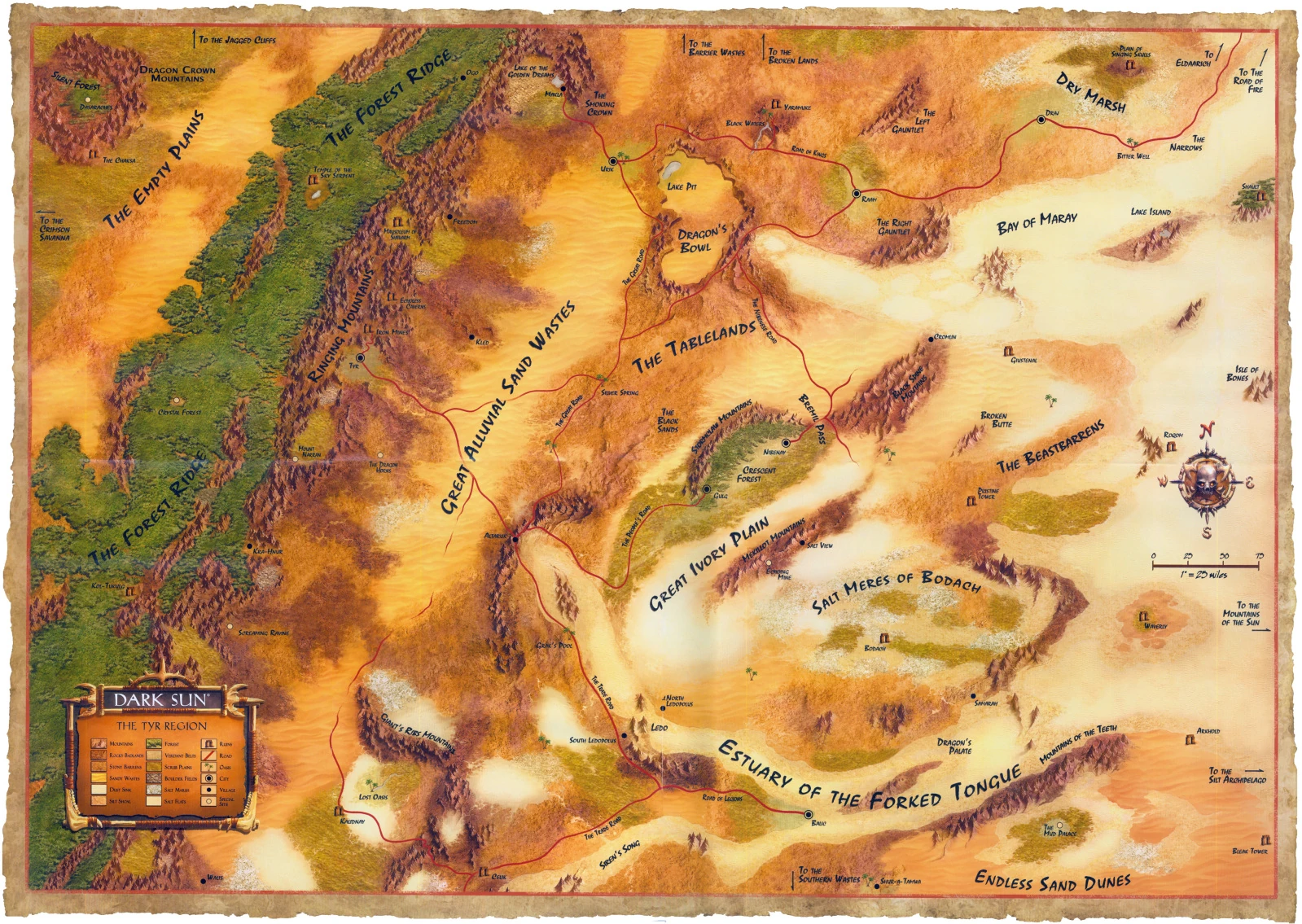
Imagine an alternative version of Athas, the world of Dark Sun setting. Everything around the populated areas is a desert filled with cannibals and places that have some natural life is kept like that with magic. A rumour has spread that behind Ringing Mountains there's forests and plains full of life, packs of animals and everything good that a dying world lacks. Besides rich forests, wild game and readily available water there's also ore mines

The sun itself might be a red giant or just be inhospitable for many lifeforms but the verdant area somehow survives that sun and thrives.

How are those conditions are possible? Is that area is raised above the sea level to the point that it's cooler up there? Is there some clouds that can't escape the place because the mountains are above the cloud level? An aquifer?

Saendra
  • 91
  • 3
  • 8
    There are many mountains in the world which have a luxuriant green area on one side and a desert on the other, or which raise green and teeming with life out of a desert. Look up rain shadow (e.g., the Cascade Mountains in North America shadowing the Great Basin)) and orographic precipitation. – AlexP Oct 07 '18 at 09:50
  • @AlexP makes an excellent point. Find a few such places on a map of Earth. Water is usually the key factor: Look at the relevant prevailing winds and ocean currents, which lead to cloud formation and water transport inland. – user535733 Oct 07 '18 at 11:00
  • 1
    California and Hawaii offer to good examples. – pojo-guy Oct 07 '18 at 11:41
  • AlexP has it right the rain shadow effect is no joke. Just look at south america, driest desert on earth on one side of the mountains largest rainforest on the planet on the other side. – John Oct 07 '18 at 13:38
  • Welcome to Worldbuilding.SE! We're glad you could join us! When you have a moment, please click here to learn more about our culture and take our [tour]. The point everyone is making is that a desert is defined by a lack of water - not an excess of heat. There are many frigid deserts on Earth. Also, note that when it comes to games, etc, scientifically viable is often ignored in favor of telling a good story. – JBH Oct 07 '18 at 14:03
  • VTC POB. While there are some elements of known climatology which apply to this question, it's too specific. Besides, they're just rumors. – RonJohn Oct 07 '18 at 14:36
  • 1
    @AlexP: It can be much more abrupt if you take runoff into account. There are many "oasis" places on the east side of the Sierra Nevada where streams & lakes flowing down from the mountains keep the valley verdant, yet literally a few steps will take you from grass & trees into sagebrush desert. – jamesqf Oct 07 '18 at 17:35
  • I'm with @jamesqf. We have areas where I live that are filled with water, but it's barren 100 feet from the resevoir. Now, if what we're looking for is lush valley next to the Sahara, that might be a bit more complicated. But Oases exist, and we're simply talking about a large oasis. – JBH Oct 14 '18 at 15:14

1 Answers1

1

If you want to keep a barren environment next to a lush environment find a way to separate their water cycle. Why? Because the primary difference between a lush and verdant environment, and a dry and desolate environment, has very little to do with the amount of water the place initially attracts. The important feature is how long that environment manages to keep the water around.

As has been pointed out Mountain ranges are naturally very good at keeping the water cycles of two areas separate. They also can help attract water by causing a monsoon. A good example of this is India.

India has a powerful monsoon. The landmass is roughly shaped like a dagger, or a sharks tooth, with high mountains along the hilt/base running down the middle toward the tip. Both sides are surrounded by warm tropical oceans. As the summer progresses the oceans heat creating moisture rich air, but the mountains warm quicker creating a strong temperature gradient, sucking the rain inland toward the mountains where it is forced up and every last drop of moisture is squeezed from it, creating heavy torrential rain. The landscape is such that it takes the better part of a year for most of this water to find its way back to the coast, in time for the next monsoon. However if you look north past the mountains you'll find a very large desert.

Alternately, mountains can help trap water. Think the Amazon rain basin, over 80% of the rain that falls there is water that never left. The trees push so much moisture up into the air, it either falls immediately or is swept back up the mountains were it falls again. If you were to cut down every tree, most of the water would just disappear, as it would just drain out into the ocean. In this case the mountains help with the water cycle but its the trees doing all the heavy lifting. You'll find most rain forests near mountains.

Another method is buffering the water. Think of the great lakes in the middle of Africa. Here there is a lot of water, most of it fell during large wet seasons over many years. Some years the rains are not so good and these lakes start to shrink, but still manage to support large thriving ecosystems around them. In good years they fill right back up again. If the rains started to come too infrequently the lakes would slowly dry out, and the communities around the smaller ones would be the first to go. But if you look around much of the environment further away from these lakes is very dry and seasonal.

Lets look at a desert, i will pick the Sahara desert.

  • It has mountains.
  • It is surrounded by tropical ocean.
  • It has aquifers.
  • It actually receives rain.

Why isn't it a verdant and lush region?

  1. Ironically the desert isn't hot enough to sustain a regular and consistent monsoon.
  2. The ground is mostly sandy or bare rock. Neither surfaces tend to slow water, or keep it around very long.
  3. Their isn't a lot of vegetation that slows rain run off and evaporates it.
  4. The aquifers are empty, and the rain is so spaced out that they dry up before the next rain.

To terraform this desert would not require much water, it would require addressing all the ways in which water escapes the environment, and reducing it to the point were the amount leaving the ecosystem is roughly the amount the ecosystem receives, with maybe a few buffers for the bad years.

But if you look around this desert, you'll see to the north Europe which is arguably quite green. To the East you'll see India, To the south is a seasonal grassland with a number of lake systems.

Kain0_0
  • 5,136
  • 1
  • 9
  • 17
  • The land is already separated by high mountains and no need to terraform. the land is already lush/desert, I needed to know why and why plus some extra details to shape out mechanics of the world. – Saendra Oct 12 '18 at 06:11
  • Specifically your city appears to exist in a rain shadow. That is the mountains extract most if not all the moisture from the winds blowing over the city. This would cause a general drying of that area. The other factors such as no monsoon, and poor land management would have exacerbated that into a pretty cruel desert. Just take a look at the middle east and the Sarah. It is both the place of the earliest civilisations on earth and the dryest (and largest) desert. Also elevation has little to do with one of the world deadliest deserts is over 2000 metres above sea level. – Kain0_0 Nov 09 '18 at 04:32