Olfactomedin 4
| OLFM4 | |||||||||||||||||||||||||||||||||||||||||||||||||||
|---|---|---|---|---|---|---|---|---|---|---|---|---|---|---|---|---|---|---|---|---|---|---|---|---|---|---|---|---|---|---|---|---|---|---|---|---|---|---|---|---|---|---|---|---|---|---|---|---|---|---|---|
| Identifiers | |||||||||||||||||||||||||||||||||||||||||||||||||||
| Aliases | OLFM4, GC1, GW112, OLM4, OlfD, UNQ362, bA209J19.1, hGC-1, hOLfD, olfactomedin 4 | ||||||||||||||||||||||||||||||||||||||||||||||||||
| External IDs | OMIM: 614061; MGI: 2685142; HomoloGene: 4684; GeneCards: OLFM4; OMA:OLFM4 - orthologs | ||||||||||||||||||||||||||||||||||||||||||||||||||
| |||||||||||||||||||||||||||||||||||||||||||||||||||
| |||||||||||||||||||||||||||||||||||||||||||||||||||
| |||||||||||||||||||||||||||||||||||||||||||||||||||
| |||||||||||||||||||||||||||||||||||||||||||||||||||
| |||||||||||||||||||||||||||||||||||||||||||||||||||
| Wikidata | |||||||||||||||||||||||||||||||||||||||||||||||||||
| |||||||||||||||||||||||||||||||||||||||||||||||||||
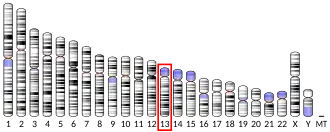



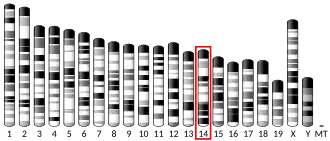

Olfactomedin 4 is a protein that in humans is encoded by the OLFM4 gene. [5]
Function
This gene was originally cloned from human myeloblasts and found to be selectively expressed in inflamed colonic epithelium. This gene encodes a member of the olfactomedin family. The encoded protein is an antiapoptotic factor that promotes tumor growth and is an extracellular matrix glycoprotein that facilitates cell adhesion. [provided by RefSeq, Mar 2011].
References
- 1 2 3 GRCh38: Ensembl release 89: ENSG00000102837 – Ensembl, May 2017
- 1 2 3 GRCm38: Ensembl release 89: ENSMUSG00000022026 – Ensembl, May 2017
- ↑ "Human PubMed Reference:". National Center for Biotechnology Information, U.S. National Library of Medicine.
- ↑ "Mouse PubMed Reference:". National Center for Biotechnology Information, U.S. National Library of Medicine.
- ↑ "Entrez Gene: Olfactomedin 4". Retrieved 2018-01-19.
Further reading
- Liu W, Chen L, Zhu J, Rodgers GP (2006). "The glycoprotein hGC-1 binds to cadherin and lectins". Exp. Cell Res. 312 (10): 1785–97. doi:10.1016/j.yexcr.2006.02.011. PMID 16566923.
- Liu W, Zhu J, Cao L, Rodgers GP (2007). "Expression of hGC-1 is correlated with differentiation of gastric carcinoma". Histopathology. 51 (2): 157–65. doi:10.1111/j.1365-2559.2007.02763.x. PMID 17650212. S2CID 27058889.
- Liu W, Liu Y, Zhu J, Wright E, Ding I, Rodgers GP (2008). "Reduced hGC-1 protein expression is associated with malignant progression of colon carcinoma". Clin. Cancer Res. 14 (4): 1041–9. doi:10.1158/1078-0432.CCR-07-4125. PMID 18281536.
- Conrotto P, Roesli C, Rybak J, Kischel P, Waltregny D, Neri D, Castronovo V (2008). "Identification of new accessible tumor antigens in human colon cancer by ex vivo protein biotinylation and comparative mass spectrometry analysis". Int. J. Cancer. 123 (12): 2856–64. doi:10.1002/ijc.23861. PMID 18798264. S2CID 19686678.
- van der Flier LG, Haegebarth A, Stange DE, van de Wetering M, Clevers H (2009). "OLFM4 is a robust marker for stem cells in human intestine and marks a subset of colorectal cancer cells". Gastroenterology. 137 (1): 15–7. doi:10.1053/j.gastro.2009.05.035. PMID 19450592.
- Oue N, Sentani K, Noguchi T, Ohara S, Sakamoto N, Hayashi T, Anami K, Motoshita J, Ito M, Tanaka S, Yoshida K, Yasui W (2009). "Serum olfactomedin 4 (GW112, hGC-1) in combination with Reg IV is a highly sensitive biomarker for gastric cancer patients". Int. J. Cancer. 125 (10): 2383–92. doi:10.1002/ijc.24624. PMID 19670418.
- Liu W, Lee HW, Liu Y, Wang R, Rodgers GP (2010). "Olfactomedin 4 is a novel target gene of retinoic acids and 5-aza-2'-deoxycytidine involved in human myeloid leukemia cell growth, differentiation, and apoptosis". Blood. 116 (23): 4938–47. doi:10.1182/blood-2009-10-246439. PMC 3012588. PMID 20724538.
- Grover PK, Hardingham JE, Cummins AG (2010). "Stem cell marker olfactomedin 4: critical appraisal of its characteristics and role in tumorigenesis". Cancer Metastasis Rev. 29 (4): 761–75. doi:10.1007/s10555-010-9262-z. PMID 20878207. S2CID 35708557.
- Dassen H, Punyadeera C, Delvoux B, Schulkens I, Marchetti C, Kamps R, Klomp J, Dijcks F, de Goeij A, D'Hooghe T, Kyama C, Ederveen A, Dunselman G, Groothuis P, Romano A (2010). "Olfactomedin-4 regulation by estrogen in the human endometrium requires epidermal growth factor signaling". Am. J. Pathol. 177 (5): 2495–508. doi:10.2353/ajpath.2010.100026. PMC 2966806. PMID 21048224.
This article incorporates text from the United States National Library of Medicine, which is in the public domain.
This article is issued from Wikipedia. The text is licensed under Creative Commons - Attribution - Sharealike. Additional terms may apply for the media files.