DCHS2
| DCHS2 | |||||||||||||||||||||||||||||||||||||||||||||||||||
|---|---|---|---|---|---|---|---|---|---|---|---|---|---|---|---|---|---|---|---|---|---|---|---|---|---|---|---|---|---|---|---|---|---|---|---|---|---|---|---|---|---|---|---|---|---|---|---|---|---|---|---|
| Identifiers | |||||||||||||||||||||||||||||||||||||||||||||||||||
| Aliases | DCHS2, CDH27, CDHJ, CDHR7, PCDH23, PCDHJ, dachsous cadherin-related 2 | ||||||||||||||||||||||||||||||||||||||||||||||||||
| External IDs | OMIM: 612486; HomoloGene: 130686; GeneCards: DCHS2; OMA:DCHS2 - orthologs | ||||||||||||||||||||||||||||||||||||||||||||||||||
| |||||||||||||||||||||||||||||||||||||||||||||||||||
| |||||||||||||||||||||||||||||||||||||||||||||||||||
| |||||||||||||||||||||||||||||||||||||||||||||||||||
| |||||||||||||||||||||||||||||||||||||||||||||||||||
| Wikidata | |||||||||||||||||||||||||||||||||||||||||||||||||||
| |||||||||||||||||||||||||||||||||||||||||||||||||||
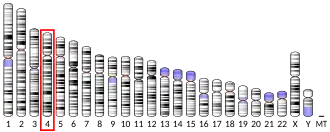



Protein dachsous homolog 2, also known as protocadherin-23 (PCDH23) or cadherin-27 (CDH27), is a protein that in humans is encoded by the DCHS2 gene.[3][4]
DCHS2 has been implicated in the nose angle (how much a nose is upturned).[5] As well as facial genetics [6][7]
References
- 1 2 3 ENSG00000284227 GRCh38: Ensembl release 89: ENSG00000197410, ENSG00000284227 – Ensembl, May 2017
- ↑ "Human PubMed Reference:". National Center for Biotechnology Information, U.S. National Library of Medicine.
- ↑ "Entrez Gene: dachsous 2 (Drosophila)".
- ↑ Hoeng JC, Ivanov NV, Hodor P, Xia M, Wei N, Blevins R, et al. (March 2004). "Identification of new human cadherin genes using a combination of protein motif search and gene finding methods". Journal of Molecular Biology. 337 (2): 307–317. doi:10.1016/j.jmb.2004.01.026. PMID 15003449.
- ↑ Adhikari K, Fuentes-Guajardo M, Quinto-Sánchez M, Mendoza-Revilla J, Camilo Chacón-Duque J, Acuña-Alonzo V, et al. (May 2016). "A genome-wide association scan implicates DCHS2, RUNX2, GLI3, PAX1 and EDAR in human facial variation". Nature Communications. 7: 11616. Bibcode:2016NatCo...711616A. doi:10.1038/ncomms11616. PMC 4874031. PMID 27193062.
- ↑ Richmond S, Howe LJ, Lewis S, Stergiakouli E, Zhurov A (2018). "Facial Genetics: A Brief Overview". Frontiers in Genetics. 9: 462. doi:10.3389/fgene.2018.00462. PMC 6198798. PMID 30386375.
- ↑ Firger J (19 May 2016). "Your nose--Big or small--is shaped by your DNA". Newsweek.
Further reading
- Maruyama K, Sugano S (January 1994). "Oligo-capping: a simple method to replace the cap structure of eukaryotic mRNAs with oligoribonucleotides". Gene. 138 (1–2): 171–174. doi:10.1016/0378-1119(94)90802-8. PMID 8125298.
- Kimura K, Wakamatsu A, Suzuki Y, Ota T, Nishikawa T, Yamashita R, et al. (January 2006). "Diversification of transcriptional modulation: large-scale identification and characterization of putative alternative promoters of human genes". Genome Research. 16 (1): 55–65. doi:10.1101/gr.4039406. PMC 1356129. PMID 16344560.
- Suzuki Y, Yoshitomo-Nakagawa K, Maruyama K, Suyama A, Sugano S (October 1997). "Construction and characterization of a full length-enriched and a 5'-end-enriched cDNA library". Gene. 200 (1–2): 149–156. doi:10.1016/S0378-1119(97)00411-3. PMID 9373149.
This article is issued from Wikipedia. The text is licensed under Creative Commons - Attribution - Sharealike. Additional terms may apply for the media files.