Turkish Riviera
%252C_Mu%C4%9Fla_Province%252C_southwest_Turkey%252C_Mediterranean.jpg)
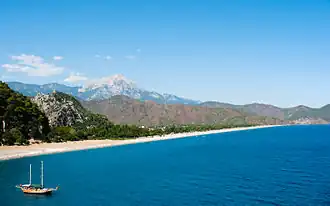
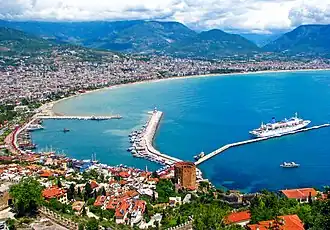
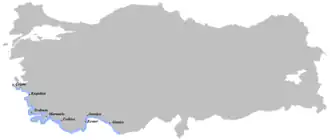
The Turkish Riviera (Turkish: Türk Rivierası), also known popularly as the Turquoise Coast, is an area of southwest Turkey encompassing the provinces of Antalya and Muğla, and to a lesser extent Aydın, southern İzmir and western Mersin. The combination of a favorable climate, warm sea, mountainous scenery, fine beaches along more than a 1,000 km (620 mi) of shoreline along the Mediterranean and Aegean waters, and abundant natural and archaeological points of interest makes this stretch of Turkey's coastline a popular national and international tourist destination.
Among the archaeological points of interest are two of the Seven Wonders of the Ancient World: The ruins of the Mausoleum at Halicarnassus; and the Temple of Artemis in Ephesus.
The coastline is regarded as a cultural trove that provides background on a fascinating mixture of factual and mythological individuals, conflicts and events, and has frequently been referred to in the folklore of various cultures throughout history. As such, it is regarded as the home of scholars, saints, warriors, kings, and heroes, as well as the site of numerous well-known myths. Mark Antony of the Roman Republic is said to have picked the Turkish Riviera as the most beautiful wedding gift for his beloved Cleopatra of Egypt.[1] Saint Nicholas, who later became the basis of the Santa Claus legend, was born in Patara, a small town close to present-day Demre.[2] Herodotus, regarded as the "father of History", was born in Bodrum (ancient Halicarnassus) in c. 484 BC.[3] The volcanic mountains to the west of Antalya, near Dalyan, are believed to have been the inspiration for the mythical Chimera — the fire-breathing monster that Bellerophon slew.[1]
Communities and settlements
Many cities, towns and villages in the area are internationally known, such as Alanya, Antalya, Belek, Bodrum, Çeşme, Dalyan, Didim, Fethiye, Kalkan, Kaş, Kemer, Kuşadası, Marmaris, and Side.
Notable places on the Turkish Riviera include:
- Akbük
- Akyaka
- Alaçatı
- Alanya
- Antalya
- Armutalan
- Beldibi
- Belek
- Beycik
- Bitez
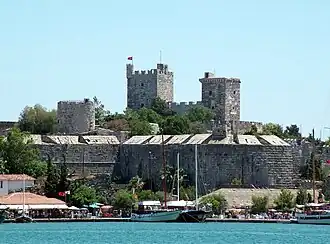
- Bodrum
- Bozburun
- Çamyuva
- Çeşme
- Çıralı
- Dalaman
- Dalyan
- Datça
- Demre
- Didim
- Fethiye
- Finike
- Gazipaşa
- Göcek
- Gökova
- Gümüşlük
- Güzelçamlı
- Hisarönü
- Ilıca
- İçmeler
- Kalkan
- Kaş
- Kekova
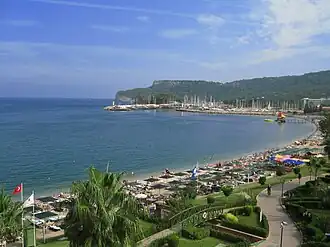
- Kemer
- Kızkumu
- Kumluca
- Kuşadası
- Konyaaltı
- Köyceğiz
- Lara
- Manavgat
- Marmaris
- Milas
- Muğla
- Olympos
- Ortaca
- Ovacık
- Ölüdeniz
- Ören
- Özdere
- Patara
- Selçuk (Ephesus)
- Selimiye
- Side
- Simena
- Torba
- Turgutreis
- Turunç
- Türkbükü
- Ulupınar
- Yalıkavak
Gallery
 Typical architecture of Alaçatı
 Tip of the Alanya peninsula
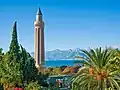 Yivli Minaret Mosque, near the Gulf of Antalya
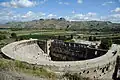 Roman theatre in Aspendos, Antalya
 Castle of Çeşme
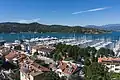 View of the Fethiye coast
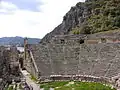 Roman theatre in Myra (Demre) where St. Nicholas lived
.jpg) Lycian tombs in Fethiye
Lycian tombs in Fethiye.jpg) Butterfly Valley, Fethiye
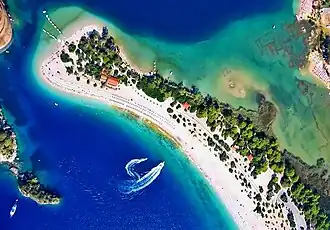
Butterfly Valley, Fethiye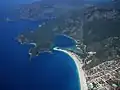 Ölüdeniz Beach, Fethiye
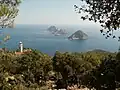 Cape Gelidonya near Finike is the site of the wreck of a Phoenician merchant ship from c. 1200 BC
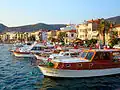 Port of Foça (Phocaea), home of the Mediterranean monk seal
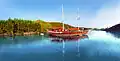 Traditional two-masted gulet visiting a cove in Gökova during a Blue Cruise
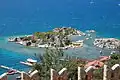 Ancient sites of Simena (Kaleköy)
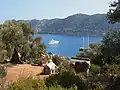 Lycian tombs in Simena
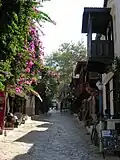 A street in Kaş with traditional houses and a Lycian tomb in the background
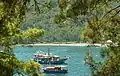 Moonlight Beach in Kemer
.jpg) A view of Güvercinada island, Kuşadası
A view of Güvercinada island, Kuşadası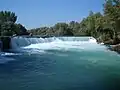 Manavgat waterfall
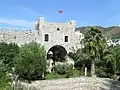 Marmaris Castle, built by Suleiman the Magnificent during his campaign against the Knights of Rhodes
.jpg) Karaca in Marmaris
Karaca in Marmaris.jpg) Olympos Beach
Olympos Beach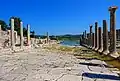 Ancient ruins in Patara
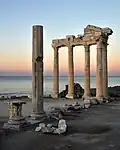 The ruins of the Temple of Apollo, near Side
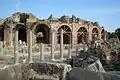 Exterior walls of the ancient theatre in Side
See also
- French Riviera
- Levantine Sea
- The Blue Voyage
- Tourism in Turkey
- Foreign purchases of real estate in Turkey
- Riviera (disambiguation)
Notes
- 1 2 The Mediterranean Region of Turkey ; archived copy at web.archive.org. Archived November 23, 2007, at the Wayback Machine
- ↑ "St. Nicholas the Wonderworker and Archbishop of Myra in Lycia". oca.org. Retrieved 13 May 2017.
- ↑ "Herodotus". Archived from the original on 14 November 2007. Retrieved 13 May 2017.