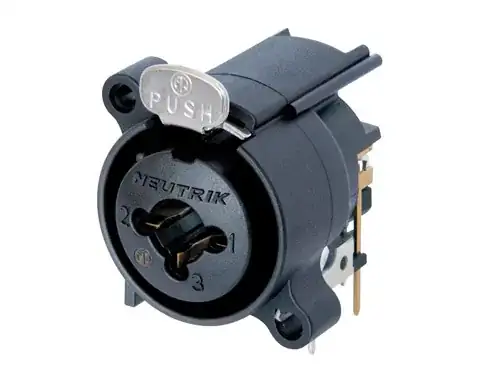
On an XLR cable, pins 2 and 3 carry the same voltage, just 180 out of phase, while pin 1 is the ground.
Wiring this up to a TRS connector, pin 2 is tip, pin 3 is ring, and pin 1 is the sleeve.
 image linked from here
So, if you're using balanced TRS connections in your combo jack, the answer is, it should be fine. The voltage present on the tip and ring "is seen by equipment as “common mode” noise and rejected, or ignored, by the equipment." source
A caveat, however...
As the jack plug is inserted into the jackfield its tip will
momentarily connect with the ring contact in the socket, while the
ring of the plug touches the sleeve contact. This short-circuits the
phantom supply, bridging the +48V line straight to the earth return
and, although the phantom supply should cope, the resulting voltage
spike can cause irreparable damage to the input circuitry of the mixer
channel. The mic input stage can be destroyed outright (particularly
with older types of electronically balanced inputs) but it is more
usual to find a gradual degradation in performance as various circuit
components deteriorate. source
The quote above is not exactly related to your situation, but close enough to give you some useful tips to avoid damage.
Having said all that, I suppose in the end, it depends on how the Neutrik connector is wired on the back side. If there are only three leads (which are just split to connect to both the XLR and TRS contact points) There would be phantom on the TRS. If, however there are six leads, it could go either way. I suppose the only way to know for sure would be to test with a DMM or contact Neutrik :)