Below is the diagram, where, if we just consider the implementations of List,
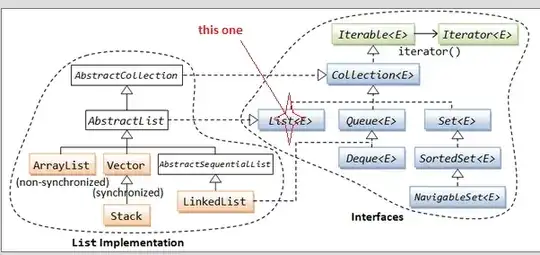
AbstractListmaintains the core behavior of list. To introduce the new implementationclass MyList(say) one can inheritAbstractListand override(if necessary) required methods. By extendingAbstractList. Additionally,class MyListis obeying the contract to behave like a list.class MyList extends AbstractList{..}Users can use collection hierarchy, as,
AbstractList l = new ArrayList<String>();
l.add("one"); //execute ArrayList's add method
A class can also maintain composition relation with any list implementation(at runtime), by having
AbstractList l;as member, that gets populated at runtime, with any list implementation.
So,
I would like to understand the clear reason, Why additionally interface List<E> is introduced?
note1: Intention is to understand, how to use interface. This not a duplicate question, because both abstract class and interface are used.I did not use the word 'instead of' or 'rather'
note2: Let us not get into java-8 default methods, as above collection hierarchy was designed with whatever was provided till java-7


class Book extends Content implements List<Page>- one couldn't do this with AbstractList, because there would be no way for Book to extend both Content and AbstractList simultaneously – gnat Jul 05 '15 at 02:33AbstractListdocumentation. Quote: "This class provides a skeletal implementation of the List interface to minimize the effort required to implement this interface backed by a "random access" data store (such as an array)." – rwong Jul 05 '15 at 02:35interface List<E>? – overexchange Jul 05 '15 at 04:53Listis purely a specification of interface,AbstractListhas behaviour that could conceivably be wrong in some situations. Interface-only inheritance should be preferred when you do not need to inherit behaviour but only need to provide the capability of polymorphism. – Jules Jul 05 '15 at 05:21class MyListthat defines all of the required methods and obeys the general contract is preferred to implement aninterface List, because theclass Myclass(some business class) do not need to reside in the above class hierarchy. This has nothing to do with multiple inheritance or polymorphism. – overexchange Jul 05 '15 at 09:49