24

Note: This question has been severely edited from its original version to better fit the format of this site. Some answers below - including the accepted, correct answer - have been given based on the original question.


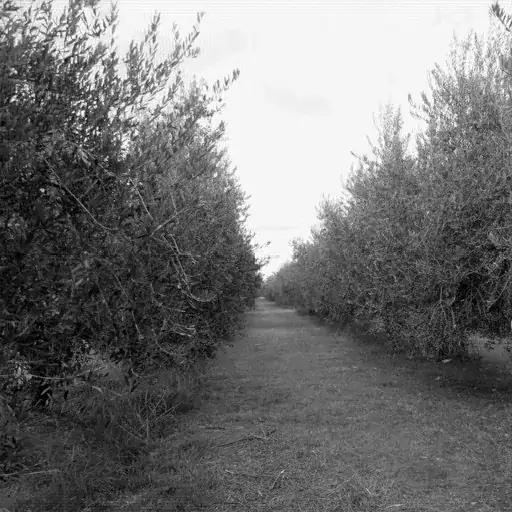
Consider the following two digital images below:

Image 1 Image 2

Although they depict two very different things, they share a strong common feature: They hide an identical 3-digits prime number within themselves.

Not only do the hide the identical number, but they hide it by the identical method.

If you apply the method on image one, you'll get the prime number.
If you apply the identical method in the identical way to the other image, you will get the same prime number.

What is the method to be applied? And which 3-digit prime number do both images hide?

Important hints & restrictions:

  • The answer to this puzzle is not an ambiguous or subjective solution. Subjective interpretation is not involved.
    ("...looks like..."; "...reminds me of..."; "...could be interpreted as...";... are all invalid concepts.)

  • The answer lies within the image itself and can not be 'forced' upon it by altering the data.
    ( "...paint everything black and draw the prime onto it...";... is not a valid answer. )

  • There is no hidden meta-data to the images.
    (You can right-click & save it from here; or you may print it and then rescan it again; or you may simply take a good picture of you screen and use that; all of this will keep the image suitable for the method in question. However, you do need to use a computer to find the answer -- simply looking at the images does not suffice.)

BmyGuest
  • 18,141
  • 1
  • 69
  • 147
  • I actually know what the first picture is (and no, people, it's not the Roman Colosseum... that's a lot bigger). – generalcrispy Nov 25 '14 at 14:37
  • 2
    Pula Arena? in Croatia? I am feeling more and more confident of this – skv Nov 25 '14 at 14:38
  • Bonus point given. @generalcrispy: Why didn't you tell? Point goes to skv now... – BmyGuest Nov 25 '14 at 15:11
  • I thought it had to go into an answer. I knew it was the Pula Arena. – generalcrispy Nov 25 '14 at 15:13
  • If you'll provide an answer, I'll give you the bonus point on top :c) – BmyGuest Nov 25 '14 at 15:15
  • 3
    I have to admit when you said you could print it and hand it to somebody that suggested to me without a computer. If you meant they needed to redigitize it that is probably worth saying... – Chris Nov 25 '14 at 23:47
  • @BmyGuest I think this is far far more technical than what I would typically like to see here in Puzzling SE but thats just me, not something I would preach – skv Dec 13 '14 at 00:08
  • 1
    @skv frequency-analysis is actually very common and potentially less technical than color-hex codes. Mathematics appear to be complex, but really are not. Fourier transforms are potentially the most common transformations used in image processing and can be found in any image-processing software for data analysis. They are also behind many "filters" (smoothing, motion-blurring, sharpening,etc.) and most image compressions (JPEG). – BmyGuest Dec 13 '14 at 06:51
  • 2
    @skv as far as puzzles are concerned: FFTs leave a telltale sign: the 'ringing' in contrast you see in the images(I.e in the white background at the border) It is periodical - exactly because frequencies were changed to produce the solution. So the pictures give a clue were to search and one doesn't need to guess and apply "anything". – BmyGuest Dec 13 '14 at 06:55

4 Answers4

31

The answer is 101, which you can see

by computing the Fourier transform.
Fourier transform

How this works

You can think of an image as a function $F$ of two variables, $x$ and $y$. $x$ and $y$ represent the horizontal and vertical positions of each pixel, and $F(x,y)$ represents the pixel intensity (lightness or darkness). Now it turns out that any periodic function (and with images we only care about a finite range, so we can always just suppose $F$ to repeat once you reach the image boundaries) can be represented as a weighted sum of sine and cosine functions of different frequencies. These sums are called fourier series; the image below (taken from Wolfram MathWorld) shows various sums of sinusoids converging to a few different periodic functions in the one-dimensional case.

Fourier series examples from MathWorld

Note that in general for this representation to be exact for a continuous function you may need an infinite number of terms in the sum. However, in the discrete case, you only need to sum over as many different frequency values as you have samples (pixels) of the original function (image).

So in our discrete, two-dimensional case, what we have is this: a function $F(x,y)$ representing an image of size M-by-N can be written as a weighted sum of 2D sinusoids with horizontal frequency $u$ and vertical frequency $v$, where $u$ ranges from $1$ to $M$ and $v$ ranges from $1$ to $N$. You can think of the weight of each term as a function, say $G$, of the frequency variables $u$ and $v$. There's then nothing stopping you from thinking of $u$ and $v$ as horizontal and vertical positions of a new image, with $G(u,v)$ determining pixel intensity at each point. This is the process that was carried out to produce the "101" image above.

I've tried to keep this explanation as non-technical as possible; if you'd like to see the gory details of how the coefficients are actually calculated, MathWorld's Discrete Fourier Transform article has a nice overview of the 1D case. You can see the (relatively straightforward) generalization to two dimensions here.

To play around with this stuff yourself you could try ImageJ, a public domain image processing package developed by the NIH. It'll do all the dirty work for you -- just install, open an image, and select Process->FFT (Fast Fourier Transform).

To see a reason (one of the many, I swear) why you'd bother to do this outside of solving puzzles, try this nice, quick example of using FFT filtering in ImageJ to remove periodic noise from an image.

For a deep understanding of why this works, I recommend a course in applied analysis. (Or, I'm sure, any number of good books or online tutorials -- but I don't know what the good ones are, so I won't try to suggest one.)

Curtis H.
  • 343
  • 2
  • 8
  • As an aside, that number is also the pixel intensity value (on a 0-255 scale) that occurs most often in the first image. Not so for the verification image, though, so I assume it's just an amusing coincidence. – Curtis H. Nov 25 '14 at 21:57
  • Thx. I am afraid too many hints and discussions may have spoilt it, though. That's what all the "hidden" cross checks where about... Anyway, well done. – BmyGuest Nov 25 '14 at 21:58
  • 6
    @BmyGuest I was curious about how robust was this against printing and redigitizing. For a quick test I just took a picture of the computer screen with my cell phone: http://i.imgur.com/fWqRY7k.jpg. This is the result: http://i.imgur.com/R7Sf6lE.jpg – rsanchez Nov 25 '14 at 22:24
  • 3
    @BmyGuest how do you alter a given picture to have a certain result for the fourier transform? Or did you just randomly decide to transform a random picture and noticed it looked like 101? – EagleV_Attnam Nov 26 '14 at 12:31
  • 2
    Please do not post an answer where all the content is hidden in spoiler markup. Your answer should make sense and be distinguishable from another answer to a reader who cannot or chooses not to read the spoiler block. – Gilles 'SO- stop being evil' Nov 26 '14 at 13:07
  • 2
    @EagleV_Attnam: As I've said, I used DigitalMicrograph (free version). FourieTransforms (FT) are a 2-way transformation between "spatial domain" (normal image) and "frequency domain". When you do a FT of an image, you get a point-symmetric FT-Image (complex number values). I've set the values to 0 to mark the 101 and then did the invers-FFT to get back to the (modified) image. However, to get back to a real-value only image, the modification needs to be point-symmetric in the FT image. – BmyGuest Nov 26 '14 at 13:55
  • 5
    @Gilles: I disagree strongly about the spoilers, but I've posted my opinion in the linked meta-discussion posting. – BmyGuest Nov 26 '14 at 16:34
  • 3
    @Gilles Your point is well taken, but I'm not sure how I could accomplish that without defeating the purpose of having anything in spoilers. If you have ideas, please feel free to edit my post to expose whatever pieces you feel shouldn't be within a spoiler block. – Curtis H. Nov 26 '14 at 17:01
21

I think it's

313

photo evidence:

enter image description here

as for the other picture

Tree, none, Tree

Raystafarian
  • 1,682
  • 12
  • 21
  • It's not.And I guess your solution would be 1. (m/m=1) .. :-) – BmyGuest Nov 25 '14 at 18:34
  • 4
    Fits the clues. Looks right to me. – A E Nov 25 '14 at 19:38
  • @AE: "....You will most likely not be able to solve this with pen & paper. (I wouldn't!)" Now, it might be that you don't trust me to draw as expertly as above (thank you!), but otherwise: No it does not fit "the clues". There were plenty more comments earlier on which have disappeared in the meanwhile. But, if it looks right to you, you can tick it as "checked" on your list. It is not the solution to be expected though and others may continue looking, if they feel for it. – BmyGuest Nov 25 '14 at 19:55
  • 2
    @BmyGuest, it seems to fit the clues that are currently visible on the page. Deleted clues don't seem (to me) really relevant. Which clue does it not fit? – A E Nov 25 '14 at 19:57
  • 2
    @AE: The ones in the "Notes and spoilers" sections, in particular: "You will most likely not be able to solve this with pen & paper. (I wouldn't!)" and the cross-check conditions, in particular: The solution is only the correct solution if you would be able to come to the same conclusion from the following, second image by applying the identical reasoning." Identical. – BmyGuest Nov 25 '14 at 20:01
  • The pen-and-paper part seems fine, Raystafarian's solution could be done with a pen and paper. Possibly better drawn. :) Ok, it's not identical reasoning though ... – A E Nov 25 '14 at 20:06
  • 1
    @AE - The question should be not solvable with pen and paper. And the reasoning is very different; the second one is basically wordplay! – Rand al'Thor Nov 25 '14 at 20:37
  • 1
    @randal'thor. Thanks! AE: In general, I DO understand the problem and nuisance of ill-defined riddles, I really do, but it is equally annoying to be confronted with "If I tweak and bend every letter, then this is a valid solution as well" requests for each and every riddle. This discussion should really go into meta though. As far as I'm concerned: ANYBODY may post ANY solution he thinks valid, and it won't annoy me. But at the same time: If you get a clear "no that's not the answer", then accept it. either skip the riddle, or retry - up to you, no bad feelings. – BmyGuest Nov 25 '14 at 20:41
  • @BmyGuest - 'Riddle'? Does this count as a riddle? Is that a clue? – Rand al'Thor Nov 25 '14 at 20:43
  • @randal'thor. No, sorry. English isn't my native. I'll edit to puzzle. – BmyGuest Nov 25 '14 at 20:50
  • Oh, should not be solvable with pen and paper? Must have misread it. @Bmy: it's not my answer. – A E Nov 25 '14 at 21:10
  • 1
    @BmyGuest This was my answer and I accepted it was wrong with your first comment. I like giving these a try even if I'm wrong, thanks for the puzzle! – Raystafarian Nov 26 '14 at 09:53
  • 2
    Please do not post an answer where all the content is hidden in spoiler markup. Your answer should make sense and be distinguishable from another answer to a reader who cannot or chooses not to read the spoiler block. – Gilles 'SO- stop being evil' Nov 26 '14 at 13:08
  • 6
    @Gilles IMHO this is neither the time or place for you to enforce an unofficial policy. Perhaps an invitation to the meta discussion would go over better so that an acceptable solution can be made by the community. – Raystafarian Nov 26 '14 at 13:49
  • 2
    @Raystafarian I am not enforcing a policy — I didn't edit. I am expressing my opinion of a usage which I find strongly detrimental to the site. – Gilles 'SO- stop being evil' Nov 26 '14 at 14:35
  • 4
    @Gilles Expressing your opinion... by saying "Do this." You aren't saying "I don't think you should use spoilers" or "Can you get rid of the spoilers, please?" Seems like an attempt at enforcing to me. – mdc32 Nov 28 '14 at 05:31
7

I think the answer is

101

Explanation

Pillar - Window - Pillar Pillars look like 1 and the Windows like 0

I did take a look at your second picture and this is the only way I'm able to connect them.

Bush-Space-Bush. Something-Nothing-Something :-)

Jerin Joseph
  • 171
  • 5
  • Nope. Same reason as above (and earlier on, but deleted). It is not an easy solution one can come up with by simply looking at the picture and thinking. Also, the cross-check states that. "Your solution is only the correct solution if you would be able to come to the same conclusion from the following, second image by applying the identical reasoning." Identical. Any "this looks like XY." would only be valid if you could state "this ALSO looks like XY." – BmyGuest Nov 25 '14 at 19:59
5

So, my first instinct was to download both pictures and compare them.

I ended up comparing their "properties" to see if their dimensions were a prime number. 512 is not prime number :( But I noticed that they were both 179 kilobytes, a prime number.

But then I looked at the hints, and realized that can't be it.

Then I made a list of all the prime numbers that it could be based on that hint:

101,131,151,181,191,313,353,373,383,727,757,787,797,919,929

As stated in previous answers, it could be

101 or 313

But, since those are incorrect, I'm going to take a very wild guess:

It might 929. Here's my reasoning. Both images are 512x512 pixels. Another way to write that is to say 2^9 by 2^9. The "2" could come from the "power of 2" or from the word "by", in that the letter "b" is the 2nd letter in the alphabet. I know it's a stretch, but it's the best I can come up with for now.

kukac67
  • 175
  • 4
  • Surely that can't be it, because the OP says "If you were to print this image (with a print resolution at least of the display resolution), and give it to a third person, this person could still solve the puzzle." – Rand al'Thor Nov 25 '14 at 20:30
  • @randal'thor Well then I'm still stumped. :D – kukac67 Nov 25 '14 at 20:32
  • Technically the resolution is 72 dots per inch (dpi). Print is normally 300 dpi, so it can still be 512x512 dimensionally although it would be a lot harder to calculate. That said, I don't think this can be right either because that's fiendish :-P – Joe Nov 25 '14 at 20:36
  • +1 for adding a new idea. No, it's not the answer though. The solution is also not a three-way-bend-numbers-into-shape thing. If you do look for the right thing, it's glaring obvious. Going for the pixel numbers would have been a valid attempt (I even thought of such a puzzle for a short time), but it is not what I'm after. (And it doesn't lead to a prime, as you've discovered.) One further note: You really should be able to solve this WITHOUT the additional hints, let alone the restriction to a small list of primes... It's only for CHECKING your answer. – BmyGuest Nov 25 '14 at 20:46
  • @Joe: The hint with printing doesn't say this other person would have it 'as easy' as you, just that it is possible. With this respect, fiendishly difficult might still be true. (The printing with at least screen resolution (and appropriate colour depth!) will not destroy the information. That's what I've meant to say mainly.) – BmyGuest Nov 25 '14 at 20:48