You can start by asking
Where is the 5 in column 6.
The six in box 6 has four possibilities, all next to a bar, so there must be a 5 adjacent to that six, away from the rightmost column. The given 6 rules out the the rest of the options in the column, so
there must be a 5 on row 4 in column 6.
From there, you get the bottom two digits of column 6 easily, seeing as how box 6 must have two pairs of consecutive digits, and therefore r6c6 has only one non-consecutive option:

Out of the remaining 2 and 3 in the column, only the 3 can go between the 5 and 6, which breaks the whole puzzle wide open, for example by solving the 2 and 3 in box 6.
Here's the final solution:
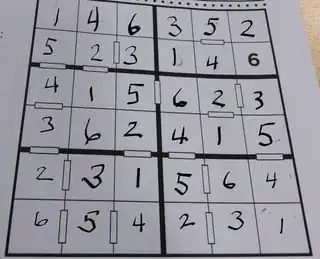
This kind of sudoku is usually called Kropki (Polish for "polka dots", the bars are usually drawn as circles), and the usual solution methods involve inspecting long chains of connectors (column 1 turned out to be a red herring in this puzzle), and also squares and digits adjacent to the givens.


