This is exactly the approach taken in Bernard Shutz's note "Gravitational waves on the back of an envelope" (Am. J. Phys. 50 vol 5 pp 412). The abstract reads:
Using only Newtonian gravity and a little special relativity we calculate most of the important effects of gravitational radiation, with results very close to the predictions of full general relativity theory. Used with care, this approach gives helpful back‐of‐the‐envelope derivations of important equations and estimates, and it can help to teach gravitational wave phenomena to undergraduates and others not expert in general relativity. We use it to derive the following: the quadrupole approximation for the amplitude h of gravitational waves; a simple upper bound on h in terms of the Newtonian gravitational field of the source; the energy flux in the waves, the luminosity of the source (called the ‘‘quadrupole formula’’), and the radiation reaction in the source; order‐of‐magnitude estimates for radiation from supernovae and binary star systems; and the rate of change of the orbital period of the binary pulsar system. Where our simple results differ from those of general relativity we quote the relativistic ones as well. We finish with a derivation of the principles of detecting gravitational waves, and we discuss the principal types of detectors under construction and the major limitations on their sensitivity.
(If you don't have access to Am J Phys, this talk seems to recapitulate the details.)
A major difference in this Newtonian scalar theory from the real GR theory of gravitational waves is in the effect of the waves on an inertial test particle. This Newtonian theory predicts that the waves would appear as an oscillating force along the direction between the source and the test particle. By contrast, GR predicts an oscillating differential tidal effect in the plane perpendicular to the line connecting the source and the test mass.
As a result, while I think LIGO would still detect the "Newtonian" form of gravitational waves, the antenna pattern of the detector would be different. The L-shaped LIGO detector has optimal sensitivity to a source located directly overhead in the GR case (allowing the gravitational wave to stretch one arm while it is compressing the other). There would be no sensitivity to a "Newtonian" source directly overhead. However, you could detect it if the "Newtonian" source were aligned with either arm.
By the way, "Newtonian noise" (the near-field action of Newtonian gravity arising from density waves in the material near the detector) is a real concern for terrestrial gravitational wave detectors!
P.S. To be pedantic, it is best to avoid the term "gravity wave" (as opposed to "gravitational wave"), since a "gravity wave" ("Newtonian gravity wave" even!) is something completely different.
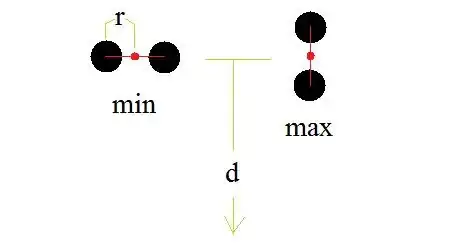


 I am measuring the gravitational influence but I do not think you are measuring 'gravity waves'. The problem with LIGO is that the device is subject to dynamic changes in length, and the laser light undergoes the same changes, making impossible the detection of any variation. After all LIGO is measuring 0.