38

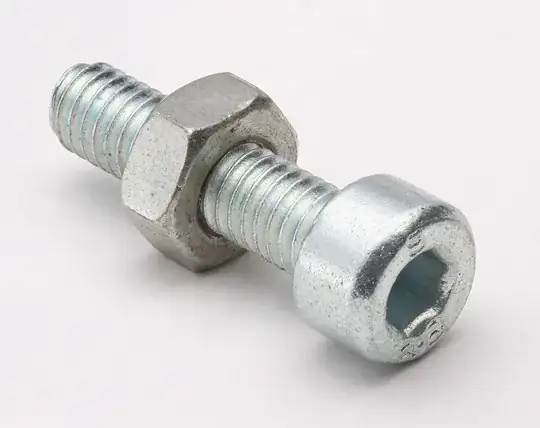
When you attach a bolt to something using a nut, it is clear what the roles of the nut and bold are.

enter image description here

The more you tighten the bolt the more secure your fastening. However, you are often also told to use a washer as well.

enter image description here

I know this somehow prevents the bolt from loosening but from a physics/mathematics point of view, what is the role of the washer?

Simd
  • 1,131
  • 2
  • 9
  • 13
  • 8
    From Wikipedia: used to distribute the load of a threaded fastener, such as a screw or nut. Other uses are as a spacer, spring (belleville washer, wave washer), wear pad, preload indicating device, locking device, and to reduce vibration. – jinawee Sep 09 '14 at 13:28
  • 3
    If bolting on a soft material (like aluminum) a washer will prevent the head and nut from "digging in" and damaging the material. – John Alexiou Sep 09 '14 at 14:07
  • 3
    This is not an engineering question; the close reason is there to prevent questions which require consideration of trade-offs and implementation which we cannot provide. This is a "why" question which is perfectly suited for this site. – Emilio Pisanty Sep 09 '14 at 14:17
  • The tighter you screw in nut with a washer, then it will always push against the nut making it have pressure so it won't unscrew with vibration. – SSpoke Sep 09 '14 at 17:29
  • 1
    @SSpoke This is the sort of answer I don't understand. Why will the washer "push" any more than the nut or bolt would? – Simd Sep 09 '14 at 19:27
  • There is no single answer. But use bolts without washers and you will begin to appreciate them pretty quickly. – Hot Licks Sep 10 '14 at 17:11
  • The kind of washer pictured will not. But there are split lock washers which do, and star-shaped washers that inhibit the nut from rotating either by friction or by engaging grooves in the surface. The purpose of the washer pictured is simply to distribute the load. – Kevin Krumwiede Sep 10 '14 at 18:51

5 Answers5

49
  1. Some (smooth or Teflon) washers are used to reduce friction while tightening allowing for greater torque application and thus higher axial loads on the bolt.
  2. Some washers increase the friction between the parts to prevent it from loosening up
  3. Some split (or lock) washers act like a spring maintaining pressure in contact during thermal or elastic expansion and/or helps prevent unwinding of the nut by digging in the base material.
  4. Some washers have a ratcheting surface to fix the nut in a particular orientation
  5. Some washers are thick in order to re-distribute the contact pressure and soften the damage to the clamped body
  6. Some washers are there to separate dissimilar metals to avoid galvanic corrosion
  7. Some (belleville) washers reduce the stiffness of the connection in order to take up deformation better.

... the list goes on ...

John Alexiou
  • 38,341
  • What is the "radial edge" in a washer? – Simd Sep 09 '14 at 15:10
  • 2
    @Lembik check image in Washers article on Wikipedia - check second row shows "split" washers which what I believe ja72 refers to as "radial edge". – Alexei Levenkov Sep 09 '14 at 16:30
  • Yes, there is a cut in the washer which creates an edge for the washer to dig in. – John Alexiou Sep 09 '14 at 18:47
  • 1
    @ja72 The cut in the washer isn't for digging in. The whole washer act as spring, so if you tighten the nut, this cut part compresses and exerts additional pressure to the nut. Thus helping prevent loosening of the nut. – jnovacho Sep 10 '14 at 09:00
  • @jnovacho. Thanks the answer is a community wiki so it can be edited by anyone I think to add or change items. – John Alexiou Sep 10 '14 at 13:34
  • 2
    @jnovacho: I'm under the impression that the cut in a split washer does two things: 1) apply spring pressure (so the bolt remains under tension so it won't loosen further even if it loosens a bit, and 2) to cut into the bolt head if it tries to rotate counter-clockwise. Note it is shaped to allow clockwise motion, but it resists counter-clockwise by digging in. (They are called "lock washers".) – Mike Dunlavey Sep 10 '14 at 13:48
12

Some washers are to keep the nut from loosening, but not the one you show. The kind of washer you show is to present the pressing force of the nut or bolt head over a larger area.

This can be particularly useful when the bolt goes thru soft material. The bare nut might dig into the material in a unacceptable way, or even punch thru due to the high pressure. The washer distributes the same force over a larger area, thereby lowering the pressure.

In some cases, the washer is also to allow for easier turning of the bolt head or nut. If the nut digs into the material a bit, it will be hard to turn, and possibly damage the material if it is turned anyway. The washer decouples the turning motion of the nut from the material. The rubbing happens between the nut and the washer, and mostly just a steadily increasing pressure is presented to the material.

Then there are lockwashers, which have a different purpose altogether. They are deliberately designed to dig into the material and the nut, preferentially in the direction of the nut being loosened. Ideally this forms a sortof ratchet mechanism such that it requires more torque to loosen the nut than to tighten it. This will help keep the nut in place. Lockwashers are usually used in cases where the overall unit will be subjected to vibration or varying loads that could cause the nut to loosen over time. There is enough friction between a normal nut, the bolt, and the material, that for static loads the nut is not going to undo itself.
Olin Lathrop
  • 12,916
  • 1
  • 31
  • 47
4

From here

"A humble flat washer is used for many purposes, some proper and some not. The two most common proper purposes are: To distribute the pressure of the nut or bolt evenly over the part being secured, reducing the chance of damage thereto, andTo provide a smooth surface for the nut or bolt to bear on, making it less likely to loosen as a result of an uneven fastening surface."

  • One that crosses the line from proper to improper depending on the application and size difference is to use a bolt in an oversize hole. – Chris H Sep 10 '14 at 08:05
1

Interesting evolution of the nut-and-washer: nut with built in washer. It helps understand some of the above answers:

Built in lockwasher enter image description here this one will "bite" evenly over a large radius - improving the torque with which the nut is held once it is tightened.

If you imagine the contact surface being smooth instead (sorry, don't have a good picture showing it) you end up with a nut that doesn't "dig" when you tighten it. Imagine that you have a soft surface: as you tighten the nut, it starts to sink into the surface, and now it will "plough" material up in front of it if you continue to torque it. This wall of material will make it harder to keep tightening (you can't turn to tighten, but the axial force may not be very high) - at the same time, it would be easy for the nut to loosen (there is a wall in front, but not behind). A smooth washer - whether built in or not - prevents that from happening. I will try to get a picture...

Floris
  • 118,905
0

A washer helps to distribute the load of the bolt or another fastener.

akhmeteli
  • 26,888
  • 2
  • 27
  • 65
  • 2
    Why does it increase the distribution? The surface area of contact doesn't seem to be changed. Also, why would distributing the load prevent the bolt from coming loose? – Simd Sep 09 '14 at 12:48
  • 2
    The area is increased because the washer is bigger than the nut. – John Alexiou Sep 09 '14 at 14:08
  • 1
    @Lembik: The pressure of the bolt head on the washer will be inversely proportional to the area of the bolt head, but the pressure of the washer on the material being fastened will be inversely proportional to the area of the washer (which is bigger, making the pressure smaller). In many cases, the washer will be better able to handle the higher pressure with the bolt than would be the material being fastened. – supercat Sep 09 '14 at 20:58
  • @Lembik: I mean the load exerted by the bolt on the part it fastens is distributed over a larger area if a washer is used. Maybe my wording was ambiguous. – akhmeteli Sep 10 '14 at 12:17
  • @Lembik most of the times, the material bolted together is softer than the bolt, often significantly. The washer increases the contact surface with the material, increasing the limit to how far the bolt can be tightened without damaging the underlying material. – Peteris Sep 10 '14 at 18:35