There has been a lot of talk lately about the alleged harmful (potential?) side effects of vaccinations/immunizations for infants and children. What are the objective arguments against immunizing?
Asked
Active
Viewed 6,135 times
37


-
1Taken in mind that there are pretty much diverse opinions on this matter, some biased and others might be economically motivated, I'm afraid that this question will lead to an endless debate! That's why it would be good if questions like this would be avoided. – nuc Mar 30 '11 at 07:53
-
13@nuc - True, there are diverse opinions—but when you look into the scientific research for/against vaccines, there's no controversy whatsoever. And because of the massive amounts of misinformation constantly being pushed out, this is a question that many parents have, and are likely to continue having. – Dori Mar 30 '11 at 09:03
-
5Highly related: http://skeptics.stackexchange.com/questions/95/just-how-inaccurate-are-vaccine-myths – Nikita Barsukov Mar 30 '11 at 09:23
-
1@dori If by "scientific research" you refer to researches made/funded by the same companies which produce the vaccines, then of course there would be no controversy.. – nuc Mar 30 '11 at 10:24
-
14If people start closing the question, because they don't like the answers. I am off. Come on, ALL questions here could then be closed for the same reasons. Parenting by its nature is subjective and argumentative. Having said that, could some one please show me any objective data against immunization? – Mar 30 '11 at 13:43
-
3-1, I think this doesn't fit here. I'd rather have this on skeptics.SE. – Zsub Mar 30 '11 at 19:16
-
@andra I've already provided some sources. They're more than enough for any thinking person to start his own research and make his own conclusions and/or decisions. Fortunately enough, it seems that there are not any unlucky families among us, who suffered the consequences of vaccinations. I rest my case! – nuc Mar 30 '11 at 20:05
-
4@nuc - Pro-vaccination does not mean Pro-Big Pharma. – Dori Mar 31 '11 at 23:15
-
2None, really. There are, on the other hand, strong arguments for immunisation: namely, it helps prevent terrible illnesses. – luispedro Mar 29 '11 at 21:44
-
1To be objective, you should be asking for the arguments for and against, not just against. – Paul Johnson Jul 08 '18 at 07:47
10 Answers
78
TL;DR: No
Update Sept 2015: Aaron Carroll more clearly and expertly answers this in his New York Times analysis "Not up for Debate: the Science behind Vaccination".
Most of the talk lately has been about how the evidence for a link between autism and MMR vaccination is fraudulent.
So, there is no scientific research that demonstrate that contemporary vaccines are harmful, with the exception of allergic reactions (commonly egg protein) and some minor side effects (fever, headache, sore arm, tears, ...). Since even minor side effects can be serious for some populations, some vaccines are not given to all patients (e.g. those who are too young, old, sick, and/or allergic; CDC Flu Vaccine Summary for Clinicians).
There is substantial evidence that vaccines keep people from contracting serious viruses and chronic diseases. For example, a series of interactive graphics from the Wall Street Journal makes this clear, like this one showing the decline in measles following the introduction of a vaccine:
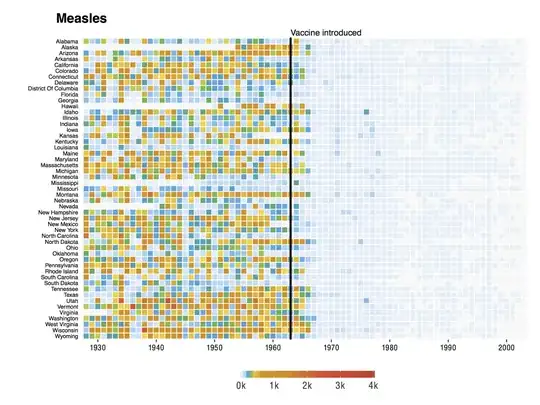
image credit: Ben Moore
It is not possible to conclude that a vaccine will have no negative effects on health, but it is easy to estimate the probability that the net effect will be overwhelmingly positive. Vaccines are definitely not inert - otherwise they would not work. So, on the pro-vaccine side, there are many lives saved and many lives improved. On the anti-vaccine side there are minor side effects and presently undetectable and unnoticeable 'unknowns'. For the sake of being thorough, the risks of ("hospital-acquired infections") and using needles (Guidice and Campbell, 2006) are accepted as risks that are outweighed by the benefits of receiving health care.
While I can find no compelling objective arguments against vaccinating children, Dr. Sears provides a comprehensive and well referenced overview of the arguments in "The Vaccine Book". Dr. Sears proposes the possibility that it would be in the public health interest to give some vaccines at later ages and / or more spread out through time, e.g., so that a child only receives one or two in any visit. One example he gives is to question the practice of giving 1-2 day old newborns a vaccine for Hepatitis B - which is transmitted sexually and through shared needles - because the risks of a Hep B vaccine for infants and toddlers are greater than the extremely low rates of Hep B at this age, given the fact that a child of a few months or a years would be better able to tolerate the vaccine than an infant. However, Offit and Moser (2009) suggest that Dr. Sears under-estimates the risk of Hep-B by misrepresenting previous work (they also point out other flaws in the Sears Vaccine book).
Reference:
Offit and Moser (2009), The Problem With Dr Bob's Alternative Vaccine Schedule, J. Ped. http://dx.doi.org/10.1542/peds.2008-2189
Giudice and Campbell (2006) Needle-free vaccine delivery. Advanced Drug Delivery Reviews, doi:10.1016/j.addr.2005.12.003

Anne Daunted GoFundMonica
- 3,445
- 4
- 20
- 31

David LeBauer
- 2,405
- 2
- 24
- 30
-
11I will remove the downvote if you remove the sentence "There is no scientific research showing that vaccines are not harmful". This is simply not a reasonable sentence: you cannot prove that something is completely harmless, and there is plenty of research into potential side effects. – philosodad Mar 30 '11 at 03:06
-
2@philosodad I appreciate your feedback, and you are correct. I will edit the sentence. – David LeBauer Mar 30 '11 at 03:36
-
1When I took my child to the doctor to have him tested for autism one of the first questions they asked were if he has had certain vacinations and if his symptoms started before or after he got them. So obviously there is some connection. We have gotten our son all of his shots except for the flu-shot this year which was banned in Australia after the harmful side effects found in several children who took the vaccine. – JLZenor Mar 31 '11 at 08:16
-
13So obviously there is some connection.
Perhaps they are trying to determine if there's a connection. Asking about something is not the same as stating that there's a connection between the thing being asked about and the (possible) problem/symptom.
– Travis Northcutt Apr 01 '11 at 12:48 -
18
-
-
9I must also say that I disagree greatly with Dr. Sears regarding the Hep B vaccine. The purpose of administering it to newborns is to protect them from exposure; and Hep B is not restricted to sexual transmission. Because most people with Hep B are asymptomatic, it is impossible to know who is infected; your daycare workers - other children at daycare or school, etc. It can be transmitted through a bite (and I know my son has been bitten more than once at his daycare), etc. If you wait to vaccinate, the chances are greater your child will be exposed or infected and have chronic liver issues. – Darwy Oct 03 '11 at 06:16
-
1@Masterz: when people are sweating profusely in front of me, one thing I may ask is: have they just been running or climbing stairs? If not, I may ask them whether it is hot outside. Does that mean there is obviously a connection between climbing stairs and the weather? Only in that they may cause similar symptoms. – reinierpost Oct 03 '11 at 09:32
-
@Darwy you make a good point, but Dr. Sears' main argument is that it does not need to be given at 1-2 days old in the hospital. For hep B to be transmitted via a bite, the bite would have to a) break the skin (relatively uncommon) and b) be made by a carrier, which is extremely rare among infants. – David LeBauer Oct 03 '11 at 15:19
-
7@David it's been my personal experience that breaking the skin isn't uncommon; my son now has his second scar in the shape of teeth marks on his arm. It doesn't have to just be an infant that could be the carrier; older sibling, babysitter.
Since the HepB vaccine was introduced, the prevalence rate of HepB has decreased significantly in the 6-19 and 20-49 year old age groups (source: http://www.ncbi.nlm.nih.gov/pubmed/20533878 (but not the 50+ group) Just think about this: 6 year olds testing positive for HepB exposure This is why we vaccinate as young as possible for HepB!
– Darwy Oct 03 '11 at 21:09 -
4You (and Dr. Sears) imply that fewer vaccinations at a time, spread out over time, etc. must obviously be a safer approach. You also say that an older child will tolerate the vaccine better. But there is no data that backs any of this up. Perhaps the risk of leaving the child vulnerable longer is greater than any potential risk of giving vaccinations sooner and multiple vaccinations together. That a doctor is making such recommendations without any data to back up his hypothesis tells me this doctor has a poor understanding of what it means to practice science-based medicine. – Dan Moulding Nov 18 '11 at 13:42
-
3The CDC also states that any childhood illness on the vaccine schedule can lead to death (among other nasty effects). And as you say, infants are less resilient than toddlers. Doesn't that mean that an unimmunized infant is more likely to die or experience permanent damage from a preventable illness? Yes, it does! So the key question is, "Which course of action reduces risk the most?" You and Dr. Sears imply that delayed vaccination lowers risk the most. CDC, FDA, WHO, AAP etc. believe that early vaccination lowers risk the most. I need data -- not conjecture -- to convince me they are wrong. – Dan Moulding Nov 18 '11 at 16:08
-
@DanMoulding this is all beyond the scope of the question, and it appears that you are misinterpreting my response. Perhaps you could find a good forum for this discussion on skeptics.se. – David LeBauer Nov 18 '11 at 19:36
-
6Keep in mind that Dr. Sears's "alternative" schedule almost doubles the number of office visits for vaccine purposes at $75 to $200 dollar a pop. I doubt he has legitimate medical reasons for it, but rather playing on UNFOUNDED fears to line his pockets. – Larian LeQuella Jan 02 '12 at 04:43
-
1@LarianLeQuella you make a good point, but he is very careful in his book to dismiss the common unfounded / irrational fears about vaccines. I have removed the link to his site because I can see how it would give an impression of less rigor than his book for those who have not read the book. – David LeBauer Jan 02 '12 at 07:38
-
11@LarianLeQuella That sums up my general impression of Dr. Sears. Just about everything I've read of his work seems to be largely based on speculation under the guise of his "decades of experience", rather than scientific research, and he seems to have no hesitation to exaggerate the risks of not buying his book and following his advice. – Jan 02 '12 at 13:32
-
1People thinking about reading Dr. Sear's "The Vaccine Book" or thinking about following advice from that book, should first read this from the medical journal "Pediatrics": The Problem With Dr Bob's Alternative Vaccine Schedule http://pediatrics.aappublications.org/content/123/1/e164.full. And @David, deleting your own comments so that mine are no longer in context is a little uncool. – Dan Moulding Mar 12 '12 at 12:19
-
1@DanMoulding I included a link to the J. Ped article that you recommended. I can't recall the exact content of the deleted comment, but I did so after realizing that the discussion was leaving the scope of the original post. – David LeBauer Mar 12 '12 at 16:49
-
1Just because Dr. Bob Sears makes a lot of money claiming that there are safety issues with vaccines or their scheduling doesn't mean that the claims have merit. One should believe the AAP and WHO over one pediatrician. He's not spreading accurate information, he's hit a marketing niche, for parents who don't totally buy anti-vac scare mongering, but think that doing something different from all the other parents who follow the AAP recommendations makes them smarter parents. – swbarnes2 Apr 06 '15 at 16:22
-
@swbarnes2 is there something in my post that contradicts what the AAP and WHO guidelines state, or something else about my answer that you find misleading? – David LeBauer Apr 06 '15 at 17:02
-
1The fact that you brought up Bob Sears's arguments about defying the AAP and WHO vaccine schedules, Why bring him up at all unless you are claiming his arguments have merit? – swbarnes2 Apr 06 '15 at 17:39
-
1@swbarnes2 Dr Sears is pro vaccine and provides a clear exposition and rejection of the arguments against vaccines in his book. Unlike anti vaccine arguments, his survey of the state of vaccine research does not reject scientific evidence. He specifically does not reject AAP and WHO guidelines; he provides the 'alternative vaccine schedule' as an alternative that focuses on reducing the risk of not vaccinating. Some of his assumptions are flawed, but they are clearly stated in a way that can be rejected by evidence. I think it is better to address his points than to dismiss or ignore them. – David LeBauer Apr 12 '15 at 05:22
22
I very highly recommend the book Bad Science by Dr. Ben Goldacre.
It is very relevant to your question and addresses some of the concerns you may have about Immunization.
It is also a very good book about understanding the difference between Scientific Research results and how they are published in the Media.

funkymushroom
- 451
- 4
- 9
-
2
-
1@hkBst it is a several hundred page book explaining science understanding, the misuse of science by quacks and large pharma alike. There is no main argument, it just increases the users ability to understand the articles/arguments offered to them. – WendyG Jul 09 '18 at 10:15
17
There is really no reason against immunisation. See http://en.wikipedia.org/wiki/Immunization. The benefits are massive. I would actually go as far as stating that denying your child immunization should be considered a crime, similar to not protecting your child with seatbelts and child seats
-
There are actually some reasons for certain populations. While, over-all, the benefits usually outweigh the risks, some do exist and some vaccinations are for relatively harmless diseases. A person with questions should speak with the child's pediatrician, and take the offered suggestions seriously (which will usually mean getting the vaccine), but I'm not sure I'd go so far as to say there is "no argument against" or that not getting them should be a "crime". http://parenting.stackexchange.com/questions/1513/what-are-the-pros-and-cons-of-a-chicken-pox-party-vs-immunization/1515#1515 – balanced mama Jan 22 '13 at 00:20
-
I agree that for very rare and specific cases that vaccination is not feasible, and saying that non-vaccination should be a crime is a little harsh. However, not vaccinating your child with no specific reason (I.E. allergy) on the basis of personal beliefs in certainly unethical, possibly immoral. – kleineg Jul 08 '14 at 14:43
-
as an autistic person my fav line is "so you would rather your child dead than like me" – WendyG Jul 09 '18 at 10:16
6
Here is the only medical research that I am aware of that connects immunizations with earlier onset of seizures in this disorder: http://www.onmedica.com/newsarticle.aspx?id=e7c292a8-9949-4a65-91f1-3a80d51a7f3b
This article emphasizes that the immunization does not cause the disease, but it does appear to cause it to manifest earlier.
FYI: Here is a link to an exhaustive investigative work on the source of the MMR-Autism vaccine scare. It is lengthy, but very enlightening!

Marie Hendrix
- 7,697
- 2
- 39
- 46
0
While I agree with most of the other answers (i.e. there are few if any objective arguments against immunizing) I think it would be more fair to stress the possible conflict between public health which is improved by immunisation programs, and individual risk.
For example the Rubella virus is dangerous for pregnant women and unborns. Immunising girls ensures they will not get the virus later, while pregnant. By immunising boys also, the risk of a pregnant woman coming into contact with a Rubella infected boy becomes very small. But there is only a little benefit for the boy.

Ivana
- 1,421
- 3
- 10
- 14
0
The short of it is that there is none. The study that claimed a link between MMR and autism was fraudulent.
The current theory is that autism is the result of an autoimmune disease, related to rheumatoid arthritis, MS, Crohn's Disease, etc (in fact, it's known that a mother with RA or a family history of same places that woman at a greater risk for having a child with autism). The body produces antibodies that view certain brain cells as abnormal and "foreign", and attacks them.
The supposed link between autism and vaccinations can thus be explained by the vaccine's intended effect of causing an immune response in the child's body; the elevated white cell count and production of antibodies to "fight" the vaccine's disease triggers the autoimmune response. However, that doesn't mean the vaccine itself causes autism, nor that not vaccinating your at-risk kids will prevent them from developing autism. The first time your child gets sick, gets an infected scrape, or even gets allergies, the autoimmune response will kick in.
That means that if your child has the genetic predisposition to develop autism, you're damned if you do and damned if you don't. Vaccinate the child and the vaccine causes the child to develop autism; don't vaccinate the child, and the disease the vaccine would have innoculated your child against will do the same damage. Given that the genetic factors that cause autism are roughly a 1 in 110 chance in the general population, while the diseases that the vaccines prevent are a 1 in 1 shot if your child is exposed, it's madness to not vaccinate your children, especially if you don't know that you have risk factors for autism.

KeithS
- 2,537
- 18
- 14
-
1Interesting. I had not heard the autoimmune theory. Could you provide some links to sources on this theory? – May 25 '12 at 20:01
-
1http://sfari.org/news-and-opinion/in-brief/2012/clinical-research-autism-genes-linked-to-autoimmune-disease – KeithS May 25 '12 at 20:02
-
The research found relationships between the genetic variants that cause autism and the ones that cause MS and ankylosing spondylitis (related to RA). The evidence suggests the variants may have evolved for a similar reason as sickle cell; if you have only a few of the markers, your chance of developing AS goes down (like having a "mild" sickle cell trait helps protect against malaria), but if you have the wrong combination of the variants they cause their own problems (similar in theory to sickle cell anemia). – KeithS May 25 '12 at 20:10
-
Great, thanks! I've added the link into the body of your answer. The question isn't really focused on autism, and as I mentioned in comments to another answer, there do appear to be objective reasons not to have vaccines unrelated to autism (not ones that I happen to agree with, but I can't completely discount them), so I can't upvote this answer here, but I really appreciate the information, and in another context I'd love to upvote it. – May 25 '12 at 20:11
-
Saying there are none is misleading. The government acknowledges that vaccines sometimes cause injury. It's up to parents to decide. – Sarel Botha May 26 '12 at 12:50
-
2@Sarel going to school sometimes causes injury. Taking a bath sometimes causes injury. Speculation and edge cases are not the kind of data parents should be basing decisions pertaining the well being of their children on. – DA01 May 26 '12 at 16:37
-
-1. The autoimmune theory for autism does not seem to involve vaccines. In fact, no sane theory for autism involves vaccines. – amcnabb May 26 '12 at 20:18
-
@amcnabb-- KeithS argues that the active ingredients in vaccines trigger an immune response, and this immune response in susceptible children causes an autoimmune response. This autoimmune response then causes autism by attacking certain brain cells. The argument continues that any foreign agent that triggers an immune response will cause autism through the same mechanism. The article itself does not contain the word 'vaccine' though, and KeithS' argument seems to be a very broad interpretation of autoimmune disorders; but they are triggered by foreign agents, so it's not necessarily wrong. – mmr May 27 '12 at 03:07
-3
One big logical argument against vaccinations is the law of unintended consequences. I foresee a future resembling the past where we weren't looking for mutations caused by medicines like thalidomide while we were patting ourselves on the back for reducing morning sickness in pregnant women.
Many vaccinations are for non lethal diseases while all vaccinations are promoted as life saving and there have been deaths caused by vaccinations.
Myself and others are against all mass medication like fluoride in drinking water and vaccinations.
The statistics for reductions in diseases are often shown on graphs that start when the vaccine was created and don't show that the particular disease was declining before the vaccine started being used. This misrepresentation should be cause for concern.
The power money and corruption that we see time and time again from large rich powerful corporations happens with the pharmaceutical companies also. Would you have let enron inject your children with anything?

Colin Ellis
- 107
-
1This is an opinion unsupported by studies. There are hundreds of thousands of studies on vaccines, including the harmful result of vaccines. Everything that goes into your body has risks, but you present your opinion as if vaccines are more dangerous that the alternative. Please support from a reliable source. The Enron comment is a straw man/red herring. – anongoodnurse Jul 08 '18 at 05:20
-4
I don't believe that there is an argument that vaccines are an overall net negative to public health. However, it does bother me that some folks try to sweep vaccine reactions under the rug as if they don't exist. It also bothers me when doctors who point out the risks are verbally tarred and feathered.
To me, when you consider any medical intervention, any medical intervention at all, there are always risks and side-effects. Even common drugs like aspirin that are widely regarded as safe may sometimes cause lethal reactions in a few patients. That is not to say that they are bad drugs.
To see the big picture, you have to look at the benefits of the therapy and compare them to the risks. Robert Sears has written about this in his "Vaccine Book". He has pointed out that he has concerns about the safety of vaccine ingredients. He also points out objectively how many cases of infectious disease have likely been prevented by vaccination. (I've noticed that most writing about vaccines, whether for or against, descend into personal attacks against people with whom the author disagrees. Robert Sears seems to be one of the few authors to present objective facts about personally attacking others)
I would like to add further that vaccines are quite different from one another in terms of the ingredients used and how they are made. Some contain live pathogens; some contain dead pathogens, some contain fragments of dead pathogens. Some contain trace amounts of toxic chemicals, such as aluminum, to enhance the body's immune response to the vaccine. In short, asking "Are vaccines safe?" is like asking "Are pain pills safe?" Each one has a different profile of risks and potential side effects.
Anne Daunted GoFundMonica
- 3,445
- 4
- 20
- 31

Vivian River
- 544
- 3
- 10
-
3And therein lies the problem... People generally have a poor grasp of risk and mistakenly believe that their choices are the right ones even if the data says otherwise. The likes of Robert Sears encourage (and profit heavily) from the idea that there is a debate or discussion to be had around vaccination when the numbers say there is a greater risk in travelling to or from the clinic... – James Snell Apr 06 '15 at 14:45
-
3Just because Bob Sears writes like a nice guy doesn't mean that his claims have merit. He's not an immunologist, he's not an epidemiologist. He doesn't have the training to be drawing conclusions against the vast consensus of the AAP and the WHO. – swbarnes2 Apr 06 '15 at 16:26
-
1@James, you are absolutely correct to say that people generally have a poor grasp of risk; consider the fear of flying, for example. I agree with the consensus that with few exceptions, vaccination is a net positive.
However, I also believe that when we heap scorn on people who ask questions or express concerns, it's like pouring gasoline on a fire. Questions and concerns need to be addressed, not ignored.
I would like to point out that staunch anti-vax people hate on Robert Sears with just as much vitriol as many staunch pro-vax people do. Why? He doesn't share their opinion exactly.
– Vivian River Apr 09 '15 at 14:34
-7
Here are some arguments:
- The government created the vaccine injury compensation fund in 1988 to pay people injured by vaccines. Their site is here: http://www.hrsa.gov/vaccinecompensation/index.html
- In the 1970s pharmaceutical companies were being sued a lot for vaccine injury. These companies were going to stop producing vaccines but the government stepped in and made a law that makes it illegal for anyone to sue a pharmaceutical company for vaccine injury. More info here: http://www.cdc.gov/vaccinesafety/Vaccine_Monitoring/history.html
As a parent you have to decide what poses a greater risk to your child: the diseases or the immunization.
It may be against your religion, specifically Christianity and Judaism. Leviticus prohibits consuming 'diseased' meat. Vaccines are made by infecting animal or human fetal tissue and then extracting the virus from it. Every vaccine contains some infected tissue.
You may also object to aborted fetuses being used in this way. For some vaccines you can find a vaccine from a different manufacturer that uses animal tissue as opposed to aborted human fetal tissue.
Not one study has been done to investigate whether there are any negative effects associated with the complete vaccine schedule recommended by the CDC. Individual vaccines must be tested but they're not all tested together. A controlled study should be performed that compares vaccinated and unvaccinated children.

Sarel Botha
- 131
- 4
-
5As a parent you should not be making decisions on medical harm just based on what you read online. You should also be consulting trained medical practitioners--which a vast majority will tell you what the science says: get your child vaccinated. The two bullets points are also not very useful arguments against immunization. They're likely very good arguments for total health care reform (taking power away from big pharma) but don't, in and of themselves, provide an argument for not vaccinating your child. – DA01 May 26 '12 at 16:35
-
2Also, it's not just about what would cause greater risk to your child. It's also about what would cause a greater risk to your child...and their siblings...and their classmates...and their community. – DA01 May 26 '12 at 16:41
-
@Beofett I think you're being overly pedantic. Technically, every product ever invented for child care has the potential to cause injury. It's not whether there's a remote chance of something causing injury, but rather is the chance greater than what most of society considers 'acceptable risk'. While technically it'd be correct to say a child could get a paper cut from a book that leads to a life threatening infection, OBJECTIVELY, that's not a valid argument for not having books in the house. – DA01 May 27 '12 at 07:01
-
2@Beofett the question is fine. It's asking for objective reasons against immunization. This answer does not contain objective reasons against immunization unless we count extreme and specious edge cases based on questionable correlations. We COULD count that, but, again, then nearly every question asked on the site could have these considered as useful answer when they really are not. – DA01 May 27 '12 at 17:32
-
3The source given reads: "Legal decisions were made and damages awarded despite the lack of scientific evidence to support vaccine injury claims", so I don't think it answers the question the way it's being presented here.
An attempt to prevent out-of-court settlements for nuisance suits from leading to epidemics is not evidence of serious harm, it's evidence of ambulance chasing. As Beofett points out, there is a good table there, but all it gives is an acknowledgement of potential harm, not actual figures.
– deworde May 28 '12 at 00:54 -
2Not a useful answer. As noted by others, the creation of the VICF is not an objective argument against vaccinations, nor is the removal of liability from the pharmaceutical companies - since the fund was created to ensure that those who do experience the extremely rare serious adverse reaction could be compensated for it. It's a bit odd - claiming that removal of liability is a reason to not vaccinate, while also claiming that the fund set up to compensate families for not being able to sue the companies is also a reason to not vaccinate. That's rather circular... – Darwy May 28 '12 at 11:17
-
2Changed my upvote to a downvote after your latest edits. I don't believe the idea that vaccinations involve having "diseased meat" injected into the patient has any basis in reality, and saying it violates religious prohibitions on "consuming diseased meat" is beyond a credible stretch. The claim that vaccines use "aborted human fetal tissue" is even more ridiculously distorted. As for claiming that a controlled study should be done that deliberately withholds vaccinations from infants... words fail. – Jun 14 '12 at 12:48
-13
My wife's brother and cousin both developed autism immediately after getting their MMR vaccine. They had a severe reaction that included fever and seizures and they were autistic afterwards. The medical community can state all day long that the vaccines did not cause this and we do not believe them. Watch the movie The Greater Good for more information about this.
It is believed that some people's bodies aren't able to deal with the mercury in the vaccines. We will not be giving our children any vaccines.
Vaccines were not responsible for the decline in diseases anyway: http://childhealthsafety.wordpress.com/graphs/
Update:
I should have left out the 'propaganda' stuff and just given a personal testimony. Oh well.
Ana, yes. Her brother was 18 months when this happened. He was talking. He got his MMR shot. That night he got the fever and seizures. That lasted two days. After this he stopped talking and eating and he wouldn't look at people any more. They stopped giving him vaccines. Her brother was fortunate and got much better. Today 11 years later you would just think he's odd. Her cousin was not fortunate. Today he is a 20-year old severely autistic young man. He still does not speak or look at you and his parents take care of him.
Sarel Botha
- 131
- 4
-
6The general medical and scientific community is pretty clear that the mercury found in vaccines (few, if any, of which are part of standard childhood immunizations in the US) is unrelated to ASD. The idea that vaccines cause autism has been pretty thoroughly debunked. Claiming vaccines "do more harm than good" is dangerously wrong. – May 25 '12 at 19:55
-
6The movie 'The Greater Good' is propaganda, plain and simple. It does not have supporting science or studies behind it. Your final link is to a known anti-vaccination propaganda site, and the conclusion of 'vaccines were not responsible for the decline in diseases anyway' is also incorrect. None of those graphs present indicate the MORBIDITY of the diseases (their incidence), instead focusing on the mortality. – Darwy May 25 '12 at 20:08
-
I'm very curious about the sudden development of autism (regardless of the cause). Did the kids point to objects before? Make eye contact? Cry when their parents left the room? Understand a few words, respond to commands like: "Bring me the ball"? I read that autism can be diagnosed only about 18 months into someone's life, but I find that strange as my kid was smiling and blabbering to toys with a face (eyes) already when he was three months old. He would also look directly into your eyes (not your hand) if you would suddenly grab his foot. Does all of this suddenly disappear with autism? – Ana May 26 '12 at 07:29
-
-
@Ana autism is a spectrum disorder. There's no 'one' symptom that defines it. – DA01 May 26 '12 at 16:39
-
@DA01 I'm aware of that... I'm just trying to figure out whether the not-before-18-months diagnosis involves deterioration of already acquired social skills, or playing on the safe side on the part of the diagnosticians. – Ana May 27 '12 at 14:13