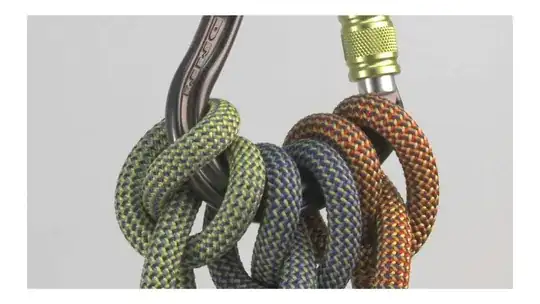
The number one reason for having different sizes of carabiners is for working with different sizes of ropes.
Size is one of many differing factors in the design of locking carabiners, there are also different shapes and different profiles, each carabiner design is intended for offering the best performance for different functions. Larger biners are typically for working with larger ropes and larger loads. Small biners are for working with smaller ropes, smaller loads, and saving weight.
Of the three biners you listed, only two are different sizes of the same style of biner:
- Black Diamond RockLock = Large Pear-shaped Carabiner
- Mini Pearabiner = Small Pear-shaped Carabiner
The third, the Black Diamond Positron, is an offset 'D' Carabiner with a 'T' profile.
Pear shaped biners were designed specifically to be used with a munter hitch, load release hitch, or more recently the radium release hitch, and work excellent for belays and rappels. Different sizes accommodate different rope sizes. I have both large and small biners, large for when I'm working with 11-15mm ropes, and small for 10mm and smaller. The pear shape and rounder profile makes them great for reducing wear on ropes (and the biner), but they're not as strong as the D-shaped positron carabiner because the load is distributed differently.
D-shaped carabiners are stronger because they carry the load along the spine of the biner, as opposed to pear or oval shaped carabiners which carry the weight dead smack in the middle, hence the bulkier design. D-shaped locking biners are ideal for making anchors, attaching anchor plates, and for use with certain rappel devices, but aren't well suited for accommodating a lot of knots, especially the munter hitch.