In the first measure from this section of Schubert's Serenade, does the accidental on the ornamental C at the beginning affect the "regular" C that follows? And is that answer applicable to all ornaments?
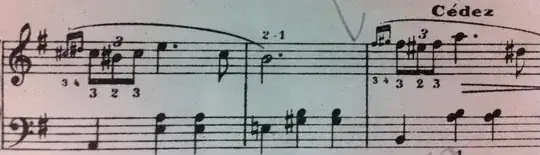
In the first measure from this section of Schubert's Serenade, does the accidental on the ornamental C at the beginning affect the "regular" C that follows? And is that answer applicable to all ornaments?
Yes it does affect it, both in this specific case and also for any ornament notated within the staff. The accidental always remains in effect for the remainder of that measure. However, if the two notes are of different octaves, the first accidental does not change the latter notes. If a G5 is sharped, for example, all remaining G5's of the measure will be sharped. G4's, G6's or G's of any other octave will be left natural. A natural sign has the same rules as any other accidental.
It's obvious that B♯ will be played on the same piano key as C♮.
So, there would be no point in writing B♯ in the same triplet as two C ♮ notes. Thus it will be conclusive that the accidental shown in the beginning of the bar will continue, like all accidentals should, through to the end of that bar - but only affecting that particular octave of the note C.


