The relationship of chords to scales is an important one to understand, as it serves as a foundation for songwriting, composition, and improvisation. In our chromatic system of harmony, there exists a scale (or many scales) for every chord, and there exists a chord (or several chords) for every scale. As an example, here are several chords that can be derived from the C Major Scale:

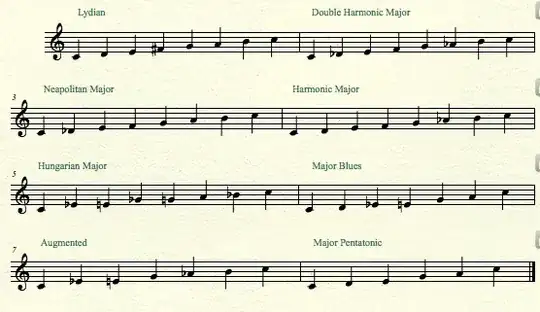
And, similarly, several scales which include a C Major triad:
With that, to answer your questions -
Isn’t it just as correct (and, if not, why not), to simply know the notes in the C Major Scale and take the 1st, 3rd, and 5th notes to arrive at the same chord?
It works for major scales, yes, because the major scale is such a scale that the interval relationships line up with the scale degrees. The 3rd degree of this scale happens to be a major 3rd, and the 5th degree happens to be a perfect 5th. I'll expound upon this in a moment.
Also, you should understand that this is not the exclusive relationship that the root, major 3rd, and perfect 5th combination have to a scale. If you wind up trying to improvise an idea or compose a melody over a C Major triad, for example, you can use any of the scales pictured to create ideas which include those tones (and introduce new ones).
And doesn’t the latter method work for all scale types: major, the minors, the pentatonics, blues, and diminished?
Consider this:

If I were to pull the 1st, 3rd, and 5th scale degrees from this scale, I would have myself a minor triad. But, as you can see, that doesn't really encapsulate the entire story that this scale tells - especially considering the tonality of this scale becomes a bit obscured by the presence of both a minor and major 3rd and the absence of a 7th.
To answer your question, there is a better rule to follow: Know the chord tones that comprise those scales. That way you won't be pulling scale degrees and making assumptions about chord quality - you'll have a deeper understanding of the entire tonal function of that particular scale.
Finally, and in the same vein, the chord formula for the Major Chord is 1- 3 - 5. Do the numbers represent intervals, e.g., 5 equals a Perfect Fifth; or can they just as well represent the note names at those positions in the scale?
This sort of relates to what I mentioned previously - in the case of C Major, we are referring to both the scale degree and the intervalic relationships because they happen to be one of the same. However, this is not always the case (as in the above example), so make sure you are aware of whether they are mentioning the scale degree (the order in which the tone appears in the scale) or the interval (the distance that tone is from the root of the scale.)
I hope this helps, and good luck!


