44

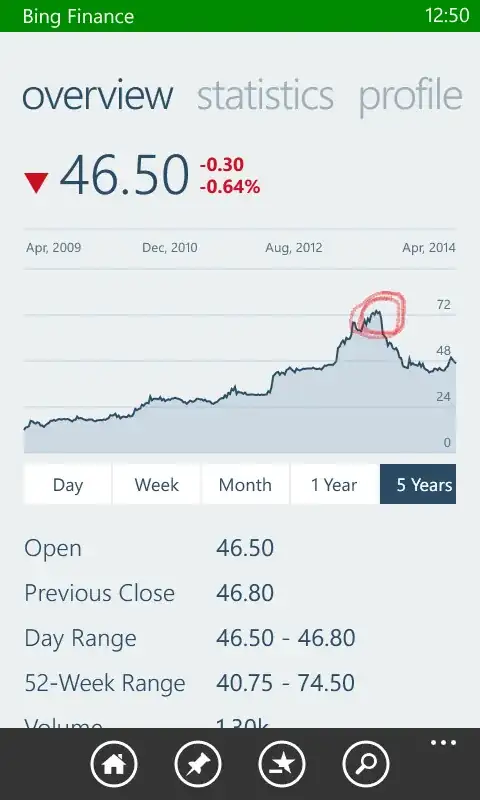
I carelessly invested on stock on a spike (I have been persuaded by a family member) and now my investment value is really low, as you can see below.

bing-finance

Is there anyway to salvage my investment for short-term? Would it be better if I sell my stocks now and buy from other company? Or should I just wait for its price to go up again?

JTP - Apologise to Monica
  • 172,273
  • 34
  • 296
  • 560
  • Why did you buy this stock? What do you need the money for? Do you need the money now, or can you wait for it to go back up? – BrenBarn Apr 08 '14 at 05:02
  • @BrenBarn I do not really need the money now, I am actually worried that it will never go that high again, or it will take a really long time (5 or 6 years?) to have the same amount (and I still need to wait more just to make it higher than what I invested). – John Isaiah Carmona Apr 08 '14 at 05:06
  • 44
    The lesson: investing in specific stocks is not something you should do as a casual investor, exept for entertainment value using money you don't care about. – Michael Borgwardt Apr 08 '14 at 08:03
  • 3
    If you care this much about a loss, you clearly did not diversify enough. – CodesInChaos Apr 08 '14 at 16:48
  • 8
    Depending on your tax regime and your other investments, you might be able to counter part of the loss by selling it at a time when you are also selling profitable investments, thereby offsetting capital gains tax liability. – Steve Jessop Apr 08 '14 at 23:51
  • 8
    "Salvage" this investment the way you would salvage a shipwreck. Pull out the gold, abandon the wreck, and put your gold somewhere else. – NL7 Apr 09 '14 at 15:29
  • @NL7 Yes. Don't hang around waiting to see if the boat floats itself again. – DJClayworth Apr 10 '14 at 18:55
  • 2
    You really should be thinking through contingencies like this before you buy the stock, not as they are happening. Before you buy any stocks, you need to figure out what your exit strategy is and how you will respond to any situation. Personally, I think watching your investments on a daily basis is a recipe for misery (due to loss aversion), so I follow a strategy that requires only infrequent checking of my investment. – Muhd Apr 10 '14 at 21:45
  • 1
    Share price is not the only factor you should be considering. What sort of dividends is this company paying? – TryHarder Apr 11 '14 at 01:07
  • 5
    The loss is in the past, what your best action is now does not depend on the past. You have a stock with some value now, it doesn't matter if it was worth twice as much or half this much last week. – RemcoGerlich Apr 11 '14 at 13:06
  • 8
    See http://en.wikipedia.org/wiki/Loss_aversion - you're suffering from this. You've already lost, so forget that. The only thing you can do now is evaluate the stock from the perspective that you're considering buying it today (at a slight discount, because you no longer have to pay the bid-ask spread/fees/etc, as those are already covered). If you would buy it under these circumstances, hold. If you wouldn't, sell. – Jules Apr 12 '14 at 15:29
  • 1
    What stock was this? It would be fun to see it's current value. – MmM Sep 21 '15 at 08:52

18 Answers18

56

Is there anyway to salvage my investment for short-term?

No. If by "salvage" you mean "get back as much as you paid", the only way to salvage it is to wait as long as you consider "short-term" and see if goes up again. If by "salvage" you mean "get some money back", the only thing you can do to guarantee that is sell it now. By doing so, you guarantee that you will get neither more nor less than it is worth right now. Either way, there is nothing you can do other than sell the stock or hold it. The stock price went down. You can't make it go back up.

Would it be better if I sell my stocks now and buy from other company? Or should I just wait for it's price to go up again?

This depends on why you bought the stock, and what you think it will do in the future. You said a family member persuaded you. Does that family member still think the stock will go up again? If so, do you still trust them?

You didn't even say what stock it is in your question, so there's no way anyone here can tell you whether it's a good idea to sell it or not. Even if you do say what stock it is, all anyone can do is guess. If you want, you could look the stock up on Motley Fool or other sites to see if analysts believe it will rise. There are lots of sources of information. But all you can do with that information is decide to sell the stock or not.

It may sound obvious, but you should sell if you think the stock will go lower, and hold it if you think it could still go back up. No one can tell you which of those things is going to happen.

BrenBarn
  • 23,964
  • 6
  • 60
  • 80
  • 28
    +1 for the last paragraph. People make so many mistakes because they forget that the past is irrelevant (other than as a lesson to learn from). How you got to "now" doesn't matter, all that matters is where you are now and how the future will unfold – Richard Tingle Apr 08 '14 at 10:22
  • 2
    +1. How entertaining can it be to read the obvious answer in clear words... Especially the first paragraph. – Jo So Apr 09 '14 at 14:43
  • 3
    Checking what analysts write about stock is a very dangerous advise. There are so many manipulation cases where the analysts have vested interest to say the opposite and effectively bet against gullible small investors following their advise. – Dmitri Zaitsev Jul 31 '15 at 11:37
  • I agree with Dmitri that following analyst (or website) advice may not be a particularly good idea, though I disagree with the allegation of widespread fraud in the industry. Stock analysis is very hard and figuring out who is a good stock analyst is even harder. It is easy to lose a lot more money learning how to find good analysis then you would ever make back from the advice. – rhaskett Feb 24 '16 at 22:53
  • @rhaskett The problem is binominal. There will always be analysts who guess correctly - the only thing that is certain with a card draw is that it will be some certain and specific card drawn. The ones who picked that card are winners, no matter the motivation or method they used to pick it. Thus there will seem to be "good" stock analysts and there will never be a method for distinguishing if their next analysis will be right... or wrong. – Stian Nov 24 '20 at 11:32
48

It would be useful to forget about the initial price that you invested - that loss happened, it's over and irreversible, it's a sunk cost; and anchoring on it would only cause you to make worse decisions. Getting "back" from a loss is done exactly the same as growing an investment that didn't have such a loss.

You have x units of stock that's currently priced $46.5 - that is your blank slate; you need to decide wether you should hold that stock (i.e., if $46.5 is undervalued and likely to increase) or it's likely to fall further and you should sell it. The decision you make should be exactly the same as if you'd bought it a bit earlier for $40.

Peteris
  • 3,353
  • 20
  • 19
  • 9
    Another useful way to think about it is: "if somebody sold your position for you and gave you the cash, would you re-buy that stock now or would you choose another investment?". – assylias Apr 13 '14 at 07:57
17

enter image description here

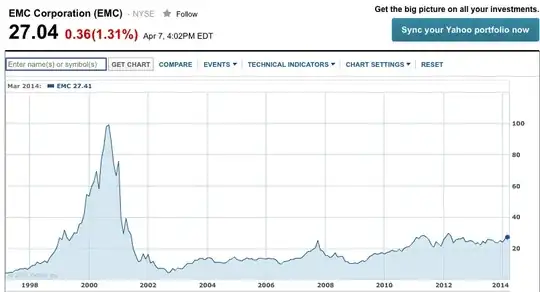
I had a coworker whose stock picking skills were clearly in the 1% level. I had a few hundred shares of EMC, bought at $10. When my coworker bought at $80, I quietly sold as it spiked to $100. It then crashed, as did many high tech stocks, and my friend sold his shares close to the $4 bottom advising that the company would go under. So I backed up the truck at $5, which for me, at the time, meant 1000 shares. This was one of nearly 50 trades I made over a good 10 year period. He was loud enough to hear throughout the office, and his trades, whether buy or sell, were 100% wrong.

Individual stocks are very tough, as other posters have offered. That, combined with taking advice from those who probably had no business giving it. For the record, I am semi-retired. Not from stock picks, but from budgeting 20% of income to savings, and being indexed (S&P) with 90% of the funds. If there are options on your stock, you might sell calls for a few years, but that's a long term prospect. I'd sell and take my losses. Lesson learned. I hope.

JTP - Apologise to Monica
  • 172,273
  • 34
  • 296
  • 560
  • 15
    +1 for being able to spot which guy to be contrarian to. I had a co-worker that was hell bent on buy high, sell low, make it up in volume. – boatcoder Apr 08 '14 at 15:48
12

You probably bought the stock near the peak because "it's been up a lot lately." That's the easiest way to lose money.

You need to go back and do some basic research. The stock appears to have been expensive around 75. Why is that? The stock seems to be in a "comfortable" level around 45. Why is THAT? Maybe it's too expensive around 45 (based on the P/E ratio, or other measures); maybe you should buy more at 45, where it is cheap, even though 75 is too expensive.

The key is to study the stock where it is today (45-47). Ask yourself what you would do at TODAY's price, and today's "fundamentals." That will also save you from paying 75 for a stock worth 45, and should save you from paying 45 for a stock if it is only worth 35.

Tom Au
  • 6,021
  • 20
  • 32
  • 3
    +1 good to see you here, Tom. "what you would do at TODAY's price, and today's 'fundamentals.'" Exactly. And my mod powers don't let me see who gave you a DV, but I liked your answer. – JTP - Apologise to Monica Apr 10 '14 at 00:23
11

You should be worried. You have made the mistake of entering an investment on the recommendation of family/friend. The last think you should do is make another mistake of just leaving it and hoping it will go up again.

Your stock has dropped 37.6% from its high of $74.50. That means it has to go up over 60% just to reach the high of $74.50. You are correct this may never happen or if it does it could take a long, long time to get up to its previous highs.

What is the company doing to turn its fortunes around?

Take a look at some other examples:

QAN.AX - Qantas Airways

QAN

This stock reached a high of around $6 in late 2007 after a nice uptrend over a year and a half, it then dropped drastically at the start of the GFC, and has since kept falling and is now priced at just $1.15. QAN reported its first ever loss earlier this year, but its problems were evident much earlier.

AAPL - Apple Inc.
AAPL

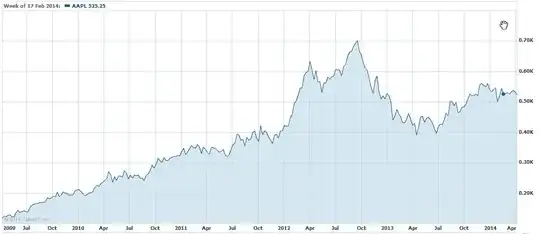
AAPL reach a high of just over $700 in September 2013, then dropped to around $400 and has recovered a bit to about $525 (still 25% below its highs) and looks to be at the start of another downtrend. How long will it take AAPL to get back to $700, more than 33% from its current price?

TEN.AX - Ten Network Holdings Limited
TEN

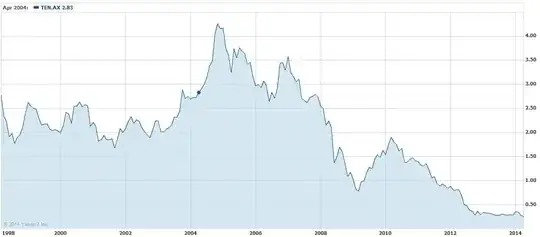
TEN reached a high of $4.26 in late 2004 after a nice uptrend during 2004. It then started a steep journey downwards and is still going down. It is now priced at just $0.25, a whopping 94% below its high. It will have to increase by 1600% just to reach its high of $4.26 (which I think will never happen).

Can a stock come back from a drastic downtrend? Yes it can. It doesn't always happen, but a company can turn around and can reach and even surpass it previous highs. The question is how and when will this happen? How long will you keep your capital tied up in a stock that is going nowhere and has every chance of going further down?

The most important thing with any investment is to protect your current capital. If you lose all your capital you cannot make any new investments until you build up more capital. That is why it is so important to have a risk management strategy and decide what is your get out point if things go against you before you get into any new investment. Have a stop loss.

I would get out of your investment before you lose more capital. If you had set a stop loss at 20% off the stock's last highs, you would have gotten out at about $59.60, 28% higher than the current share price of $46.50.

If you do further analysis on this company and find that it is improving its prospects and the stock price breaks up through its current ranging band, then you can always buy back in. However, do you still want to be in the stock if it breaks the range band on the downside? In this case who knows how low it can continue to go.

N.B. This is my opinion, as others would have theirs, and what I would do in your current situation with this stock.
Victor
  • 20,991
  • 6
  • 47
  • 85
  • 13
    I am no expert, but isn't it a mistake to even consider the $74.50 as anything other than part of the history of the stock. - The 74.50 is a sunk cost. His stock is now worth 46.50 - If it could be expected to rally to $60 in a reasonably short time it's worth it to stay for that, the fact that it might not rally to 74.50 seems irrelevant. - Note that I am not arguing that he should keep the stock, I am arguing that the stock is now worth $46.50 and he should base his strategy on that value. – Taemyr Apr 08 '14 at 08:48
  • 2
    @Taemyr - The OP bought the stock at the spike where he has it circled. The OP hasn't given the price he bought it at but the 52 week high was $74.50, so I would say he bought it near this price. So to estimate the current loss and how much is required to get back to break even, $74.50 is very relevant. Do you think if the OP bought near $74.50 he would consider at $60, after all if it has started recovering and reaches $60 why could it not keep going and reach $74.50 or higher? – Victor Apr 08 '14 at 09:01
  • 1
    @Taemyr - What makes you say "If it could be expected to rally to $60 in a reasonably short time..." ? It could also be expected to fall to $30. The point is the future price is not known, and a stock in a trend is more likely to continue that trend rather than change directions and trend in the opposite direction. So in fact it can be more expected that this stock continues its journey down rather than rally to $60. – Victor Apr 08 '14 at 09:04
  • 4
    The word "If" is not a coincidence. The $60 value is completely arbitrary, what I am saying is that OP should consider the expected value of the stock relative to where it is now. The fact that he bought it at 74.50 is irrelevant. (The fact that the stock was worth 74.50 a short time ago is not, since it indicates trends) – Taemyr Apr 08 '14 at 09:09
  • 1
    And yes, the 74.50 is relevant to what is necesarry in order to break even. - But that sets breaking even as a goal. Since the decision to buy at 74.50 was a mistake that might not be a good goal. – Taemyr Apr 08 '14 at 09:11
  • 23
    Or said in another way; the statements "I made a bad investment of $10,000 and now I only have $1000 left. How do I recover my money" and "I have $1,000, how do I turn this into $10,000" are equivalent. – Taemyr Apr 08 '14 at 09:14
  • 1
    @Taemyr - that is exactly my point. I am using the value of $74.50 to show how far the current price is from break even to show that it is a big task to get there and if it does eventually it may take a very long time, in the mean time the OP's money is left in a losing stock. – Victor Apr 08 '14 at 09:21
  • 1
    Except that if the stock value increases, but does not reach 74.50 it's not in a losing stock. The current value is what OP should consider, the loss is already a reality. – Taemyr Apr 08 '14 at 09:29
  • 1
    Note that this stock has currently got support at about $42, if it breaks through this point then the next support is at about $30, it is currently heading south and is more likely to keep going down than start to go up. This is the reason the OP should get out now, protect his remaining capital and look for new opportunities. It is always best to take a loss and have some capital left than keep hoping for a stock to turn around and lose all your capital. The question is, would you buy into this stock now? If the answer is no then you should not stay in it if you already own it. – Victor Apr 08 '14 at 10:09
  • 1
    Yes. The analysis should be done from the situation the stock is currently in. – Taemyr Apr 08 '14 at 10:20
  • 1
    Which is exactly what I have said in my answer. The whole point in mentioning the entry point is that many people in losing stocks want to try to get their money back. And all I was trying to explain was that it would be a big mistake to stay in a stock just to try and get your money back, because all you will end up doing more often than not is lose more money . – Victor Apr 08 '14 at 11:26
  • 1
    @Taemyr - the only thing that you're forgetting is the psychology of having lost $9k and being left with $1k compared with starting with $1k and no losses. – Victor Apr 15 '14 at 02:09
8

If you're asking this question, you probably aren't ready to be buying individual stock shares, and may not be ready to be investing in the market at all.

Short-term in the stock market is GAMBLING, pure and simple, and gambling against professionals at that. You can reduce your risk if you spend the amount of time and effort the pros do on it, but if you aren't ready to accept losses you shouldn't be playing and if you aren't willing to bet it all on a single throw of the dice you should diversify and accept lower potential gain in exchange for lower risk. (Standard advice: Index funds.)

The way an investor, as opposed to a gambler, deals with a stock price dropping -- or surging upward, or not doing anything! -- is to say "That's interesting. Given where it is NOW, do I expect it to go up or down from here, and do I think I have someplace to put the money that will do better?" If you believe the stock will gain value from here, holding it may make more sense than taking your losses.

Specific example: the mortgage-crisis market crash of a few years ago. People who sold because stock prices were dropping and they were scared -- or whose finances forced them to sell during the down period -- were hurt badly. Those of us who were invested for the long term and could afford to leave the money in the market -- or who were brave/contrarian enough to see it as an opportunity to buy at a better price -- came out relatively unscathed; all I have "lost" was two years of growth.

So: You made your bet. Now you have to decide: Do you really want to "buy high, sell low" and take the loss as a learning experience, or do you want to wait and see whether you can sell not-so-low. If you don't know enough about the company to make a fairly rational decision on that front, you probably shouldn't have bought its stock.

keshlam
  • 45,770
  • 6
  • 77
  • 152
  • 2
    It'd be polite if downvoters indicated what they were disagreeing with. – keshlam Apr 10 '14 at 04:16
  • My first post here. I was thinking the exact same thing as your answer (so I upvoted you). He (and I) have no business buying stocks in the first place, unless we'd like to gamble a little! This is evident by OPs lack of basic understanding about stocks. – Peter V. Mørch Apr 10 '14 at 12:18
6

If you know you have picked a bad stock, the sooner you sell the better. There is a tendency to hold a bad stock in the hope that it will pick up again. Most of us fall into this trap.

The best way one needs to look at things are;

  • If you had the same amount of money [suppose you sold it], would you buy this stock at this price? If the answer is yes, hold the stock. If the answer is NO, get rid of it.
  • The other reason to hold this stock is a reminder. Although not recommended, I had one very badly performing stock value close to NIL that I have held. It keeps reminding me that I need to be carefuly and sell bad stocks.
Dheer
  • 57,070
  • 18
  • 88
  • 169
5

Ignore sunk costs and look to future returns. Although it feels like a loss to exit an investment from a loss position, from a financial standpoint you should ignore the purchase price. If your money could be better invested somewhere else, then move it there.

You shouldn't look at it as though you'll be more financially secure because you waited longer for the stock to reach the purchase price. That's psychological, not financial.

Some portion of your invested wealth is stuck in this particular stock. If it would take three months for the stock to get back to purchase price but only two months for an alternate investment to reach that same level, then obviously faster growth is better. Your goal is greater wealth, not arbitrarily returning certain investments to their purchase price.

Investments are just instrumental. You want more wealth. If an investment is not performing, then ignore purchase price and sunken costs. Look at the reasonable expectations about an investment going forward.

NL7
  • 4,819
  • 16
  • 20
  • +1 for the psychological perspective. Also the other side of increasing wealth is also protecting your existing capital. Without any capital it would be hard to create future wealth. – Victor Apr 10 '14 at 21:14
3

The market doesn't know or care why you bought.

What you are asking is effectively 'this share went down in price after I bought. Is there anything I can do?'. Consider what you are asking for - if there were anything you could do, then no one would ever make a loss. How do you suppose that would work?

AakashM
  • 3,983
  • 1
  • 21
  • 24
2

Basically, your question boils down to this:

Where and how do I squeeze the stock market so that within time period X, it will make me Y dollars. (Where I'm emotionally attached to the Y figure because I recently lost it, and X is "as soon as possible".)

  1. There is no guaranteed way to make the market pay you back; all additional trades carry risk. The shorter the desired period X and the greater the amount Y (the more money you want to make, and the shorter the time) the greater is the risk of losing.
  2. The stock on which you lost money is not necessarily the best instrument for gaining back the money, even though it is attached to the mistake. You must think of the mistake only in terms of dollars, dissociated with whatever instrument as involved in the loss.

To make money on the stock market (in a quasi-guaranteed way), you have to adjust X and Y so that they are realistic. For instance, let X be twenty-five years, and Y be "7% annual return".

Small values of X are risky, unless X is on the order of milliseconds and you have a computer program working for you.

To mitigate some of the risk of short term trading, you have to treat trading seriously and study like mad: study the stock market in general, and not only that, but carefully research the companies whose stocks you are buying. Work actively to discover stocks which are under-valued relative to the performance of their corporation, and which might correct upward relative to the performance of similar stocks.

Always have an exit strategy for every position and stick to it. Use instruments like "trailing stops": automatic tracking which follows a price in one direction, and then produces an order to close the position when the price reverses by a certain amount.

Kaz
  • 316
  • 1
  • 7
  • 6
    Inside advice: "The stock market is a poker game run by the pros for the pros. Making side bets on the pros is relatively safe. Sitting down at the table and playing against them isn't; remember that if you don't see the sucker at the poker table, he's sitting in your chair." – keshlam Apr 09 '14 at 12:38
2

Some financial planners would not advise one way or the other on a specific stock without knowing your investment strategy... if you didn't have one, their goal would be to help you develop one and introduce you to a portfolio management framework like Asset Allocation.

Is a two of clubs a good card? Well, that all depends on what is in your hand (diversification) and what game you are playing(investing strategy).

One possibility to reduce your basis over time if you would like to hold the stock is to sell calls against it, known as a 'covered-call'. It can be an intermediate-term (30-60+ months depending on option pricing) trading strategy that may require you to upgrade your brokerage account to allow option trades. Personally I like this strategy because it makes me feel proactive about my portfolio rather than sitting on the side lines and watching stocks move.

emican
  • 701
  • 3
  • 6
2

I am very surprised no one mentioned the Stock Repair Option Strategy which has real benefits and is one of the mainstream Option Strategies. Quote:

Who Should Consider Using the Stock Repair Strategy?

  • An investor who owns shares purchased at a price well above the current market price, and whose goal is to simply break-even on this position
  • An investor who is willing to give up any profit potential above the new, reduced break-even point
  • An investor who is unwilling to commit additional funds to the current losing stock position

In a nutshell, you are buying call options with current strike price (at-the-money) and sell call options with higher strike price (out-of-the-money), all with the same expiry dates.

The only reason to also sell call options here is to recover your premium paid for the other call options. If you are comfortable paying that premium, you just buy the call options without selling the others.

In case your stock will rise moderately to a price between the two strike prices, your call option will rise together with your stock, so you will be faster to recover your money. This is the main reason it is called Repair.

If you have sold any call options, as the price rises, you have to be careful when it reaches the strike price of the options sold, as from there on you will begin incurring losses. It is however exactly the lucky outcome you were hoping for, your stock is higher, and you can buy back those loss making options - then or shortly before. If you didn't sell any options and payed your premium, you don't need to worry at all at this stage.

WARNING It should be noted that the Stock Repair Strategy offers no protection for your stock price further falling down. In that case all those options will expire worthless or you can sell back the ones your bought but likely not for much.

In order to have the downside protection for your stock, there are other strategies, the simplest one being buying a Put Option at-the-money or slightly lower. That will effectively cut your possible losses to the Option Premium (which is the main use of that option).

Again, if you hate to pay that premium, you can offset it by selling other options that you either hope won't be exercised or take steps to protect you against those.

  • 1
    I agree that is a possible course of action, but there are some caveats. Using this strategy does not change the fact that the stock must rise in value for you to break even; if the stock falls in value, you will lose money. It just changes the precise amount the stock would have to rise in order to break even. So you still face the same question: whether you think the stock will go up or down. Also, as noted on the CBOE page, you will likely pay transaction costs on the options trading, which, depending on the size of the investment, could reduce or eliminate the benefit. – BrenBarn Jul 29 '15 at 06:21
  • @BrenBarn Yes, that was exactly why I wrote that warning. And suggested how to protect against it. The transaction costs can be offset by selling the other options. It is not the point of the strategy to predict the stock's movement, which no one can, but to recover your losses in case it does go up, as I suppose you hope anyway. – Dmitri Zaitsev Jul 29 '15 at 06:35
  • 2
    Selling other options won't offset the transaction costs. It will just incur more transaction costs. – BrenBarn Jul 29 '15 at 06:37
  • I think you misunderstand what I mean by "transaction costs". "Transaction costs" refers to the costs your brokerage will charge you for conducting a transaction. Whether you buy or sell an option, you will have to pay your broker a fee to do so. The more buying and selling your strategy involves, the more such fees you will have to pay. – BrenBarn Jul 29 '15 at 16:07
  • @BrenBarn Can you give any arguments to support your statement that selling does not offset transaction costs? I still don't understand why you say that. – Dmitri Zaitsev Jul 31 '15 at 11:32
  • 2
    Suppose the stock has to go up $10 to break even. Now with your options strategy, it only has to go up $5. But to buy and sell options, your brokerage charges a fee. Suppose you pay $10 each on the buy/sell. You now have an additional $20 to recoup. This may or may not be a significant amount, depending on how much you invested, but it's $20 that you paid out of pocket. You might be able to arrange the options scheme to recoup the $20, but you will still have to recoup $20 more. Every time you buy or sell options, you pay money, increasing the amount you need to get back to break even. – BrenBarn Jul 31 '15 at 18:02
  • @BrenBarn So you pay $20 but get $200 from selling your options – Dmitri Zaitsev Aug 01 '15 at 03:33
  • Your $200 from options sales offsets the market price of the options you buy, not the transactions costs. If you buy $200 worth of options and sell another $200 worth of options, that doesn't mean you recovered all your costs; you have paid transactions costs and you have a corresponding net loss. If you have $20 in your account right now, and you sell $200 worth of options, then buy another $200, you will not still have $20 in your account; you'll have to spend it to pay the broker for conducting the actual trades, and you'll have $0 left (assuming as above that the cost per trade is $10). – BrenBarn Aug 01 '15 at 04:09
  • @BrenBarn Are we evaluating the whole strategy or the single short leg? In case of the former - yes - there is a cost - the difference between option prices plus the commissions - obviously you have to pay for your insurance. On the other hand, you can also buy $200 options and sell $300 - then you offset all costs! There is some more risk it the stock shoots up but that would be exactly the dream-come-true outcome for your stock! – Dmitri Zaitsev Aug 01 '15 at 04:40
  • @BrenBarn - You're obsessing over the commissions involved and you have lost big picture perspective. Per your example, if the stock has to go up $10 to break even and with the repair it only has to go up $5, and the repair costs $20 in commission, that's a potential gain of $1,000 per 100 shares for a $20 commission. In addition, depending on the size of the stock loss and the strike prices involved, repairs can often be structured for a credit meaning that the net effect of doing the repair is a profit and there's no additional $20 to recoup. – Bob Baerker Oct 30 '20 at 22:47
  • Almost everything that @Dmitri Zaitsev wrote about the Repair Strategy was correct. The one inaccuracy was his statement that above the the strike price of the options sold, as from there on you will begin incurring losses. That is not the case. The strike price of the short calls is the limiting factor and above that price you will not earn any additional money. Above that strike here are no losses from the strategy only unrecovered losses on the stock if the repair's potential gain was less than the stock loss. – Bob Baerker Oct 30 '20 at 22:52
0

You can do several things:

  • After the fact: If you believe the stock will go up, you can buy more stock now, it's what's called "averaging". So, you bought 100 at $10, now it's at $7. To gain money from your original investment it needs to raise to over $10. But if you really think it'll go up, you can buy and average. So you buy, say, 100 more stock at $7, now you have 200 shares at $8.50 average so you gain money on your investment when the stock goes over $8.50 instead of $10. Of course, you risk losing even more money if the stock keeps going down.

  • Before the fact: When you buy stock, set 'triggers'. In most trading houses you can set automatic triggers to fire on conditions you set. When you buy 100 shares at $10, you can set a trigger to automatically sell the 100 shares if it drops below $9, so you limit your losses to 10% (for example).

Rodolfo
  • 159
  • 3
0

Yes, you could sell what you have and bet against others that the stock price will continue to fall within a period of time "Shorting". If you're right, your value goes UP even though the stock price goes down.

This is a pretty darn risky bet to make. If you're wrong, there's no limit to how much money you can owe. At least with stocks they can only fall to zero! When you short, and the price goes up and up and up (before the deadline) you owe it!

And just as with stocks, someone else has to agree to take the bet. If a stock is pretty obviously tanking, its unlikely that someone would oppose your bet.

(It's probably pretty clear that I barely know what I'm talking about, but I was surprised not to see this listed among the answers.)

Jason Kleban
  • 175
  • 3
  • 2
    It probably wasn't mentioned because of the lack of understanding the OP already has in buying stocks, let alone shorting them. This strategy would be too advanced for the current level of the OP. – Victor Apr 10 '14 at 21:18
0

Just get out. If the investment isn't going up, you are losing money to inflation, as well as the opportunity cost of not having the money somewhere more profitable.

These things happen to the best of us. Just learn from it and move on. Some valuable lessons:

  1. Don't take stock advice from family members.
  2. Stop losses are your friend (when used properly).
  3. I'm not against investing in individual stocks like a lot of other people here are. However, they do require more research, which-- to be frank-- it appears you didn't really do.
  4. Even if you like the company fundamentals, the technicals can still be unfavorable. Make sure you understand both. I like to use fundamentals to find a great company, then use technical analysis to find a good time to buy it. Patience is your friend here. I just keep a spreadsheet with a growing list of companies I like, but haven't bought yet. About once per week I check in to see if any of them are at a good technical level to buy.

Just keep trying. Mistakes like this are all part of the learning process.

Best of luck.

0

Stocks go down and go back up, that's their nature... Why would you sell on a low point? Stocks are a long term investment. If the company is still healthy, it's very likely you'll be able to sell them with a profit if you wait long enough.

MmM
  • 101
  • 2
-2

The worth of a share of stocks may be defined as the present cash value of all future dividends and liquidations associated therewith. Without a crystal ball, such worth may generally only be determined retrospectively, but even though it's generally not possible to know the precise worth of a stock in time for such information to be useful, it has a level of worth which is absolute and not--unlikely market price--is generally unaffected by people buying and selling the stock (except insofar as activities in company stock affect a company's ability to do business).

If a particular share of stock is worth $10 by the above measure, but Joe sells it to Larry for $8, that means Joe gives Larry $2. If Larry sells it to Fred $12, Fred gives Larry $2. The only way Fred can come out ahead is if he finds someone else to give him $2 or more. If Fred can sell it to Adam for $13, then Adam will give Fred $3, leaving Fred $1 better off than he would be if he hadn't bought the stock, but Adam will be $3 worse off.

The key point is that if you sell something for less than it's worth, or buy something for more that it's worth, you give money away. You might be able to convince other people to give you money in the same way you gave someone else money, but fundamentally the money has been given away, and it's not coming back.

supercat
  • 878
  • 6
  • 5
  • Quite a lot of discussion leading to the punchline "the money has been given away, and it's not coming back," which is just about right. – JTP - Apologise to Monica Apr 10 '14 at 10:02
  • @JoeTaxpayer: Yes, but I seldom see much mention of the idea that (from the above example) Fred lost $2 the moment he bought the stock. He gained $3 when he sold it (at the expense of Adam) but the purchase was still a $2 loss. – supercat Apr 10 '14 at 12:57
  • 4
    'Fred lost $2 the moment he bought" is a tough one for me to accept. It implies that one has a pricing mechanism that simu doesn't exist. It also opens the door to the idea that unless a stock starts going up the moment you buy, you over paid by some number you should have known in the first place. – JTP - Apologise to Monica Apr 10 '14 at 16:05
  • @JoeTaxpayer: Any real worth a stock has comes from the future income stream represented thereby. Thus, the worth of a stock at some point in time is the value of that future income stream. To someone for whom the future income stream of a stock would be worth $1/share, the value of the stock cannot exceed that [unless the value of the future income stream changes]. If one buys the stock for $0.50, one makes a 100% profit; if one buys it for $10, one takes a 90% loss. If one buys some other stock for $2 and sells for $3, one would know that... – supercat Apr 10 '14 at 16:19
  • ...any profit on one transaction exceeded any loss on the other by $1, or else both transactions profited by a total of $1, but one wouldn't know which of the transactions was profitable until one sees what dividends the stock ends up paying throughout its existence. The reason I like to analyze things in this fashion is that it makes it much easier to distinguish parts of the market which create wealth from those which don't. Markets can create real wealth, but markets with no discernible mechanism for creating real wealth generally only create imaginary wealth. – supercat Apr 10 '14 at 16:24
  • 1
    @supercat - so what is "the worth of a stock at some point in time is the value of that future income stream". Are you saying you can work out the future income stream of a stock? Unfortunately the value one puts on a stock is to some extent based on that person's assumptions and their biases they put on those assumptions. That is why different analysts can have different values for the same stock. – Victor Apr 10 '14 at 21:29
  • @Victor: If one believes that the present cash value of a stock's future income stream will turn out to have been $2/share, and buys it at a price of $1.75, one would gain $0.25/share by that transaction if the estimate turns out to be correct. If two weeks later one discovers that one's estimate was wrong and the income stream will really only be worth $1.50/share, the discovery that the income stream wasn't really worth $2.00 won't diminish its value; the real value was $1.50 whether or not one knew about it. – supercat Apr 10 '14 at 21:47
  • @Victor: Re-iterating my earlier point, markets can create some real wealth, but they often generate massively larger amounts of imaginary wealth. If the future payouts a stock ends up making are worth $1.50/share present cash value, an analyst who estimates the value to be $150/share can easily conjure up $148.50/share of imaginary wealth, but won't generate real wealth. To generate real wealth, a transaction would have to occur between people with different risk tolerance and investment horizons, such that the even if the buyer and seller knew exactly what payments would be made... – supercat Apr 10 '14 at 21:56
  • @supercat - and then 1 week later one discovers the true value is $3, then one week later one discovers the true value is $1, and so on and so on. All one can do is make assumptions based on their biases and estimate what they think a stock is worth. The true value is never known as the daily decisions a company makes is continually changing the true value. And in most cases analysts aim to estimate a company's future value based on their assumptions. This is why the markets are irrational and all one can do is make estimates on the value of a stock based on their assuptions. – Victor Apr 10 '14 at 21:57
  • @Victor: ...the buyer would assign a higher present cash value to that known payment sequence than would the seller. Transactions which generate imaginary wealth often make it harder for markets to generate real wealth. – supercat Apr 10 '14 at 21:59
  • @Victor: Much irrational behavior in markets stems from people's mistaking imaginary wealth for real wealth. If the price of a stock is rising and there's nothing to suggest that previous estimates of its future income stream were erroneously low, the rising price should be a red flag to buyers: "don't buy so much". Instead, bulls don't slow down in response to the red flag, but instead become more aggressive. They perceive that the act of throwing money at the stock will increase its value, but in reality all it does is trade real wealth for newly-minted imaginary wealth. – supercat Apr 10 '14 at 22:06
  • @supercat - the markets boom and bust due to people's emotions, mainly greed and fear. Simple as that. I want to make money in stock A because my friend did (greed). OMG my stock has fallen since I bought it, I am going to lose all my money (fear). There is no imaginary wealth - if you buy at $10 and sell at $20 a week later you have doubled your money - this is not imaginary. What happens in a booming market actually happens, it is not imaginary, it is just too much greed building up until it cannot be sustained anymore. Some people will make real money and others will lose it. – Victor Apr 10 '14 at 22:22
-2

If the company is stable. I like to recoup losses by buying in the valley and selling it all at the plateau and then learning as all beginners do, don't buy stocks because there's a feeding frenzy...or because Joe told me too. Pick your strategy in stocks and learn to stick with that. If you have no strategy, buy land.