92

As depicted in 1870 by James William Elliott's National Nursery Rhymes and Nursery Songs, the nursery rhyme "Humpty Dumpty" goes as follows:

Humpty Dumpty sat on a wall,
Humpty Dumpty had a great fall.
All the king's horses and all the king's men
Couldn't put Humpty together again

Now, in most if not all illustrations Humpty is portrayed as an egg...

By William Wallace Denslow - Library of Congress [1], Public Domain, https://commons.wikimedia.org/w/index.php?curid=11121180

Why is this? Because nothing in the four lines of the rhyme depict him as such...

How do we know Humpty Dumpty was an egg?

verbose
  • 26,907
  • 2
  • 63
  • 159
Skooba
  • 4,008
  • 3
  • 25
  • 49
  • 4
    According to the The Oxford Dictionary of Nursery Rhymes, it was originally a riddle, and thus the egg part was the answer. I'll try to dig out a quote from my copy later. –  Feb 09 '17 at 21:22
  • 4
    I suspect he was portrayed as an egg in some well read work (Possibly Alice Through the Looking Glass) and that was then copied by other authors leading to it becoming standard. – Bellerophon Feb 09 '17 at 21:33
  • 10
    The other questions is: How do we know Humpty wasn't the king? – Möoz Feb 10 '17 at 00:33
  • 2
    There is a second verse that implies such, though I don't know where it came from or whether it caused or resulted from the popular image of Humpty Dumpty as an egg. – Devsman Feb 10 '17 at 14:03
  • @Devsman If you can get a original and reputable source for that it seems that would be a great answer. – Skooba Feb 10 '17 at 16:41

2 Answers2

63

Humpty Dumpty almost certainly wasn't an egg at conception

Humpty Dumpty is over 200 years old, originating in the 1700s.

Our first clue lies in the original phrasing of the poem; the eponymous Humpty Dumpty is not "put back together again" but rather

Four-score Men and Four-score more, Could not make Humpty Dumpty where he was before.

This opens up both literal falling and political falling, while also lacking references to the king, as later versions would.

The first example of Humpty Dumpty being visually presented as an egg comes from Lewis Carroll's Through the Looking-Glass, wherein he argues semantics with Alice. The book, written in 1871, then popularized this personification of Humpty Dumpty -- and led to the "couldn't put Humpty together again" version; Alice specifically calls out the older wording as being "too long for the poetry" within the book.

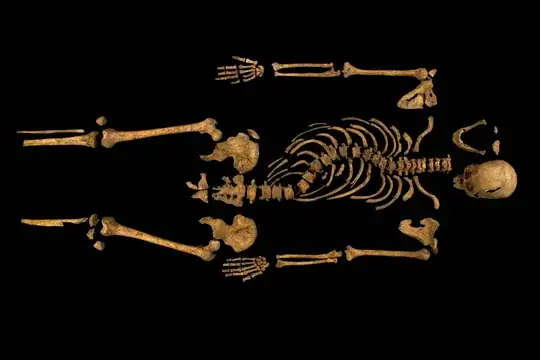
In the 1700s, a "humpty dumpty" referred to one of two things: either a brewed brandy and ale drink or a short, clumsy person (E. Partridge and P. Beale, Dictionary of Slang and Unconventional English (Routledge, 8th edn., 2002)). Were these the only things the phrase had been attributed to, one could easily conclude it was a morality tale against drunkenness (it was published in Mother Goose's Melody, after all) or a jab at a political figure (with most signs pointing to King Richard III, who had a great fall at Bosworth Field and was a known hunchback).
img1

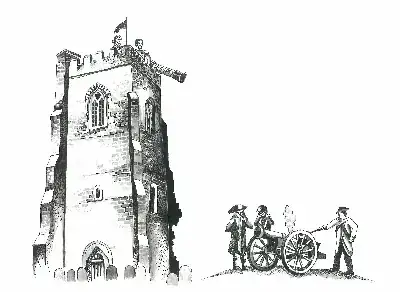
To further complicate things, there's also rumors of a siege cannon nicknamed Humpty Dumpty used to attack the English town of Colchester (specifically at St-Mary-At-The-Wall) during the English Civil War. All the Royalists couldn't put the cannon back on the wall after the section it was placed on was hit by cannon fire.
img2

In summation, there's no signs that Humpty Dumpty was ever intended to be an egg at all, and the Lewis Carroll interpretation of the rhyme was so popular it stuck.

Rand al'Thor
  • 72,435
  • 26
  • 236
  • 488
Plumbing for Ankit
  • 1,377
  • 11
  • 16
  • 19
    So how did Humpty Dumpty become an egg? – David says Reinstate Monica Feb 10 '17 at 00:01
  • 6
    As per the link (and my knowledge): "The first time the character of Humpty Dumpty was represented explicitly as an egg was in Lewis Carroll’s Through the Looking Glass in 1872." – Academiphile Feb 10 '17 at 06:35
  • 3
    @DavidGrinberg Concrete answers to that are a mystery, and Lewis Carroll is, unfortunately, too dead to tweet a Word of God answer. – Plumbing for Ankit Feb 10 '17 at 14:48
  • @Skooba the link at the top of the answer. The text is "originating in the 1700s". My quote is found all the way at the end, under Bonus Facts. – Academiphile Feb 10 '17 at 16:45
  • 15
    “The first example of Humpty Dumpty being an egg comes from Lewis Carroll's” No, that's not true. It's surely because of him that everybody things of Humpty-Dumpty as an egg now, but the idea did not originate with him. Variations on the “sat on a wall” poem as a riddle whose solution was “an egg” existed before 1870, e.g. 1854. And it's pretty clear when reading Through the Looking-Glass that Carroll expects the reader to associate Humpty-Dumpty with an egg. – Gilles 'SO- stop being evil' Feb 11 '17 at 00:05
  • @Gilles Edited for clarity. – Plumbing for Ankit Feb 13 '17 at 16:15
  • 5
    You've misread your own linked article. "As the popular nursery rhyme is neither a bottle of alcohol nor a person, it is most likely that the nursery rhyme was intended as a riddle...The historical events that have been linked to “Humpty Dumpty” provide excellent stories, but are based on pure speculation. Given the actual evidence at hand, it is far more likely that Humpty Dumpty was not intended to be a story, but rather just a riddle posed to children for their amusement. The answer to the riddle, as stated, is “an egg”, which is why Humpty Dumpty today is nearly always depicted as such." – MJ713 Feb 17 '23 at 20:36
  • So him being an egg is non-cannon? – Comic Sans Seraphim Jun 19 '23 at 10:38
7

I am going to contradict the other answer. Humpty Dumpty may not have been an egg at conception, but he was certainly one by 1835, thirty years before Lewis Carroll wrote Alice in Wonderland.

There was a long satirical poem published in 1835, Child Capone's Nonage, by A Monk, which you can find on Google books, which has a footnote which starts:

“Humpty-dumpty sat on a wall,
Humpty-dumpty had a great fall:
Not all the King's horses and all the King's men
Could set Humpty-dumpty right agen.”

This nursery rhyme upon an egg, which every body remembers, represents, under a beautiful allegory, the easy lapse of a child from his early position of virtue, and the vast difficulty of reclaiming him at school and college, even though these may have been founded and endowed by kings.

It's not clear to me whether the footnote is serious or not — I expect not.

Let me remark that the riddle is not quite as hard to guess as it might seem to modern readers. Before the riddle branded Humpty Dumpty as an egg forever, Humpty Dumpty meant a short, fat person. For example, Google books finds the 1828 book The Dialect of Craven, in the West-Riding of the County of York by Mark-William Carr, with the definition:

HUMPTY-DUMPTY , Short and broad. "He's a lile humpty-dumpty fellow"

and an egg is indeed short and broad. So, even though the word "humpty-dumpty" originally meant a short, plump person rather than an egg, it may be that the poem originated as a riddle whose answer was an egg.

Peter Shor
  • 12,408
  • 2
  • 32
  • 78
  • Great find! I assume there is no more information on why/how he was "an egg, which every body remembers"? – Skooba Jun 19 '23 at 11:59
  • @Skooba-Stands-Against-AI: I included all of the relevant part of the footnote, so no more information. – Peter Shor Jun 19 '23 at 12:26
  • 1
    @Skooba-Stands-Against-AI: Your question (and the other answer) made me realize that, since we only know modern English, we are missing one important clue in the rhyme for Humpty being an egg. I've added that to my answer. – Peter Shor Jun 19 '23 at 13:12