26

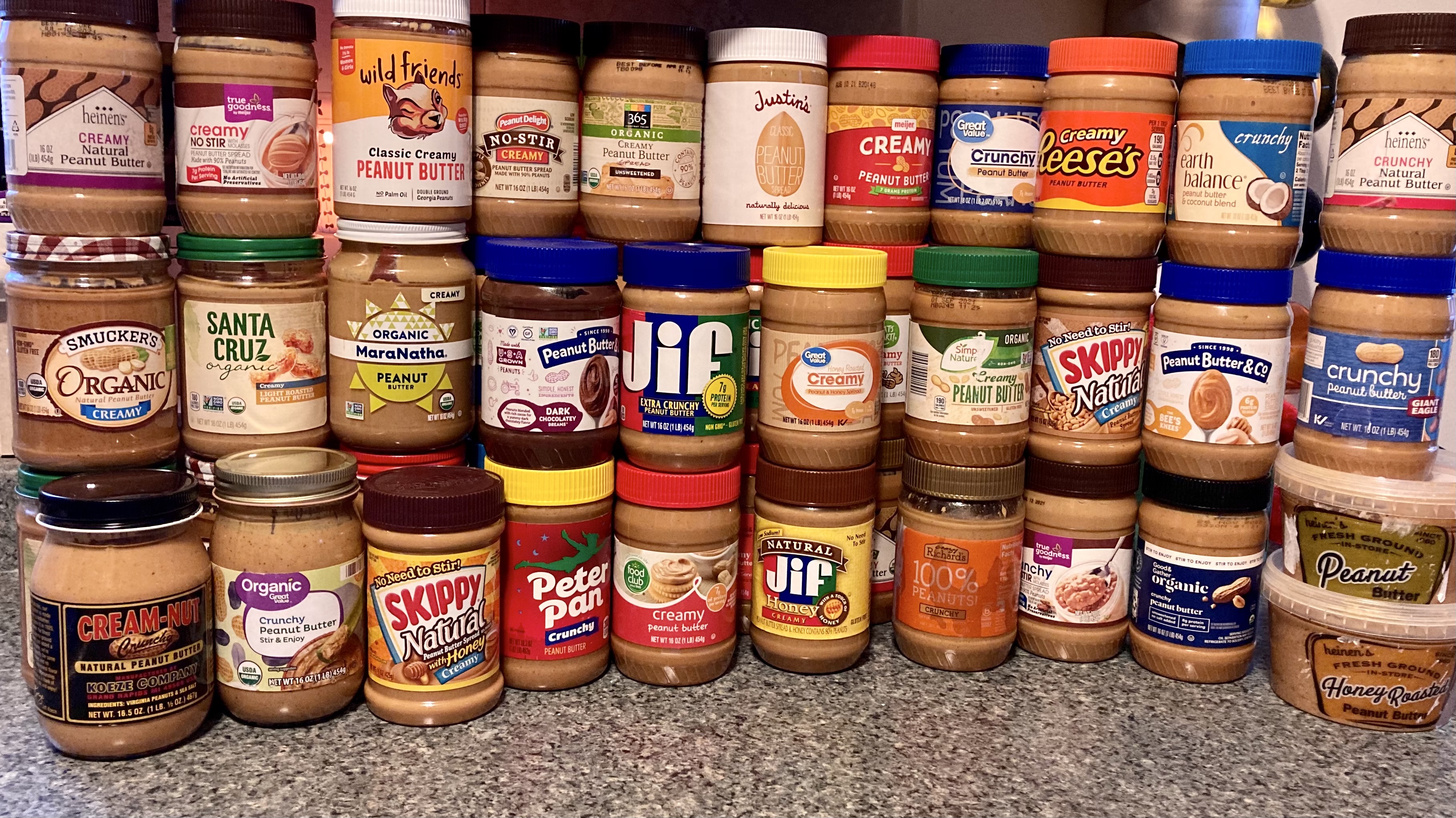
Some products have disclaimers that serve no apparent purpose or which are obviously redundant. For example, a peanut butter jar that lists the ingredients as peanuts, and then provides a warning right under it which says may contain peanuts.*

If a company sells a product without such a warning, what arguments could be used in court against them by a person who claimed that they read the ingredients, understood that it listed peanuts, but consumed it anyway because they weren't warned that it may contain peanuts and was injured?

* I'm aware that it usually says may contain nuts because peanuts are technically legumes, but this is just an example.

forest
  • 998
  • 11
  • 24
  • Comments are not for extended discussion; this conversation has been moved to chat. – Dale M Jan 23 '23 at 21:50
  • 6
    Don't underestimate the indifference of those people whose job is to enforce regulations. Don't underestimate the mendacity of organizations that are regulated. A reg that requires the exact text, "may contain peanuts," if there is any possibility that the product might contain peanuts (or if it definitely does contain peanuts) is hard to misinterpret, either by accident or by intent. It would serve no purpose, and maybe it could open a loophole (who knows?) for the labelling regs to allow exceptions for "obvious," "common-sense" cases like a jar of peanut butter. – Solomon Slow Jan 24 '23 at 00:14
  • 4
    I checked two brands of peanut butter in the United States (Skippys and and Adams) and neither had a warning. They don't seem to be worried. Do you know of one that does? This may just be an internet rumor. It could also be that this is more a branding thing where some distributors promote full disclosure. My Skippys says "GLUTEN FREE" for instance. – tdelaney Jan 24 '23 at 16:02
  • I thought the warning was about the risk of containing whole peanuts, not in butter form. – Bernat Jan 24 '23 at 16:48
  • A peanut-butter jar listing ingredients as peanuts, then providing the warning: 'may contain peanuts' seems like the producer's attempt at clarity. How is that bad?

    If a company sold a product without such a warning, the Court should fall back to what warning was given and since in your example the producer clearly stated 'ingredients (include) peanuts' doubt in Court could only come from an uneducated judge, whose decision should be struck down by any superior Court.

    – Robbie Goodwin Jan 24 '23 at 22:01
  • 1
    OP do you have an actual jar of PB from the U.S that says. “May contain peanuts”? There is a lot of shade in lawyers and bureaucrats based on the assumption that this actually happened. – Damila Jan 24 '23 at 22:41
  • I don't know the actual answer to this question, so just tossing this out there as a comment, but it's sometimes simpler and less-ambiguous for a law to say, "All food products that may contain peanuts must be labeled as saying "may contain peanuts", as opposed to a law that makes an unnecessary written exception for obvious cases like cans of peanuts or peanut butter. In some cases, one-size-fits-all, even if it causes silly redundancies ("peanut butter may contain peanuts"), is superior to one-size-but-exceptions-exist-that-may-cause-unexpected-legal-ambiguity-or-loopholes. – Jamin Grey Jan 24 '23 at 23:34
  • @Damila The may is a bit of a red herring. Substitute it for contains peanuts if you would like. The question is about redundantly listing a single ingredient, then re-listing that same ingredient, regardless of what wording they use. – forest Jan 24 '23 at 23:36
  • Actually then, “Contains: peanuts” is very different and makes sense. – Damila Jan 25 '23 at 00:40
  • @MichaelHall There’s an ingredients list and there’s an allergen list. It makes sense to have those be in a uniform format on all products. It turns out that for some products it’s a little bit silly. The peanut butter I eat has precisely one ingredient. See the answer by David42 – Damila Jan 25 '23 at 05:51
  • You could compare flour which says "contains gluten" - that may seem obvious to you. But gummi bears don't contain real bear. Does coconut milk contain milk? Does peppermint tea contain tea? There are a lot of edge cases, and you could pass a law saying "labelling is not required if it's obvious" but how do you define obvious? – Stuart F Jan 25 '23 at 13:16
  • Would a warning that peanut butter does not contain diary pass your redundancy test? – Neil Meyer Jan 25 '23 at 22:17
  • 1
    @StuartF But what if the flour said "Ingredients: Flour. Warning: Contains flour."? A jar of peanut butter may say it contains peanuts three times. First in the name (OK, as you say, that doesn't mean much), then in the ingredient listing, and again, right below the ingredient listing, in a warning. – forest Jan 25 '23 at 22:56

7 Answers7

24

When the dangerous nature of a product is or should be known to a manufacturer and the product is being used in the usual and expected manner, the manufacturer has a duty to warn of the danger. Breach of that duty can lead to liability. The case Billiar v. Minnesota Mining and Mfg contains some useful precedent for understanding the issue.

It is well settled that New York law holds the supplier of a product which it knows or should know is dangerous if used in the usual and expected manner to a duty adequately to warn users of the product of the danger unless the danger is obvious or well known.

...

When the user is fully aware of the nature of the product and its dangers, however, the supplier cannot be held liable for failure to warn him.... The rationale for this "knowledgeable user" exception is that knowledge of the danger is equivalent to prior notice; no one needs notice of that which he already knows.

In this particular case, plaintiff was injured mixing an electrical resin at work, but was (deemed to be) an unskilled worker. The court recites various cases where individuals with some relevant knowledge were nevertheless harmed (and won their cases), because the warnings were insufficient.

Food allergies have a special treatment, thanks to the Food Allergen Labeling and Consumer Protection Act of 2004. Peanuts (and other things) are "mandatory warning" substances, where the label must say "Contains peanuts". Omitting the warning makes the food misbranded. Also note that warnings carry a "prominence" requirement, which does not exist for ordinary ingredients which are typically in illegible microprint. Paragraph (w) spells out the labeling requirement, which is well worth reading for its complexity. The law does include the escape clause that if the name of the product contains the name of the allergen, you have been warned.

If plaintiff is suing the manufacturer pro se and stipulates, in lieu of competent legal advice, that they knew that peanut butter contained peanuts and that they were allergic to peanuts, but they ate it anyhow, the manufacturer will not be liable.

user6726
  • 214,947
  • 11
  • 343
  • 576
  • The question is "what arguments could be used in court against [the manufacturer] by a person who claimed that they read the ingredients?" – Greendrake Jan 22 '23 at 02:25
  • 3
    @Greendrake For the hypothetical person, it would be better to claim that they couldn't read the ingredients because the text was too small and the list was not easy to read. But yeah, as posed the question does not have good answers. – jpa Jan 22 '23 at 14:08
  • 1
    @jpa What's your point — that it is okay to answer a different question just so that the answer is good? – Greendrake Jan 22 '23 at 14:48
  • 1
    @Greendrake I added my own answer, which hopefully makes my point more clear. – jpa Jan 22 '23 at 14:51
  • 1
    "ordinary ingredients which are typically in illegible microprint" In the US? Maybe on like tiny little fun-size candy pieces? Otherwise it's a pretty normal size – Azor Ahai -him- Jan 23 '23 at 04:47
  • 5
    Root beer doesn’t contain beer. So one could argue that a customer might not realise that peanut butter contains peanuts and it must be listed as an ingredient. How sure are you it contains butter and not some replacement? Is there vegan peanut butter? – gnasher729 Jan 23 '23 at 06:51
  • 1
    @gnasher729 But if it lists "Ingredients: Peanuts" and then on the next line "Warning: contains peanuts" or something similar, it's far less clear how a person could possibly be confused. – forest Jan 23 '23 at 10:52
  • 3
    @gnasher729 Most peanut butter is vegan, and does not contain butter (rather, it "is" a butter). I doubt such an argument would be very convincing, since you could always respond that even if a product name including ingredient X does not imply that the product contains X, it is still a perfectly good warning that it might and you should check if you're allergic. – preferred_anon Jan 23 '23 at 16:55
  • 1
    @gnasher729 A customer might also hypothetically not realise that “Tomatoes” contain tomatoes – that’s why the escape clause says that if the name of the product contains the allergen, you have been warned. If you’re not intelligent enough to understand that as a warning, that’s on you as the consumer, not on the manufacturer. Root beer is not an adequate parallel, since that’s a negative: you wouldn’t expect the consumer to realise that root beer is not a type of beer, but unless the consumer is allergic to everything but beer, there is no possible harm in that lack of understanding. – Janus Bahs Jacquet Jan 23 '23 at 21:06
  • @preferred_anon Why is reading the list of allergens that's legally required to include peanuts if peanuts are in the product not a reasonable way of checking? – prosfilaes Jan 24 '23 at 02:38
  • @prosfilaes I don't understand your comment. Checking the ingredients is perfectly reasonable. I only claim that checking the name is also reasonable. – preferred_anon Jan 24 '23 at 08:48
  • 1
    @gnasher729 wait, so what about baby powder? – candied_orange Jan 24 '23 at 14:27
  • 1
    @candied_orange And if corn oil is made from corn, what's baby oil made from? – manassehkatz-Moving 2 Codidact Jan 25 '23 at 03:20
  • 3
    If you eat baby powder or drink baby oil, does that make you a humanitarian? – Obie 2.0 Jan 25 '23 at 07:11
  • @preferred_anon Not the ingredients; that can easily conceal an allergen. Check the list of allergens, that things that says "Warning: Contains peanuts." – prosfilaes Jan 25 '23 at 21:30
  • @prosfilaes ... and checking the list of allergens is also reasonable. I still don't see your point. – preferred_anon Jan 26 '23 at 10:33
15

I think you misunderstand the liability that the manufacturers are seeking to avoid by providing these specific labels when they appear clearly redundant: the liability would likely come from regulatory enforcement or prosecution, not a private cause of action.

Private cause of action

Maybe it is obvious, but in the case where a plaintiff brings an action in negligence, product liability, or failure to warn, the plaintiff would have to make out the elements of the specific cause of action they are alleging. I think you are correct that it would be quite a hurdle for a plaintiff to show that they were not informed that peanut butter contained peanuts.

Regulatory requirement

But a standalone allergen notice is required by regulation. Failure to provide the notice is an offence. This explains the presence of a label, even in the case of clear redundancy.

The Food and Drug Regulations say:

A food allergen source, gluten source and added sulphites statement on the label of a prepackaged product shall ... be introduced by a title that shall (i) consist of the term ... "Contains" or "Contains:"; (ii) be shown in bold type; and (iii) be shown without any intervening printed, written or graphic material appearing between the title and the rest of the statement.

The understanding of the consumer is irrelevant to the labelling requirement. Failure to provide the label is the violation. This avoids any uncertainty about what a manufacturer's obligation is. It does not matter that the presence of an allergen might already be clear from the nature of the product or other features of the labelling; the prescribed allergen label is always required.

A person or organization who contravenes the Food and Drug Regulations is guilty of an offence (see Food and Drugs Act: ss. 31, 31.1). These offences would be enforced by the state; they do not create a private cause of action.

Jen
  • 54,294
  • 5
  • 110
  • 242
  • The question is clearly about a private person facing a peanut butter manufacturer in court. Why all the bla-bla about them violating regulations if that won't help the person to win as they knew the ingredients? – Greendrake Jan 22 '23 at 15:44
  • 14
    @Greendrake The question also states "[s]ome products have disclaimers that serve no apparent purpose or which are obviously redundant.", indicating that OP may have had the impression that the redundancy was to solely avoid the legal risk they later proposed. Clarifying the context is helpful. – xngtng Jan 22 '23 at 17:19
  • 1
    It could be that a company could get fined for not listing peanuts in its "warnings" list, independent of someone suffering any consequences. And at the same time someone with peanut allergies might lose their case because it is common knowledge, and because peanuts were listed in "ingredients" but not "warnings". – gnasher729 Jan 23 '23 at 12:29
11

I happen to agree that this is a bit strange, and I think it is basically "government says do it, so you do it even if it doesn't make a whole lot of sense." But here are some additional examples that may shed some light on things:

On the one hand, Oreo cookies are commonly listed with an OU-D certification. This normally indicates "contains dairy". But the OU has publicly stated that, at least for the time being, as long as there is no "May contain milk" or "Contains milk" or any milk-based ingredients listed, these can be considered dairy-free from a Kosher perspective such that they can be eaten following a meat meal. Trust me, for Orthodox Oreo-loving Jews this was big news when it came out several years ago. As I understand it, the OU asked the manufacturer to put an OU-D on the package instead of OU (indicating no dairy or meat by default) or OU Pareve (clearly stating no meat or dairy) because this allows the manufacturer to change the ingredients (as long as they are Kosher) and manufacturing processes (e.g., baking in the same equipment used for products containing dairy) by changing the labels as required by government regulations (e.g., adding "Contains milk" or "May contains milk" as appropriate) without requiring a recertification by the OU to determine the labeling. In other words, OU-D covers all the likely scenarios from a Kosher perspective.

And on the other hand, several years ago I saw a Passover product which stated "May contain wheat, milk and nuts" and next to it a line "This has no Kosher concern." (or similar, I can't remember the exact phrase). That was important because the item was certified as Pareve (so no milk) and Kosher for Passover (so no wheat, or rather any wheat had to be special for Passover which gets to be a very big deal, and in this case no wheat intentionally included).

So there is one situation where the allergen statement is used to clarify the Kosher statement (is it really dairy or not) and in the other the allergen statement is essentially minimized (because Kosher rules are rather strict, especially for Passover) but the manufacturer felt the need to still include it based on their understanding of FDA regulations.

  • Margarine

Margarine is basically vegetable oil, flavoring, coloring and other chemicals made as a butter substitute. People who keep Kosher look for margarine that is 100% dairy-free. Many margarines (and similar products) contain dairy. Many do not. It may not be obvious from the ingredients. While Kosher symbols work for those who keep Kosher, the allergen statement or lack thereof can be vital for those who don't keep Kosher (or on a product that is not Kosher certified). As an example, I can't believe it's not Butter may not have butter but it does have milk ingredients based on the allergen statement (and the OU-D) even though there is nothing obviously dairy in the ingredients.

  • Non-Dairy Creamer

This is the exact reverse of the peanut butter question. Many "non-dairy" creamers are actually made partly from dairy products! Really. Blindly following the name would be a problem for someone with a serious allergy problem. Looking at Coffee-Mate the label says: non-dairy but the ingredients include SODIUM CASEINATE (A MILK DERIVATIVE) and the allergen statement says CONTAINS: A MILK DERIVATIVE.

So what is in a name? If non-dairy creamer can include dairy, and "it's not butter" include dairy, who is to say that peanut butter must have peanuts?


Some comments on the original question got me hunting on the internet for what each manufacturer says as far as allergens. All are from manufacturer web pages. Except as noted, all are Creamy, the only type of peanut butter that matters.

  • Jif "Contains peanuts"
  • Peter Pan: "Contains: Peanuts"
  • Smuckers: "Contains peanuts"
  • Trader Joe's: "CONTAINS PEANUT"
  • Smart Balance (not sure if this one counts, it is Chunky not Creamy): "This product contains peanuts."
  • Skippy seems to be the lone holdout - it has "Ingredients & Allergens" which just lists the ingredients, the first one being Roasted Peanuts.

However, I just checked some of my actual real Jif Creamy Peanut Butter - and I can't find the allergen list anywhere! But the ingredients have PEANUTS in bold - I don't know if that is for emphasis or if it somehow satisfies an FDA requirement.

And just for fun, I pulled out a container of Lactaid Milk and sure enough, after the ingredients is CONTAINS MILK.

8

A peanut butter jar that lists the ingredients as peanuts, and then provides a warning right under it which says may contain peanuts.

They don't, unless the manufacturer messed up. The allergy warning typically says something like Contains peanuts. May contain nuts. The two allergies are separate conditions and are thus marked separately.

What arguments could be used in court against them by a person who claimed that they read the ingredients, understood that it listed peanuts, but consumed it anyway because they weren't warned that it may contain peanuts and was injured?

None, if they readily admit they knew it contains peanuts. But why would they intentionally undermine their own case? It is as if you admit you saw a drunk driver wasn't going to stop at crosswalk and intentionally walked in front of their car.

Instead the person would claim the label was not clear enough and they thought it didn't contain peanuts. For example, consider that the allergy warning said merely:

Allergy warning: May contain milk and shellfish.

Then the person could argue they read the allergy warning and it said nothing about peanuts.

If the manufacturer has a need to add an allergy warning (for the "may contain" ingredients), it makes sense to list all allergens there, even if some should be obvious. As user6726 says, it can be sufficient for the product name to include the allergen, but that depends on local laws.

jpa
  • 350
  • 1
  • 5
  • 6
    The issue with peanut butter in particular is not so much that the warning is seemingly redundant with the ingredient list, but that it is redundant with the name of the product. "It never occurred to me that peanut butter might contain peanuts" is going to be a hard sell. – John Bollinger Jan 22 '23 at 15:50
  • 2
    @JohnBollinger Yeah, and according to user6726's answer the product name can be sufficient in US. I think it is not sufficient in EU. But not all peanut butters have that prominent labeling and it could be missed, compare with e.g. this image. Especially if the store places them together with other spreads. – jpa Jan 22 '23 at 16:57
  • I think you mean "may contain milk and shellfish." Seashells are not edible. – phoog Jan 23 '23 at 03:12
  • 2
    @JohnBollinger I'm going to sue Pepperidge Farm because there are no goldfish in my goldfish crackers. – user253751 Jan 23 '23 at 15:13
  • 1
    Go right ahead, @user253751. You'll lose, but you'll at least have a better prima facie case than in a lawsuit over supposed unawareness of peanut butter containing peanuts. – John Bollinger Jan 23 '23 at 15:20
  • @jpa I believe product name is sufficient in the EU as well – even excluding the main logo/word mark. The front of the jar of EU-produced and EU-sold peanut butter I have on my desk right now says “[Maribel] Peanut Butter, creamy” in English (which I would imagine doesn’t satisfy the requirement). By the little language marker before the ingredients on the back, it says “Peanut butter” in the local language (which does). The warning only says, “May contain traces of cashews” (in local language), no mention of containing peanuts. – Janus Bahs Jacquet Jan 23 '23 at 21:16
  • It's worth mentioning that peanuts aren't nuts, they're legumes. Some people with nut allergies can eat peanuts, so many companies cover themselves with "may contain nuts" on peanut products. – Barrington Jan 24 '23 at 02:26
4

Writing "may contain peanuts" on a jar of peanut butter appears to be an error and a violation of FDA rules. According to the FDA's Food Allergies information sheet:

Consumers may also see advisory statements such as “may contain [allergen] or “produced in a facility that also uses [allergen].” Such statements are not required by law and can be used to address unavoidable “cross-contact,” only if manufacturers have incorporated good manufacturing processes in their facility and have taken every precaution to avoid cross-contact that can occur when multiple foods with different allergen profiles are produced in the same facility using shared equipment or on the same production line, as the result of ineffective cleaning, or from the generation of dust or aerosols containing an allergen.

So according to the FDA the phrase "may contain peanuts" is appropriate only if the manufacturer has "taken every precaution" to exclude peanuts from the product. It is a warning that they may still be present as a contaminant.

The allergy warning should read "Contains: Peanuts". These warnings appeared on food packaging in the USA after the passage of the Food Allergen Labeling and Consumer Protection Act of 2004 (FALCPA). This law defines the format of the notice. This law specifies which allergens have to be called out, standardizes their names, and requires the word "Contains" at the start of the list.

The situation would be less confusing if the list were preceded by the world "Allergens". I suspect food manufacturers objected and the confusing heading "Contains" was chosen as a compromise.

This odd choice has two unfortunate consequences. One, product labels seem to have two lists of ingredients. And second, the required notice sometimes is perceived as an inane statement of the obvious.

The framers of the law could have made an exception for cases where the presence of an ingredient should be obvious. But that would have complicated the law. As other have pointed out, what is obvious to one person may not be obvious to another. Drawing up a list of exceptions would have required considerable research into public understanding of the nature of food items, followed by public comments and other lengthy and expensive bureaucratic procedures to arrive at the final list. The savings would have been only in ink.

David42
  • 141
  • 4
3

Allergy warnings are mandated by government on all mass produced foodstuffs. It is mandatory regardless of how redundant such warnings may be.

It is also generally useful. I'm lactose intolerant and have to read labels attentively. You would be surprised how sneaky some allergens could be in things you would not expect.

If they did not have labels then that could lead to litigation on a scale I could probably not comprehend. Not just civil case but government knocking on your door as well.

mathlander
  • 439
  • 4
  • 21
Neil Meyer
  • 4,829
  • 20
  • 45
  • 1
    Do you need a warning label to know that milk chocolate does, in fact, contain milk, though, similar to how the OP was asking about warning labels for peanut butter containing peanuts? – nick012000 Jan 22 '23 at 10:56
  • 5
    Do you need a label to warn you Maas has diary and Mague not? I sure do, how are legislators supposed to know what is apparent or clear to people? Better to have a uniform law that applies to everything. – Neil Meyer Jan 22 '23 at 11:25
  • 6
    @nick012000 Names are not always obvious indicators. Cocolate milk usually contains milk and chocolate, but coconut milk doesn't contain milk. And milk chocolate might use artificial substitutes for milk and/or chocolate. – Barmar Jan 22 '23 at 16:53
  • 1
    cacao butter does not contain diary, soy/rice/almond milk is more juice than milk – Neil Meyer Jan 22 '23 at 19:38
  • 4
    @nick012000 The problem is though is that you've taken examples that you already know contain those things and then assumed that it's obvious that if it says it has it in the label, it contains it in the product. This actually isn't always the case. Truth is, I've had both "chocolate candy" containing no cocoa and peanut butter creme in cookies that in fact have no peanut content at all. In market that allows this to exist, I don't actually think it unreasonable for companies to have to declare which products ACTUALLY contain the allergens on the packets' branding. –  Jan 23 '23 at 16:18
  • @DumDeeDummDumm I think the point is that as a first assumption anything in the name should be presumed to be in the product unless it says otherwise. This would on occasion mean people skipped something they could eat (say, coconut milk for someone with a dairy allergy) but how big an issue is that? – Loren Pechtel Jan 24 '23 at 00:52
  • 2
    @LorenPechtel But this is the point where I disagree. I certainly think it safer to make those assumptions, but I don't think the customer should HAVE to make those assumptions. What this really comes down to is a debate on where company responsibility ends and consumer responsibility begins, and while I respect where you sit on that line, I just don't agree. If companies are allowed to state foodstuffs not present in the content in their branding, then I don't think any assumptions a customer makes about what's in the product is more or less valid than any other. –  Jan 24 '23 at 09:25
  • 1
    The kinds of arguments in these comments are exactly why so many regulatory jurisdictions demand universal application of these warnings, rather than open the can of worms that is allowing for "common sense" exemptions – Will Jan 24 '23 at 14:44
  • 2
    I think people are forgetting another reason to keep rules around labeling as simple as possible (even if redundant): it keeps the metadata clean. Someone will inevitably have to query a database for "foods with no allergen warnings". Someone else will maintain this database by comparing it to all the foods with the warnings. If you have to do this case by case a 3 second query becomes a day long slog. – Shep Jan 24 '23 at 16:35
0

what arguments could be used in court against them by a person who claimed that they read the ingredients

None that would be seen meritorious by the court.

Product manufacturers simply prefer to comply with any applicable legal requirements for labelling and, in any event, err on the side of caution. Sometimes it turns out to be looking bizarre, but so long as it doesn't negatively affect sales there's nothing for the manufacturer to worry about.

Greendrake
  • 27,460
  • 4
  • 63
  • 126