Probably, your quote from Diguet's Précis de Littérature Latine can be related to the abundant repetitions found in Seneca's De Ira.
The doctoral dissertation by R. Pfennig (1887). De librorum quos scripsit Seneca de ira compositione et origine (Greifswald) has been considered to be a "comprehensive survey of Seneca's stylistic flaws" (e.g. see Wycislo (1996: 221; fn. 386)).
For example, Pfennig pointed out that the III book is peculiar due to the abundant repetitions with respect to books II and I. The following images are drawn from Pfennig’s (1887: 32-34) tables:
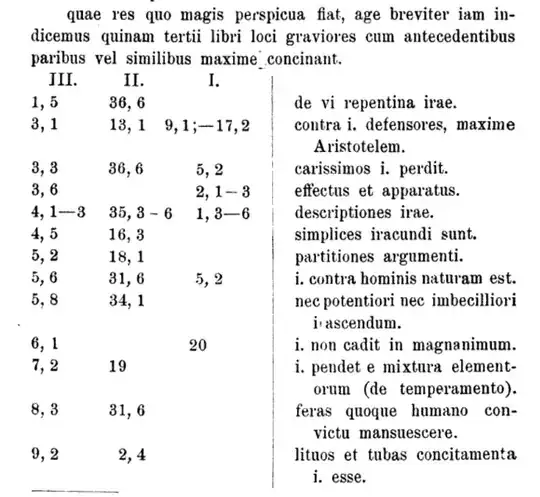 ;
;
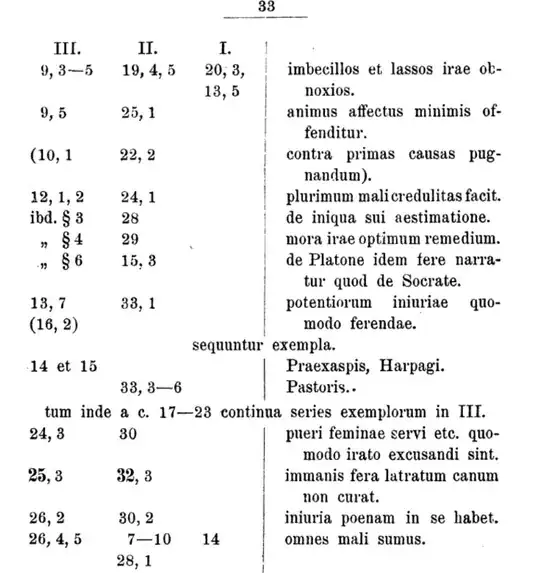 ;
;
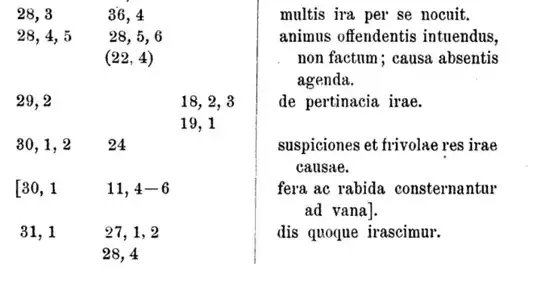
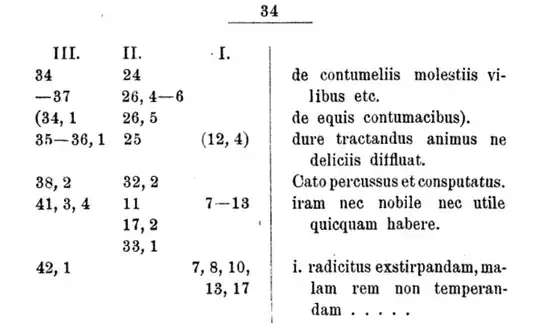
In the chapter by J.R.G. Wright (1974: page 39) entitled “Form and Content in the Moral Essays” (included in C.D.N. Costa (ed.). Seneca. Routledge), this author also reviews the following traditional critique by commenting on some inconsistencies and repetitions found in De Ira:
Another aspect of this weakness is the absence of consistency between one part of a work and another. Seneca is quite happy to contradict what he has said earlier,(note 6) or to repeat the same arguments over and over again with little or no variation.(note 7) The conclusion to which even a sympathetic critic is liable to be driven is well expressed by Justus Lipsius in the final words of his Argumentum to Book I of De Ira: Libri in partibus pulchri et eminentes sunt, in toto parum distincti, & repetitionibus aut digestione confusi. [bold mine: Mitomino]
Note 6, page 65: E.g. Ira 1.1.5-6: the effects of anger are clearly visible in wild beasts; ibid. 3.3ff.: wild beasts, having no faculty of reason, cannot have emotions (e.g. anger) but merely impulses
Note 7, page 65: For an extreme example of such criticism cf. R. Pfennig, De librorum quos scripsit Seneca de ira compositione et origine (Diss. Greifswald, 1887).


