12

This is not a religious question but moreso clarification on the word Niger in the bible. Here is Acts 13:1:

Now there were in the church that was at Antioch certain prophets and teachers; as Barnabas, and Simeon that was called Niger, and Lucius of Cyrene, and Manaen, which had been brought up with Herod the tetrarch, and Saul.(Acts 13:1)

Question-According to the blueletter the lexicon for the new testament, the word comes from Νίγερ Níger, neeg'-er which means black. Some use this to say that this means that Simon was a black man but does the word Niger actually mean black like we know it today or does Niger mean something else?

I was wondering if him being called Niger was due to his skin tone or does the word mean something else?

cmw
  • 54,480
  • 4
  • 120
  • 225
Servant
  • 223
  • 2
  • 5

1 Answers1

17

Niger was quite a common Roman surname ("cognomen") and so was widely found. Also, in eastern regions there were frequently found people named Niger, possibly from the Latin word. For example, there was Niger the Perean, a military leader in the Jewish War.

In terms of why a family might originally get the moniker, could be a range of reasons. Niger means not just black in Latin, but any dark color. It could potentially refer to wide variety of complexions. For example, Spaniards may have been considered "dark" to Romans in the early republic when surnames were being invented. Also, it could refer to someone with black hair, just the same way as Albinus is another common Roman surname that might refer to a person with a primordial ancestor having blonde hair.

The Romans did describe, for example, Ethiopians as black (niger), for example, the literary character Memnon is described that way. However, in the Roman world Niger did not carry an African connotation, and the many Niger families in Rome seemed to largely be considered no differently than any other families who were of Italic stock. So, without any additional evidence, you cannot draw too many conclusions.

Tyler Durden
  • 6,790
  • 11
  • 31
  • 1
    also worth noting that most Africans in the Roman Empire were North African and so to modern Americans would likely appear Middle Eastern rather than Black (although there likely would be some people who would be perceived today as Black, from Nubia or Ethiopia) – Tristan Oct 26 '22 at 10:59
  • 2
    Worth noting for analogy: Black is a common and very traditional British surname; it has no particular associations of complexion or race today, and may have come from several possible origins, including either an ancestor of the modern word black, referring to dark hair or complexion, or (confusingly!) an ancestor/cognate of the modern words bleak/bleach, referring to pale hair or complexion. – Peter LeFanu Lumsdaine Oct 26 '22 at 18:26
  • 1
    While it doesn't really affect the correctness of f the answer, there are some seeming anachronistic statements here. There were no 'Spaniards' in the early Roman Republic. The people in what we now call Spain at that time were mostly Celts and similar tribes mixed with some Greek and Carthaginian colonies. – JimmyJames Oct 26 '22 at 20:29
  • @Tristan These are murky waters to wade into. – JimmyJames Oct 26 '22 at 20:32
  • 2
    @PeterLeFanuLumsdaine for more analogy, in many other languages there are relatively common surnames derived form the word meaning "black/dark" (for example, German Schwarz, French Lenoir, Czech Černý, Russian Chernov). – trolley813 Oct 27 '22 at 08:39
  • 1
    @JimmyJames not especially, as that very article says, whilst scholarship generally rejects the notion that modern racial terms can be applied to Ancient Egypt (which is why I phrased it as "to modern Americans would likely appear" rather than "were"), the Egyptian population likely had a typical appearance similar to that of Modern Egyptians (i.e. the Muslim invasion did not result in widespread population replacement, as often claimed by black nationalists). It follows that they would appear to modern people as Middle Eastern – Tristan Oct 27 '22 at 08:54
  • similar arguments apply to the Libyan population of Egypt. The Nubian population certainly had darker skin, and based on their portrayal in artwork would probably be perceived as Black by modern American standards (although as East Africans, do not conform perfectly to the American prototype which is, for obvious reasons, based on the populations of West and Central Africa), and they were certainly present throughout Egypt (especially in Upper Egypt). There is no particular controversy about the Greek or Asiatic populations – Tristan Oct 27 '22 at 09:00
  • @Tristan: Just curious, but why is this about America? – Cerberus Oct 27 '22 at 15:24
  • @Cerberus mostly because the way race is perceived and functions varies in different countries. The US's system is the one which is known across the widest area (especially in the English-speaking world) as even those outside the US are exposed to huge amounts of US media so when one needs to refer to some particular modern conception of race, the US is the obvious one to go for (especially in an Anglophone context). I myself am British so this isn't just US-chauvinism – Tristan Oct 27 '22 at 15:26
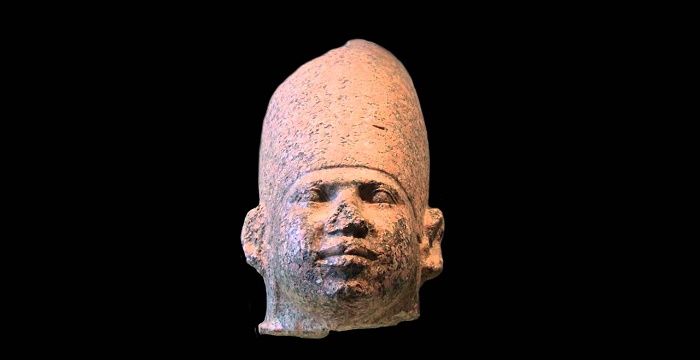
  • @Tristan Hmm. Here's a statue of Sneferu. I personally think that there's pernicious pattern of behavior to denying the achievements of black Africans. Anyone who is interested can take a look and see if they agree with your assertions and we can leave it at that. – JimmyJames Oct 27 '22 at 21:17
  • Here's another statue (head) of Sneferu. Yes, there's a stylized aspect of ancient Egyptian art but at the same time, we can infer a context from the whole of what we have. – JimmyJames Oct 27 '22 at 21:30
  • @Tristan: OK I see. It seemed a bit unsual to me in the context of Latin. – Cerberus Oct 27 '22 at 23:31
  • @JimmyJames sure, many dynasties (especially the 25th) do seem to have been ruled by people we'd now describe as Black and parts of the population were too. The evidence suggests that the majority population is largely continued in the present population of Egypt and so the average Egyptian under the fourth dynasty likely resembled a modern Egyptian more than they would the average African-American. Note of course that the modern population of Egypt is also diverse, and much (most?) of the population in the far south would be considered Black by US standards – Tristan Oct 31 '22 at 09:29