14

From the online etymology dictionary (boldface mine):

spine (n.)
c. 1400, "backbone," later "thornlike part" (early 15c.),
from Old French espine "thorn, prickle; backbone, spine" (12c., Modern French épine),
from Latin spina "backbone," originally "thorn, prickle" (figuratively, in plural, "difficulties, perplexities"),
from PIE *spe-ina-, from root *spei- "sharp point" (see spike (n.1)).
Meaning "the back of a book" is first attested 1922.

I do not comprehend the underlying semantic notions for the entitled question; the human spine does not resemble or feel like a “thorn, prickle”.

ΥΣΕΡ26328
  • 982
  • 6
  • 12

2 Answers2

10

Lewis & Short say it came to refer to various things shaped like a thorn or prickle in its transferred senses, under which they group "backbone". Our backbone is a long, thin object, after all. Perhaps their sense number 2 elucidates the etymological path for you: a fish-bone. Those are pointed and can prick into your flesh, and they resemble backbones in that they are bones.

Cerberus
  • 19,914
  • 3
  • 57
  • 110
3

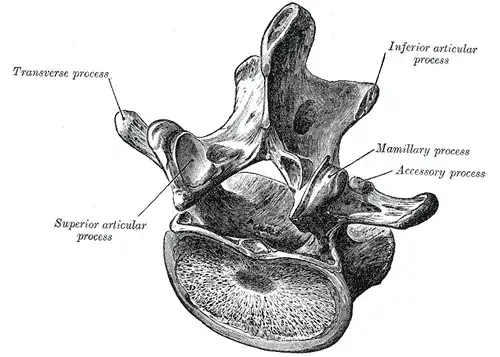
To me the "processes"

vertebra

look like thorns

spine

Earthliŋ
  • 1,797
  • 1
  • 16
  • 33
  • But it's not the vertebrae that are called spinae, only the spine. There's nothing about vertebrae in Lewis & Short (nor in English): http://archimedes.fas.harvard.edu/cgi-bin/dict?name=ls&lang=la&word=spina&filter=CUTF8 – Cerberus Mar 04 '16 at 21:22
  • @Cerberus "not the vertebrae [...] only the spine": What do you mean? The vertebrae are the spine. (E.g. from oxforddictionaries.com "spine: a series of vertebrae [...]") I was thinking that if spina meant "thorn" initially, it could have come to mean "spine", because the spine is a long thorny thing. (The "thorns" are called processes now—from Latin processus, of course, but in the sense of "outgrowth of tissue from a larger body" this word is bound to have a shorter etymology, at least shorter than something as simple as "spine/backbone".) – Earthliŋ Mar 05 '16 at 08:03
  • Very well: a vertebra is not a spine, and a vertebra is never called a spina, only the spine is. A vertebra may contain processes, but containing x is not the same as being x. A spina may have a thorny shape and thus be called a thorn, but not because it contains thorns, or it'd be a pars pro toto. But the dictionaries do not mention any pars pro toto, they just say a spine is called a spina, the most obvious conexion (x=y because x resembles y, not p=q because p contains things that resemble q). – Cerberus Mar 05 '16 at 17:12
  • 1
    @Cerberus OK, I agree with you and as you can tell from my 7-word answer, I didn't intend it to be more than a guess. – Earthliŋ Mar 05 '16 at 17:37
  • Sure, nothing wrong with guesses! I was just expressing a bit of scepsis. – Cerberus Mar 05 '16 at 17:45