As for those three sentences, only A 'かんかんに怒る” is correct.
Grammatically, “に“ and “と“ is not interchangeable, and they have slightly different nuance.
In the sentence “かんかんに怒る“, “に“ is not a particle, but a part of the adjective verb “かんかんだ”.
Any adjective verb has an unchangeable part and changeable part(だ).
When an adjective is followed by a verb, “だ“ changes into “に”.
For example,
1. 彼女はきれいに踊(おど)った。
きれい(=unchangeable)だ(=changeable).
The adjective verb “きれいだ“ is followed by the verb “おどる(=dance)”.
So, ”きれいだ“ changes into ”きれいに“.
- 私は日本語を上手(じょうず)に話す。
The adjective verb “じょうずだ” changes into “じょうずに” when followed by the verb “はなす“.
“に” can be a particle as well as a part of an adjective verb, whereas “と“ works only as a particle.
That’s why you can’t say “かんかんとなる”.
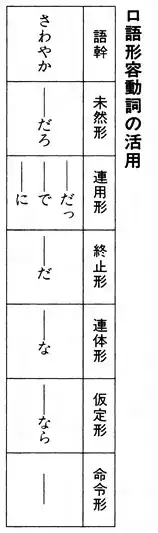 An unchangeable part is called 語幹(gokan), and a changeable part is called 活用語尾(katsuyou-gobi). Every 用言(verb/adverb/adjective) has 語幹 and 活用語尾.
This picture shows how an adjective verb changes depending on the following word.
さわやかだ changes to さわやかに when it forms 連用形(followed by a verb). In this case, as the chart shows, there’s no option for さわやかと as an adjective verb. Also, に in さわやかに is not a postpositional particle but a part of the adjective verb.
In the same way, かんかんに in the sentence A is 連用形 of the adjective verb “かんかんだ“, which is one word, and there’s no possibility that it turns to “かんかんと“ in this case.
An unchangeable part is called 語幹(gokan), and a changeable part is called 活用語尾(katsuyou-gobi). Every 用言(verb/adverb/adjective) has 語幹 and 活用語尾.
This picture shows how an adjective verb changes depending on the following word.
さわやかだ changes to さわやかに when it forms 連用形(followed by a verb). In this case, as the chart shows, there’s no option for さわやかと as an adjective verb. Also, に in さわやかに is not a postpositional particle but a part of the adjective verb.
In the same way, かんかんに in the sentence A is 連用形 of the adjective verb “かんかんだ“, which is one word, and there’s no possibility that it turns to “かんかんと“ in this case.
However, かんかんと is an adverb, and it’s not かんかん(noun) + と(particle).
かんかんと as an adverb is not used when referring to someone getting mad. It’s only used when referring to strong sun sunshine or making sounds as another answerer already explained.
Both かんかんに( an adjective verb / 形動) and かんかんと( an adverb/ 副 ) don’t include に or と as a postpositional particle. In this case, they are a part of completely different words (に is 活用語尾 of an adjective verb whereas と is just a part of an adverb).
That’s why they are not interchangeable in this case.


