I bought these plums at a supermarket in Kyoto today and noticed that they were labeled プルーン (prune?). According to jisho.org, a plum is a プラム. Is it common to not distinguish between prunes and plums in Japan?
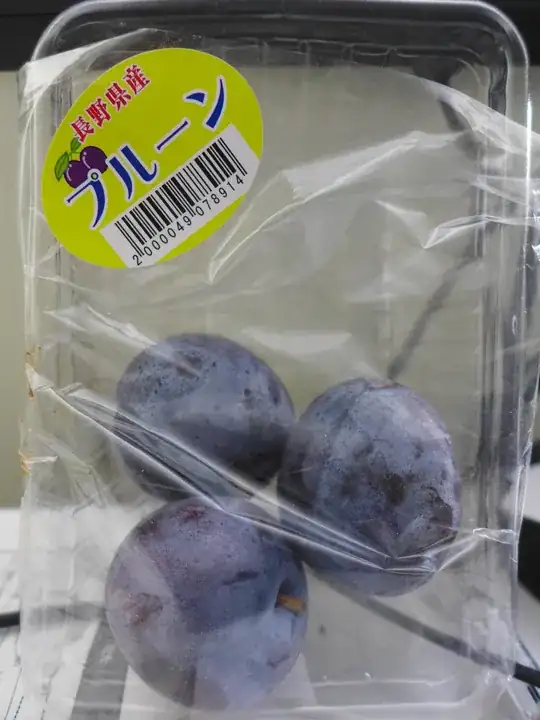
I bought these plums at a supermarket in Kyoto today and noticed that they were labeled プルーン (prune?). According to jisho.org, a plum is a プラム. Is it common to not distinguish between prunes and plums in Japan?

A quick Google lookup shows that some plum varieties are called Prunes in English, and they don't need to be dried to be called that way.
A prune is any of various plum cultivars, mostly Prunus domestica or European Plum, sold as fresh or dried fruit.
In the Wikipedia article about prunes you can see a photo of fruit looking strikingly similar to what you bought. Japanese Wikipedia and Goo Jisho indicate that プルーン in Japanese has the same meaning that it has in English
プルーン (prune) は、スモモの近縁種セイヨウスモモ (Prunus domestica) などの総称である。
This Japanese page gives further insight on the difference between plums and prunes.
I'm neither a biologist, nor a native English/Japanese speaker, but it seems most likely to me that the fruit you have bought are indeed called prunes in these two languages.
(I just copied my earlier comment by Nicolas' advice with minor edits.)
