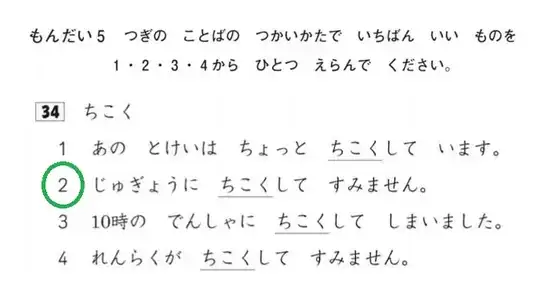
To be fair, if you Google that phrase you can actually find a small number of examples of seemingly native speakers using it. They may be using it as a slightly more formal variant of 遅れる, and it is not totally incomprehensible.
However, I find this collocation quite unnatural, and according to my own introspection, the reason is very clear. When you 遅刻 to some event, you will still have a chance to make it happen. For example, if you 遅刻 to an exam, you might nevertheless be allowed to enter the room, even if you perhaps only have the last five minutes...
But in a typical situation, if you are late for a train, you will automatically miss it. You might be able to take the next, but no longer the same one, so it is no more 遅刻. In this light, you cannot use 遅刻 when you are completely past the back end of a meeting, since you can never attend it anymore.
Conversely, 電車が遅刻する may sound not that bad, albeit not idiomatic, because when a train comes late, most passengers would usually continue to wait, so it can transport them anyway. Absolutely nothing to do with how I've waited for a half hour late train when I visited Germany a while ago.