If using a grave accent as opposed to an acute accent on top of letters e and o in Italian is used to denote a difference in pronunciation when these appear on the last syllable of the word, and such syllable happens to be stressed, with è being an open e and é a closed e, then why is the Italian word perché sometimes written as perchè across the Internet instead of as perché?
After all, I've always heard the last vowel of this word being pronounced as a closed e. Could the reason for this orthographic rule be due to differences in regional pronunciations, or is there some other reason?
UPDATE:
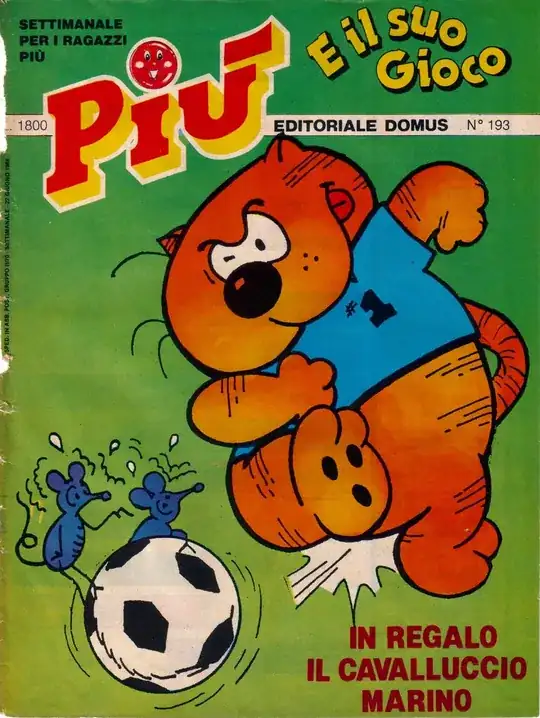
In response to a comment in one of the answers given below, his is an image of a magazine for kids that was popular in the late 1980s and early 1990s, perhaps even later (not sure if it still exists, haven't checked!). Anyways, it illustrates two different spellings of one particular word, one using the grave accent, and the other using the acute accent, on the very same place (and this is not a misprint, this is a sample representative of thousands of magazines each of whose cover page is similar): PIÙ and Piú. Of course, in the case of 'u' there is only way to pronounce this vowel in Italian; there is no distinction made between an open pronunciation and a closed pronunciation as is the case with the letters e and o, so perhaps this does not matter much here.




perché. As to your question, where have I seenperchè? Just Google up the exact word, and you will get thousands of (undobtedly wrong) results that make use of this spelling. Now I'm not sure whether I should find it strange that so many people would have spelled such a common word wrong, or whether we can simply conclude that many Italians are careless with these diacritics. Thank you for your feedback. – John Sonderson Jan 16 '15 at 17:09On a CV, for instance, it shows that you don't really care.But trust me that neither does the interviewer (unless it's for a job at Treccani or as Italian language university professor) nor is he/she aware of the "problem", given the near-absolute-zero importance of the direction of the accent in real-life Italian and the zero likelihood of that creating doubts about how to read the word or about its meaning. I am native and I lightheartedly write perche' as karoshi mentioned every time I use a non-Italian keyboard and I would feel out of touch if I considered that as a problem. – SantiBailors May 19 '16 at 09:32you are certainly unaware that quite a few HR people do flag your CV for sloppiness.No, I'm aware, and writing that accent in the wrong direction is certainly not counted as sloppiness and, again, 99% of recruiters don't even know it's wrong or even that there is a right and a wrong there.You might be unaware that different accents can produce different soundsNo, I'm aware of that too. – SantiBailors May 22 '16 at 16:42