-1

I have been looking at arts (drawings, sculptures) from different archeological periods (40000BC up to now). A pattern that I have picked up consistently when looking at arts from these periods is that the accuracy and fidelity of such arts is not good and most arts seem to be very abstract with not that much details. I have personally never seen any arts that dates back to around 10000-15000BC and before that which do not look realistic by any means and contain lots of details, to my observation. I am by no means an artist or art historian but to me, it is obvious that humans could not draw detailed arts (e.g. sculptures, drawings) until around 4000BC or so. This conclusion could be coming from the fact that I've never been into arts and I've not spent a lot of time looking for such arts.

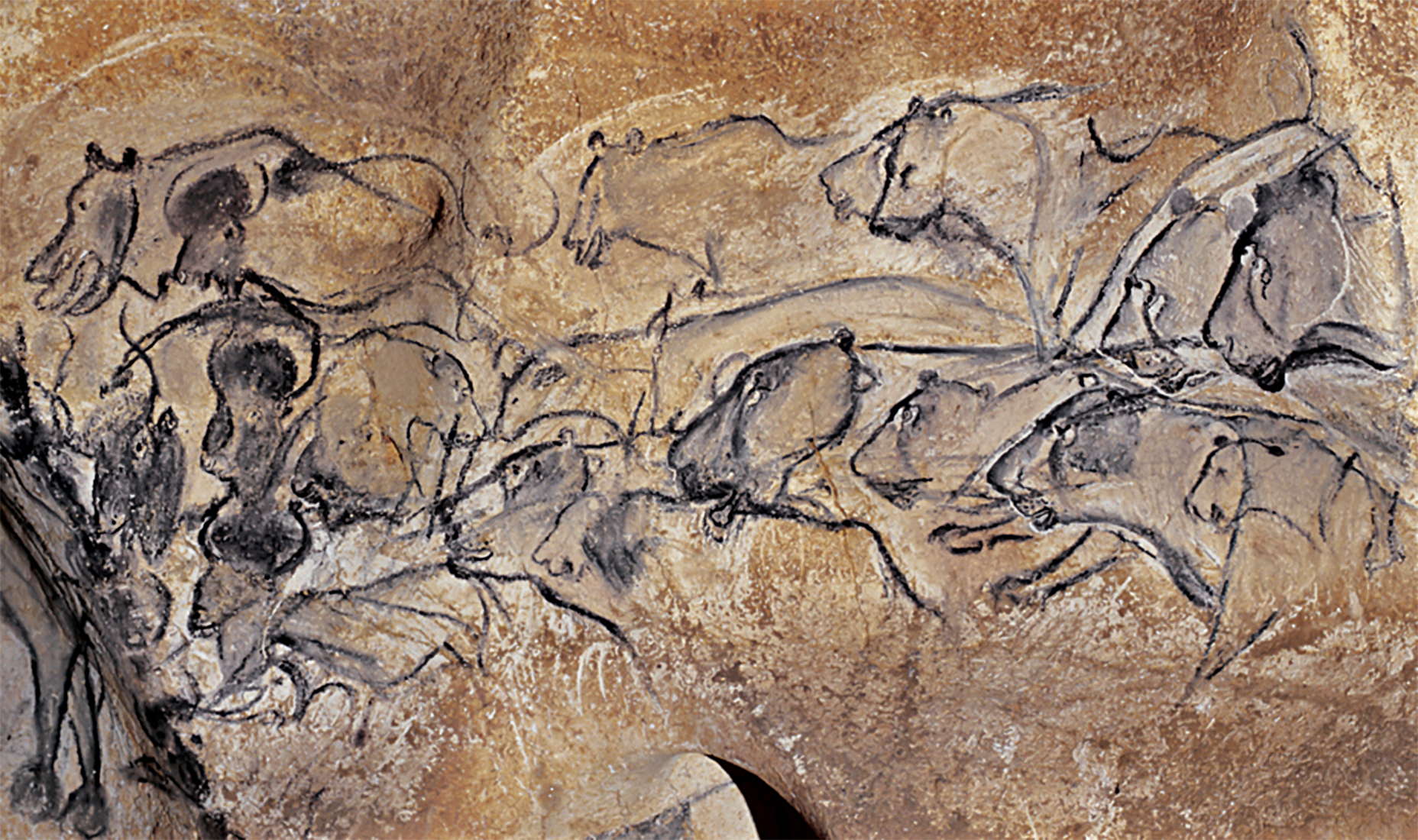
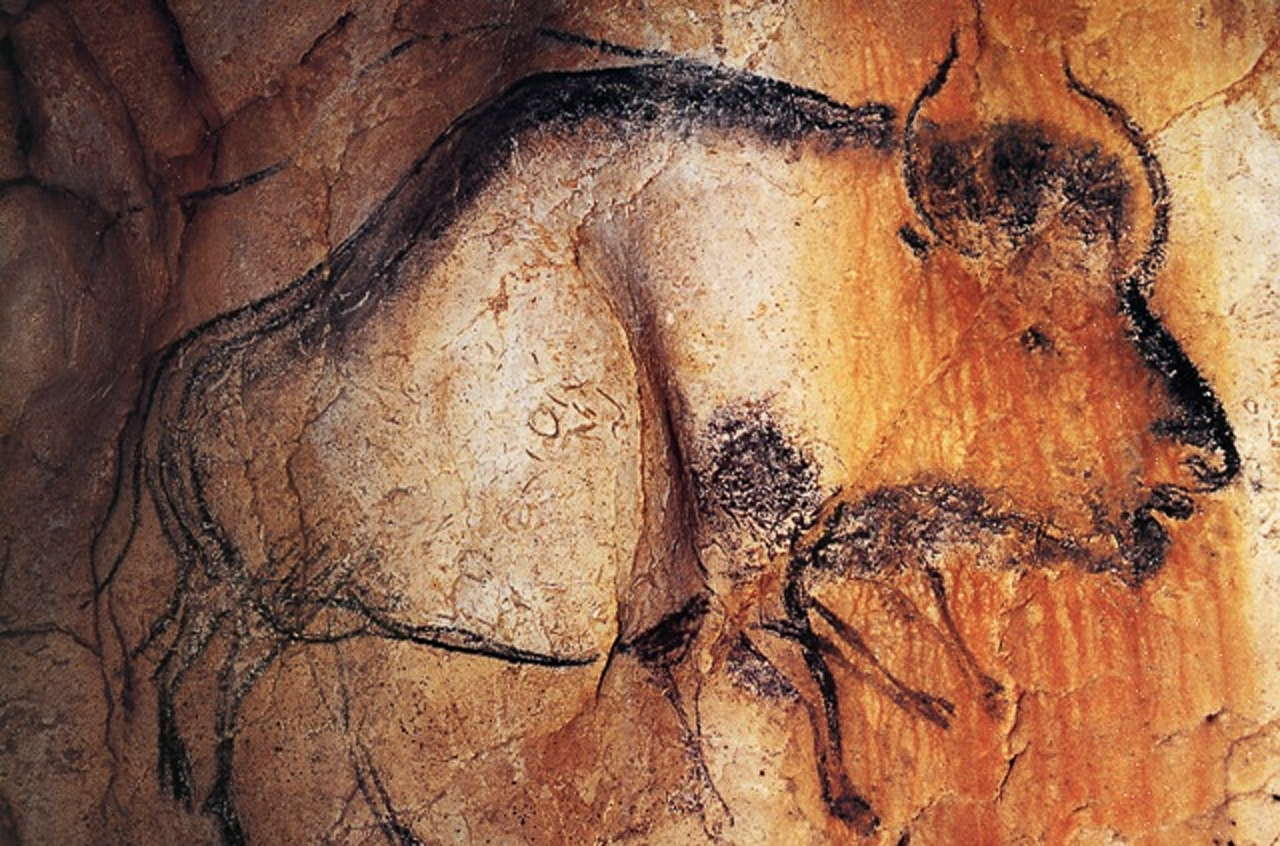
So I wonder what's people's thoughts on why this is the case? Could this be because simply humans did not have good tools to draw things more accurately or they had not developed the cognitive ability enough to pay attention to such details? Or could it be because they simply did not want to be accurate purposefully considered arts to not that serious for some reason? I'm asking this because I've seen lots of paintings or sculptures in which things like a human body is drawn with just a couple of connected lines or the sculpture of human body (here --> 1) which does not resemble a real human body in any way. In many such paintings or sculptures I've noticed that most details (e.g. eyes, breasts, muscles) are missing or have been drawn/sculpted weirdly; I've noticed this pattern in prehistoric arts for both humans, [animals] (here --> 2, 3) and other things.

Or could this inaccuracies/infidelities be a result of not having peace as human species were like preys and had to constantly look for food or run away from wild animals or other humans? It's possible that if they had piece they could have spent more time on art and made nicer things, right?

Amir
  • 107
  • 5
  • 10
    You are assuming that people intended or desired their art to be an accurate representation of exactly how things look. The Venus of Willendorf is not less accurate than this. Does that mean 21st century artists are poor? – Gort the Robot Apr 13 '19 at 16:43
  • 4
  • @StevenBurnap No that's not what I meant. The thing is it is obvious that the 21st century artist who has drawn those animation characters has had the purpose of drawing those characters that way. To me, it looks like even the "best" sculptures from old times look pretty inaccurate. Plus, those characters are full of details; many of the paintings/sculptures of ancient times do not even seem to have things like eyes etc. – Amir Apr 13 '19 at 18:24
  • @LangLangC It's not very relevant because first I'm not talking about photo realism and second I'm thinking of much older times (e.g. 2000 BC and older ) – Amir Apr 13 '19 at 19:56
  • 1
    At least some ancient art was very realistic: – vpekar Apr 13 '19 at 21:24
  • 6
    @Amir My point is that we have no way of knowing what the intentions of the original artists were. Note that the cartoons I linked to are also completely missing features like ears and noses. You say it is "obvious" that accuracy is not intended in the modern instance...why can't it be true in the ancient instance? – Gort the Robot Apr 13 '19 at 21:32
  • 3
    Note that the Venus of Willendorf has some attributes that are grossly exaggerated, and others that are minimized or removed. Note that modern cartoons usually greatly exaggerate certain features while minimizing or removing others. – Gort the Robot Apr 13 '19 at 21:45
  • 2
    How much of this is bias because more detailed art would have involved materials that don't last for millennia? For that matter, how many ancient pieces use to have more details in the form of pigments that have completely disappeared due to chemical or mechanical wear? – Gilles 'SO- stop being evil' Apr 13 '19 at 23:18
  • 3
    Unlike modern art? – Jos Apr 13 '19 at 23:21
  • 4
    Your question is more an opening for a debate. This is not the place for that. – Jos Apr 14 '19 at 07:19
  • 1
    Any question that begins "I wonder what's people's thoughts on why ..." is likely to invite answers that are primarily based on individual opinions, and so is likely to be off-topic here. (I've sat through many discussions of this sort with archaeologists in pubs over the years. Great topics for a pub debate, not so much for SE sites.) – sempaiscuba Apr 14 '19 at 14:15
  • 1
    Besides agreeing with all, who point out that the purpose of art is not to be photorealistic: 1) there is an obvious gap between the techniques available for the old artists and the new ones. It is much harder to paint a person on an uneven cave wall, without a brush, with limited pigments, in the dark, compared to paint Mona Lisa on canvas for 3 years, 2) it is better to compare ancient artifacts with folk arts: folk arts even now are often naive, highly abstract, cartoonish, etc. (of course, not in a bad way). – Greg Apr 15 '19 at 01:54

2 Answers2

3

Henri Matisse, the great French artist said "Exactitude is not truth".

An accurate and precise representation of something may not convey the meaning that the artist intended. For example the size of a human figure in ancient Egyptian pictures was meant to represent their importance in society, not their physical size. Anyone back then could 'read' the picture and know who were the big shots and who were the slaves. When a caveman drew an antelope on a wall he may have been trying to convey how fast they moved, to emphasise the parts that made the best eating, or the excitement of the hunt, rather than show the exact proportions and details of the beast. Art has always been about feelings, emotions and meaning, not precision.

The Venus of Willendorf is not meant to protray a particular woman, it is probably a symbol of fecundity. To give it a face would give it a specific identity as an individual, but it is meant to stand as a symbol of fertility in general. It ws deliberately created to look like it does for very good reasons.

We all, now, look at all art through twenty first century eyes. We can't see them in the same way their makers or their intended audience saw them, to them. When we look at a painting by Titian in the 15th century, we miss the references and allusions that were obvious to people in Venice back then, in the same way that people in a hundred years won't be aware of some of the things we take for granted now.

Dave Gremlin
  • 1,369
  • 7
  • 19
  • I may not understand some of the allusions in a Titian painting, but if I look at a realistic painting, say for instance Fredric Remington's "The Buffalo Hunt" https://commons.wikimedia.org/wiki/File:Frederic_Remington_-_The_Buffalo_Hunt.jpg I can clearly see that it depicts a buffalo, horses, humans, &c. With a lot of cave paintings, I have considerable difficulty recognizing what they're supposed to be. – jamesqf Apr 15 '19 at 05:44
  • Likewise, art can have both exactitude and truth. See e.g. Bierstadt's https://upload.wikimedia.org/wikipedia/commons/c/ce/Prong-Horned_Antelope_with_the_Grand_Tetons_Beyond_by_Albert_Bierstadt.jpg which is exactly what an antelope looks like - though it's not usual to catch them standing still when you're that close. – jamesqf Apr 15 '19 at 05:57
2

You are expressing a very strange minority opinion. So the question is really not "why old art...", but "why do you think so...".

People who have seen ancient and pre-historic art are usually very much impressed and rate many things on the highest level. For example, Pablo Picasso, after he was shown the paintings in Altamira cave said: "We have invented nothing new"!

Does this really look "pretty bad and inaccurate" to you:

https://en.wikipedia.org/wiki/File:Cucutenimalefigure.JPG

https://en.wikipedia.org/wiki/File:GanditorulDinTarpestiCucuteniCultura.JPG

https://en.wikipedia.org/wiki/Venus_of_Brassempouy

https://en.wikipedia.org/wiki/File:UrukHead.jpg

http://artdiscovery.info/wp-content/uploads/2013/08/IMG_1499.jpg

https://www.donsmaps.com/images28/lionsendchamber.jpg

https://www.donsmaps.com/images26/chauvetbison.jpg

Then I think you have some minority view. At least I share the Picasso opinion: there is no such thing as "progress" in art, unlike in science and some other areas of human activity.

Alex
  • 38,884
  • 2
  • 83
  • 159
  • But one could reasonably say that Picasso's art looks pretty bad and inaccurate - and he's still much better than many "artists" who came after him. – jamesqf Apr 14 '19 at 04:12
  • 2
    This is not the place to discuss our personal tastes in art. I am simply telling that opinion expressed in this question is far from being common, therefore, this question "why..." is not about history. – Alex Apr 14 '19 at 12:03
  • Regardless of my personal tastes, I think the opinion expressed regarding ancient art (and modern art, medieval art, &c) is far from being a "strange minority opinion". On the contrary, I think if you asked the general public, it might well be the majority opinion :-) And I think it is at least partly a history question: why did some cultures develop accurate representational art (e.g. Greek statues), only to see the techniques apparently abandoned by successor cultures? – jamesqf Apr 14 '19 at 17:24