The author of Hebrews compared Jesus' sacrifice through his death to that of the sacrificial system in Mosaic law.
When he said above, “You have neither desired nor taken pleasure in sacrifices and offerings and burnt offerings and sin offerings” (these are offered according to the law), 9 then he added, “Behold, I have come to do your will.” He does away with the first in order to establish the second. 10 And by that will we have been sanctified through the offering of the body of Jesus Christ once for all.
11 And every priest stands daily at his service, offering repeatedly the same sacrifices, which can never take away sins. 12 But when Christ had offered for all time a single sacrifice for sins, he sat down at the right hand of God,
(Heb. 10:8–12, ESV)
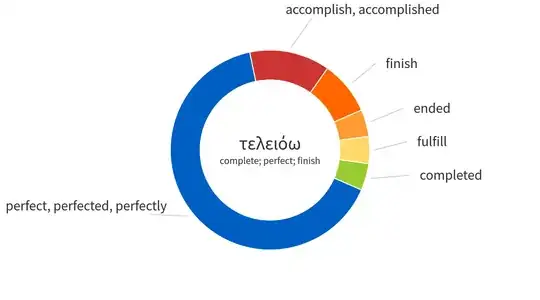
τετελείωκεν (he has perfected) means completed, finished; the perfect tense means the action is complete, but the emphasis is on the results that continue. It is the same word used in the aorist tense for "to fulfill the Scripture" (John 19:28).
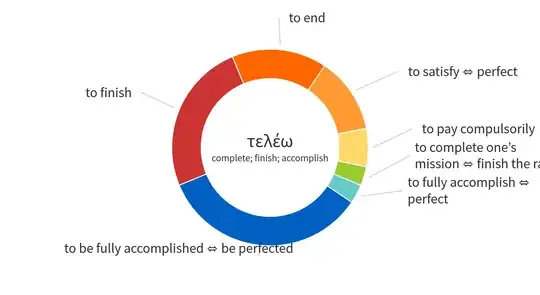
It is similar to the perfect tense verb τετέλεσται ("it is finished" John 19:30), which translated the verb for restitution in the Septuagint (LXX). See Tetelestai - What did Jesus really say in John 19:30 assuming he spoke Aramaic or Hebrew?
Thus,
For by a single offering he has perfected for all time those who are being sanctified. (Heb 10:14, ESV)
means all restitution and sanctification is done with Christ's sacrifice for ever more.
Senses of τελειόω in the New Testament (Logos Bible Software).
Senses τελέω of in the New Testament