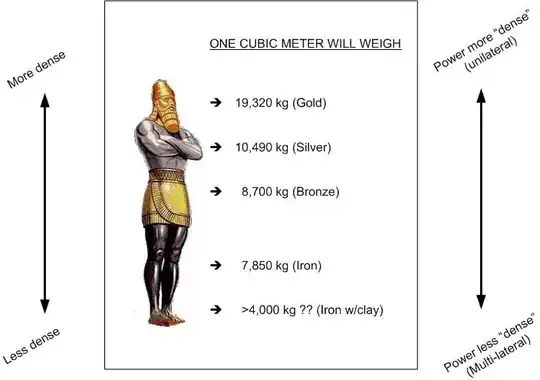
Feet and Toes In helping to interpret Daniel 2 we take notice of the progression of "the final chapter" of the world Empires: Feet, feet and toes, toes...but all parts consisted of the deadly mixture, not just the toes:
This image's...legs of iron, his feet part of iron and part of clay. (vs. 33)
Thou sawest the feet and toes, part of potter;s clay and part of iron, the kingdom shall be divided. (vs. 41)
And the toes of the feet were part of iron, and part of clay, the kingdom shall be partly strong and partly broken. And whereas thou sawest iron mixed with miry clay, they shall mingle themselves with the seed of men; but they shall not cleave one to another, even as iron is not mixed with clay. (vs. 42-43)
Number Ten As other Answers have pointed out, there is no mention of the number ten anywhere in this prophecy. To introduce it is eisegesis, a faulty exposition,and a violation of the rules of hermeneutics. To combine this number with scriptures in other books is to avoid the Context of this prophecy. It detracts from the main intent of this imagery: the disastrous mixture.
Daniel's Interpretation Notice that the prophecy is interpreted by Daniel as to what the mixture is: they shall mingle themselves with the seed of men, but they shall not cleave to one another. (vs. 43) It is a pernicious "intermingling" of different kinds of men that causes the calamity. So what is this a reference to? History has revealed the Answer: slaves (and its sister ugly, Mercenaries). At the time of Rome's dissolution, slaves and citizens intermingled at Rome. When the Barbarians attacked Rome, the defenders were mercenaries who had no allegiance to Rome! The proportion of slaves in the Empire was alarming! And as the prophecy noted, they did not cleave to one another. (Free citizens and unassimilated foreigners with no feelings of patriotism.)
References This salient fact is noted in the volumes of histories of Rome, and is found in many biblical commentaries written throughout the centuries. For a view of some of these references see Biblical Hermeneutics SE, #66581, Answer by Ray Grant. With one voice they acknowledge that the intermingling of the seed of men (slave and free) was disastrous. An empire or nation, that consists of a population that is not patriotic nor assimilated, is doomed to fall.
Quid Pro Quo As the prophecy related, the Fall of one kingdom was to see the rise of another. A temporal kingdom was to be supplanted by an Eternal Kingdom. And in the days of these kings shall the God of heaven set up a Kingdom which shall never be destroyed! (vs. 44)
So it was fitting that during the Roman Empire days Jesus would loudly proclaim: Repent, for the Kingdom is at hand! (Matthew 4:23, 9:35) And Jesus would spend 40 days after His resurrection teaching about the Kingdom. (Acts 1:3)
{Note: this Idea of a Fifth Kingdom was bandied about by the Jewish rabbis during the time of Christ, and when it fell on the ears of the Roman philosophers and historians, they mocked. How could anyone conquer Rome, let alone a small Judean people! Then came Jesus...}
Hermeneutic Conclusion The toes are merely part of the feet of the Image which consisted of iron contaminated with clay: intermingled seed of men (free citizens and unassimilated foreigners). There is no need to go outside the Book of Daniel to other scriptures to seek a correct interpretation.