You can modify your vertical to work on 160m. Small antennas are always a compromise in performance, but they do work.
You might research mobile antennas, intended for operation from a vehicle. These have similar restrictions on size, and so they usually use two methods, or both in combination, to make the antenna appear longer electrically than it is physically.
Capacity or capacitance hats
These come in a lot of styles, but the idea is to put spokes or something similar at the top of the antenna to increase the capacitance to ground at the tip of the antenna.
Here's an example from K0BG:
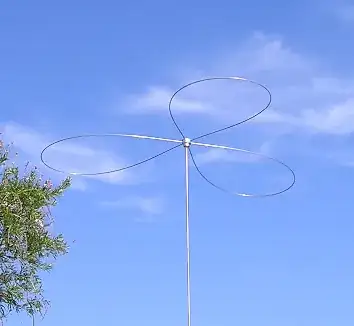
There are all kinds of variations, but anything that makes the antenna thicker accomplishes the same thing. Increasing the thickness at the top has more effect than increasing it at the bottom. See the T-antenna for an antenna where the capacitance hat is most of the antenna.
Loading coils
As you might guess from duality, it's possible to electrically lengthen an antenna (and thus, make it physically smaller), with inductance also. This is accomplished by putting an inductance somewhere along the length of the antenna.
Here's a homemade loading coil by KC7FYS:
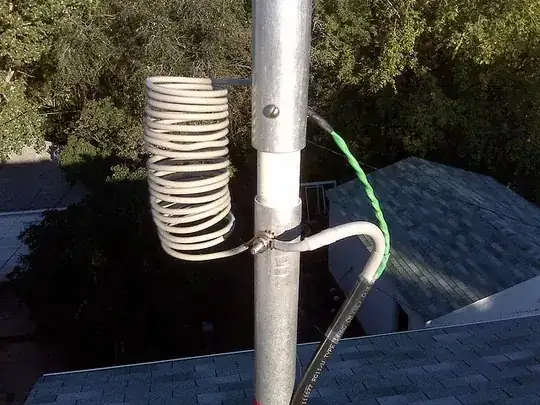
Putting the coil near the base of the antenna is more effective at electrical lengthening than putting the same coil near the tip. But the current is higher at the base than the tip, so the closer the coil is to the base, the higher the losses, and thus the lower the antenna efficiency. Likewise, a bigger coil will electrically lengthen the antenna more, but losses will be higher.
So as usual, placement and sizing of the loading coil is a compromise between size and performance. A lot of designs end up putting the coil somewhere around the middle of the antenna.
These aren't the only options
There are a lot of ways to make antennas and this is just one. As Scott Earle says, a magnetic loop antenna is an equally valid solution. People do all sorts of things: just about any conductor can be made into an antenna. People have used rain gutters, metal fences, metal roofs, or just random wires strung around wherever they can fit them. If you can match your radio's impedance, and keep losses low, it will work as an antenna!


