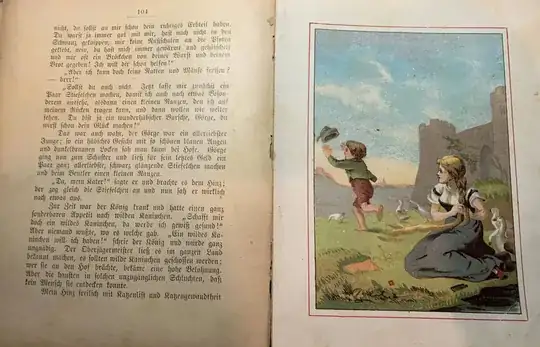
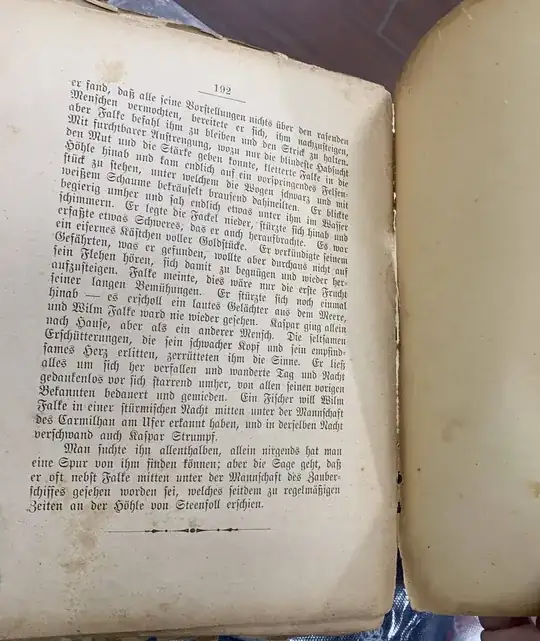
It's written in modern standard German. Nothing old about it, except the type setting and orthography. And if you know that ſ is written as s nowadays, even that's easy to read.
You should be able to find most of the fairy tales from the table of contents online, often even their English translation.
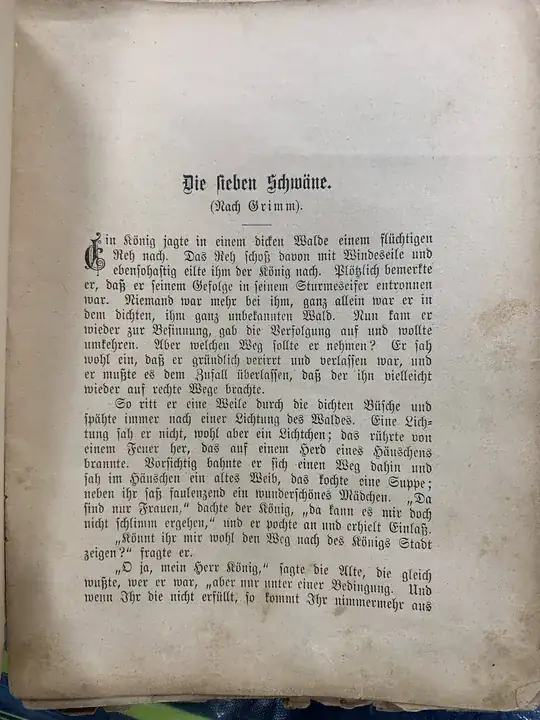
For example if you search for "Die sieben Schwäne" by (Brothers) Grimm, you will find the correct tale (with translation) even though the title in the book is not correct. The actual title of the Grimm tale is "Die sechs Schwäne". There is a variant by Ludwig Bechstein that is called "Die sieben Schwäne".
I don't think it is possible to identify the exact book but that shouldn't be necessary because these are all well known and popular fairy tales.
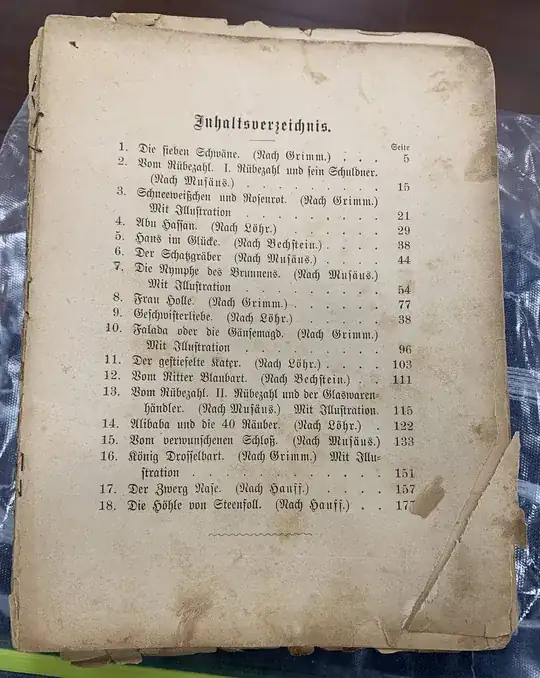
Here is a transscription of the TOC:
- Die sieben Schwäne. (Nach Grimm.)
- Vom Rübezahl. I. Rübezahl und sein Schuldner. (Nach Musäus.)
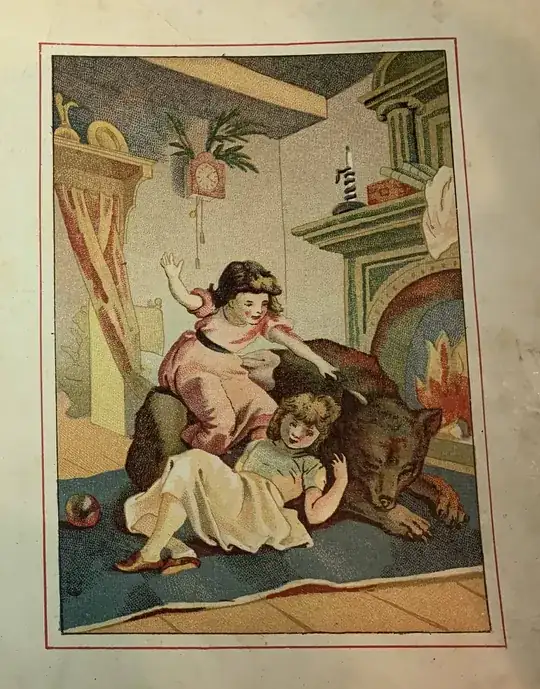
- Schneeweißchen und Rosenrot. (Nach Grimm.) Mit Illustration
- Abu Hassan. (Nach Löhr.)
- Hans im Glücke. (Nach Bechstein.)
- Der Schatzgräber. (Nach Musäus.)
- Die Nymphe des Brunnens. (Nach Musäus.) Mit Illustration
- Frau Holle. (Nach Grimm.)
- Geschwisterliebe. (Nach Löhr.)
- Falada oder die Gänsemagd. (Nach Grimm.) Mit Illustration
- Der gestiefelte Kater. (Nach Löhr.)
- Vom Ritter Blaubart. (Nach Bechstein.)
- Vom Rübezahl. II. Rübezahl und der Glaswarenhändler. (Nach Musäus.) Mit Illustration
- Alibaba und die 40 Räuber. (Nach Löhr.)
- Vom verwunschenen Schloß. (Nach Musäus.)
- König Drosselbart. (Nach Grimm.) Mit Illustration
- Der Zwerg Nase. (Nach Hauff.)
- Die Höhle von Steenfoll. (Nach Hauff.)