8

In conversation, one of my colleagues said:

He's thinking of making advances to the hospital director's daughter. If you ask me, he's got ideas above his station. He's not set up for life or anything!

I was wondering how I'd express the same idea in German. This expression means something like:

  • He's hoping for (/ He thinks he is qualified for) something unsuitable for someone of his social position.

I'd probably have said:

Wenn du mich fragst, sollte derjenige sich schleunigst seines Standes besinnen ...

I guess this is one of those expressions that do not translate easily into other languages. I wonder if my phrasing works? How is this idea commonly/idiomatically expressed in German?

  • 7
    Nun, Stände sind seit 100 Jahren bei uns abgeschafft... – user unknown Aug 16 '19 at 23:21
  • I'd offer übersteigt seinen Verstand, but the derivation is above my station. standing is obviously not the word to translate, so Stand cannot be a good translation. außer Stande sein, im Stande sein and Vermögen (polysemous as it is) as well as in der Lage sein (cp Lager "storage, station") may be informative; versetzen vs verständigen is difficult to compare, because the later is chiefly self reflexive, but the former isn't, and sich in die Lage versetzen, sich über die Lage verständigen differ in meaning. understanding rather compares to Anstand, sich unterstehen. – vectory Aug 17 '19 at 09:55
  • 1
    I think your original translation is at least as good as any of the other suggestions in the answers. "Stand" and "station" are about equally antiquated. – PiedPiper Aug 17 '19 at 22:05
  • One thing that might be interesting: where is your colleague from? US, UK, somewhere else? – LаngLаngС Aug 18 '19 at 08:45
  • your original translation is at least as good as any of the other suggestions in the answers Not now. The word Stand_is totally inacceptable, uncolloquial and ridiculous. I suggest _Er überschätzt/übernimmt sich Er hat Flausen im Kopf Er ist hanz schön eingebildet - But the real question is: What kind of sexist knucklehead is that collegue of yours? – TaW Aug 18 '19 at 08:48
  • @userunknown Nun, diese Bemerkung über "Abschaffung" ist ein irrelevanter und irreführender politischer Kommentar,. Ein alter politischer Willensakt besagt nichts über die gesellschaftliche oder sprachliche Realität. Es mag spitzfindig erscheinen, den Kommentar als völlig unzutreffend zu bezeichnen, aber die Fortdauer von ges. Unterschieden in Form von Stand, Klasse oder eben Status ist so real wie die Weiterverwendung dieses anscheinend hier unerwünschten Begriffes und korrelierter Konzepte. Zur Verbesserung der Frage trägt der Kommentar jedenfalls nichts bei. – LаngLаngС Aug 18 '19 at 08:56
  • @TaW Neither is Stand "antiquated" nor is your notion of unacceptable shared by the majority of speakers (just compare your concept of 'sexist' and ask yourself why it's still a thing to call people that). Your prescriptive perspective is unreal, idealistic, admirable, and Wunschdenken. People are sexist and suffer from Standesdünkel all the time. – LаngLаngС Aug 18 '19 at 09:01
  • 2
    Speak for yourself! - I have never heard any real person refer to 'Stand' as a reality one should conform to. Maybe you should check yourself wrt to 'Wunschdenken'..? - As for 'sexist' I ges it doesn't really convey my meaning very well. It was about the notion that a father or his job would/should restrict the daughter's choice of partners. – TaW Aug 18 '19 at 10:02
  • Es mag spitzfindig erscheinen, den Kommentar als völlig unzutreffend zu bezeichnen mMn ist das Wort nicht 'spitzfindig' sondern 'völlig unzutreffend'.. - Niemand würde im gegebenen Zusammenhang ernstlich über den Stand einer Person sprechen. (Naja, es mag Kreise geben, in denen das gängig ist).. ((Und schon haben wir ein passendes Wort)) – TaW Aug 18 '19 at 10:05
  • @TaW It may be difficult to prove a negative for you, but in my A I do prove the positive with examples, which are countless, in contemporary media. Why is your "I define no" so superior over real-world evidence? The aspirational imaginations from your utopian bubble might take a while to get real. Try falsifying my examples, otherwise you achieve nothing but prescribe political correctness of your choosing. Some directors, some peers of the daughter might think the way the speaker from OPQ assumes. It is this speaker and what he says, not what you want! – LаngLаngС Aug 18 '19 at 10:44
  • @LangLangC: Da ich Con-gras-tue-les-chiens Arbeitskollegen nicht kenne und nicht weiß, wo sich das zugetragen hat und für wen die Übersetzung bestimmt ist, weiß ich nicht, welche Übersetzung passend wäre. Stand, Klasse und Status sind unterschiedliche Begriffe. Status hat man auch heute noch, aber mit Ständen identifiziert man in Deutschland die 3-Stände-Gesellschaft: Klerus, Adel und einfaches Volk. KKH-Direktor dürfte zu einfachem Volk zählen, was den Begriff hier deplaziert erscheinen lässt, denn der Buhle wird wohl dem gleichen Stand angehören. – user unknown Aug 18 '19 at 13:38
  • @userunknown Ist denn auch der Mittelstand weg? Die übertragenen Bedeutungen, unpräzisier Usus und das (zugegeben aufgeweichte aber eben nicht völlig abgeschaffte) in "Ständegesellschaft bezeichnet in den Humanwissenschaften einen hierarchisch geordneten Teil einer Gesellschaft aus abgeschlossenen sozialen Gruppierungen – den Ständen oder Geburtsständen – mit eigenen rechtlichen, sozialen und kulturellen Normen, deren Zusammenhalt auf Gemeinsamkeit in Abstammung, Beruf, Besitz oder Bildung besteht." Es ist klar, dass der Sprecher sich diesen Konzeptes bedient (Urteil gern dem Hörer überlassen) – LаngLаngС Aug 18 '19 at 14:04
  • @LangLangC: Ich kann Dir versichern, dass in der heutigen Soziologie von Ständen nicht die Rede ist, um gegenwärtige Milieus zu klassifizieren. Eine Vermischung von "standesgemäß" mit "Mittelstand" ist auch nicht sachgemäß. Der Mittelstand ist weder sozial, noch kulturell oder rechtlich von der übrigen Gesellschaft geschieden. "Nicht standesgemäß" ist überhaupt eine Kritik, die man nur an denen übt, die sich unter ihrem Stand einlassen wollen, nicht darüber. – user unknown Aug 18 '19 at 20:16
  • Ach. Glaubte ich auch noch so gern, allein die Überzeugung liegt mir fern: https://link.springer.com/chapter/10.1007/978-3-322-88691-0_4 Wir behandeln hier zwar *gerade nicht' ein politisch gewünschtes oder wissenschaftlich 'korrektes' Begriffsungetüm in seiner Verwendung, aber schaut man den Leuten aufs Maul, oder liest ein paar Politologen oder Soziologen, dann sollte sich das schon klären lassen. Nur leider nicht zu "Stand existiert nicht" oder "Wie übersetzte ich mgslt genau" "Ohnono, youbetterdontevenstartthinkingabouti" – LаngLаngС Aug 18 '19 at 20:27

7 Answers7

17

Das ist absolut nicht seine Kragenweite.

Der spielt nicht in ihrer Liga

Die ist ein paar Nummern zu gross für ihn

are commonly use to express "above one's station" (which I haven't really heard for a long time in the UK, to be honest.)

tofro
  • 64,637
  • 2
  • 85
  • 197
  • 4
    +1 for the most colloquial German equivalents. I would also add Das ist eine ganz andere Hausnummer. – Jonathan Scholbach Aug 17 '19 at 08:42
  • Colloquial? Maybe, slightly. Idiomatic? Definitely. *Das ist eine andere Hausnummer doesn't talk about "above and below", but just says "different". – tofro Aug 17 '19 at 08:49
  • Yes, you are right with both. – Jonathan Scholbach Aug 17 '19 at 10:43
  • 1
    That does fit, roughly. While colloquial, it sounds mostly as if she is probably/mainly just much too pretty for him, or being some other kind of mismatch? – LаngLаngС Aug 17 '19 at 11:59
  • @tofro I'd disagree, the "andere Hausnummer" is regularly used to mean "above", instead of just "different". – plocks Aug 18 '19 at 08:59
  • 1
    @LangLangC it just says she’s above his reach. Not in what respect. – tofro Aug 18 '19 at 16:17
  • Well, yeah, but the original actually uses the terms 'that 'shouldn't be used', in both languages. Who uses 'ebenbürtig' today in the original sense? But please understand: I'm not saying these are bad suggestions, just that they are less precise and changing register compared to OP's speaker. – LаngLаngС Aug 18 '19 at 16:26
5

Maybe anmaßen (or related anmaßend/Anmaßung):

Er maßt sich an, mit der Tochter des Direktors anbandeln zu wollen.

David Vogt
  • 26,425
  • 2
  • 42
  • 91
  • 1
    Does not sound very idiomatic to my ears. – Jonathan Scholbach Aug 17 '19 at 17:17
  • 1
    @jonathan.scholbach Du maßt dich an, mich kritisieren zu wollen? Can you put your finger on why? I was rather proud of anbandeln, it is among those words that are used in idiomatic speech but rarely put into writing. – David Vogt Aug 17 '19 at 17:32
  • "anbandeln" is idiomatic, "sich anmaßen" is pretty high-level/formal speech. I.e. the sentence switches levels in mid-flight, which sounds a bit funny (which can be played for laughs, but I guess that's not what you want). – toolforger Aug 18 '19 at 19:47
  • Sich anmaßen, etwas zu wollen? We can do what we want. But can we want what we want? – Olafant Aug 19 '19 at 03:22
2

Maybe

Ehrlich gesagt macht er sich da falsche Vorstellungen / falsche Hoffnungen.

or

Ich denke, er macht sich da was vor.

or

Er hat, soweit ich sehe, ein paar Grundregeln des Lebens nicht verstanden.

or

... überschätzt seine gesellschaftlichen Möglichkeiten (ganz gewaltig)

or

In meinen Augen lebt er in der Illusion ... (e.g. einer klassenlosen Gesellschaft)

or

Wenn du mich fragst, leidet an Realitätsverlust.

(I'm just trying to narrow down possible translations in order to find one that 'sounds German'.)

Ralf Joerres
  • 4,753
  • 8
  • 13
1

It might be expressed as

Er hat Höhenflüge.

However: I never heard someone talk about social positions (in that context). I can't even imagine someone would think about such a thing.

Sich für etwas Besseres halten

like it was suggested in other answers means feeling superior to somebody. That seems to be rather the case for someone who is thinking about social position if it comes to finding someone attractive. So maybe the hospital's director or his daughter

hält sich für etwas Besseres

and therefor it seems unpromising to be interested in her?

Olafant
  • 8,651
  • 1
  • 14
  • 33
  • 1
    "Hält sich für was Besseres" drückt nicht wirklich aus, was "above one's station" meint. Würde sich im Beispielfall auch keinesfalls auf die Tochter des Direktors, sondern eher auf die Umgebung des Betroffenen beziehen. – tofro Aug 17 '19 at 08:52
1

Your description of

He's thinking of making advances to the hospital director's daughter. If you ask me, he's got ideas above his station. He's not set up for life or anything!

appears to focus on his position not being sufficiently secured to warrant making undesired moves. There have been several good proposals for a translation of "ideas above his station" already that would fit pretty well with how that phrase would be applied to Flaubert's Madame Bovary.

In connection with the "he's not set up for life of anything" part of it, my first thought here was the somewhat different "Er überreizt sein Blatt.". This is a very German saying referencing the card game "Skat" which starts with a bidding phase based on the kind of game you consider yourself able to win against the two other players. If your announced game does not reach the level of your bid (possibly because you misspeculated about two blind cards you are getting), you lose by default the moment this is discovered (in informal play, you are typically allowed to amend your announcement if no cards have been played yet, but having to play a different game than one prepared for more often than not leads to losing anyway).

So this is a saying for setting oneself up for failure due to unreasonable ambition.

0

The idiom »have ideas above one's station« is commonly expressed as

sich für etwas Besseres halten

So, to translate your colleague's »If you ask me, he's got ideas above his station« you could have said:

Wenn du mich fragst, hält er sich für etwas Besseres.

Or alternatively:

Wenn du mich fragst, hat er große Rosinen im Kopf.

The meaning of [große] Rosinen im Kopf haben is having high-flying, unrealizable plans or far-fetched, unrealistic ideas.

Pollitzer
  • 16,015
  • 2
  • 23
  • 47
  • 6
    Ich glaube es ist umgekehrt: Der Sprecher hält die Tochter des Hospitaldirektors für etwas besseres. – user unknown Aug 16 '19 at 23:24
  • 2
    "große Rosinen im Kopf haben" is extremly uncommon: I never heard that in my life, and I have been living in Germany almost all of that time. – toolforger Aug 18 '19 at 19:48
0

marry above (one's) station To marry someone who is of a higher social class or standing than oneself. A: "I hear that the local fishmonger's daughter is betrothed to a rich foreign lawyer!" B: "My word, she's certainly marrying above her station, isn't she?" For all the talk that social classes have been wiped away in recent years, you will still find people who believe one can't or shouldn't marry above one's station.

Compared to the question:

He's thinking of making advances to the hospital director's daughter. If you ask me, he's got ideas above his station. He's not set up for life or anything!

He's hoping for (/ He thinks he is qualified for) something unsuitable for someone of his social position.

Answer

That means in German that he has ideas that are nicht standesgemäß

To that dict.cc says:

  • normalized {adj} [conforming to a social norm or standard]
  • standardized {adj} [brought into conformity with a social standard]
  • sociol.befitting one's rank {adj}
  • sociol.befitting one's social status {adj} [postpos.]
  • having basic rules or protocols {adj}
  • to marry within one's social class

Making that

Er denkt darüber nach, der Tochter des Krankenhausleiters Avancen zu machen. Wenn du mich fragst, hat er Ideen, die nicht standesgemäß sind. Er ist nicht reich genug oder irgend sowas!

While Stand is not an official characterisation, social position or social status are still distinguished in the Form of Stellung, gesellschaftlicher Rang, Satus and the word standesgemäß escaped the linguistic fogging of implied legal and societal levelling of ranks. As is evidenced by the continued use of the word I suggested: enter image description here
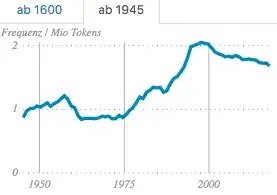
standesgemäß

Bedeutung
entsprechend den Vorstellungen, die aus der Zugehörigkeit zu einem Stand abgeleitet sind

Beispiele: eine standesgemäße Erziehung, Heirat, Verbindung
standesgemäß leben, auftreten
sich standesgemäß kleiden
standesgemäß heiraten
Drei behäbige gemütliche Landleute, die eigentlich standesgemäß dritter Klasse fahren sollten

So, since the original describes the situation as 'daughter of director' (desgnating her inherited status) 'advances' (love relationship desired, previously clearly wanted to end in marriage) and 'ideas above his station' (societal status of the Romeo being lower than daughter/director) and 'not set up for life' (Romeo's staus, measured in his financial situation and prospects) any colloquial translation looses precision and switches register. This is about class and a perceived mismatch based on that concept, regardless of what you want the speaker to say instead.

Therefore the original translation offered in the question is in fact already quite good. With a caveat.

Wenn du mich fragst, sollte derjenige sich schleunigst seines Standes besinnen ...

It is too freely transforming the merely descriptive observation of a class-conscious speaker into a prescriptive statement. The prescriptive part is only weakly implied in the original version.

seines Standes besinnen = he should remind himself of his station (and he should stop thinking of daughter)

er hat unstandesgemäße Ideen = He has ideas above his station (while the English is unidirectional aspirational, the German is strictly speaking bidirectional in characterising the mismatch)

Examples abound on that source site:

Der schwedische Geschäftsmann ist ohne edle Abstammung. Heute sind bürgerliche Ehepartner im Königshaus keine Seltenheit mehr. Doch zu dieser Zeit galt eine solche Hochzeit noch als nicht standesgemäß und war demzufolge unerwünscht.

LаngLаngС
  • 7,300
  • 1
  • 20
  • 50