Dating photos relies on a combination of:
- internal evidence - clothing, subject matter, composition, props, etc
- identification of people in it - what age were they when the photo was taken? how does this fit with known birth dates?
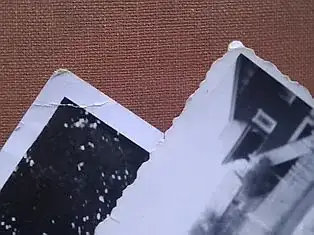
- production processes - different materials (eg. type of photographic paper) and chemical processes resulted in characteristic types of photo. Standard sizes of commercial prints have changed over time.
- photographer - photographer's marks and advertising can be used to identify the photographer, hence the period the business operated.
Jayne Shrimpton and Maureen Taylor's books are good references, but they concentrate on the 1850-1950 period.
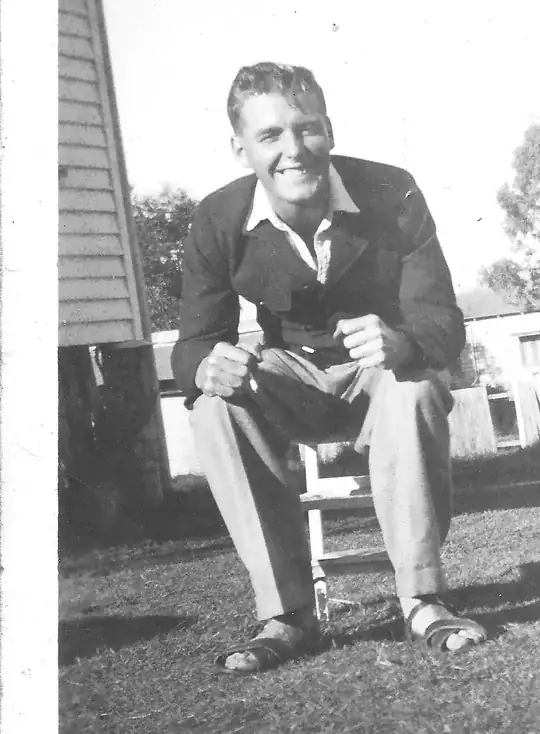
The scanned image shows a black-and-white print. The informal outdoor setting suggests it was taken by an amatuer photographer. I think this print has been cut down from a larger original because prints usually had white borders on all sides.
Commercially processed prints tended to come in standard sizes, which is derived from the size of the negative. Typically commercial processesing produced contact prints (exactly the same size as the negative) and enlargements of the whole negative, which maintain the aspect ratio of the negative. Unfortunately in this case, we do not know the size of the original print, so we can't deduce the size of the negative.
As othe answers have suggested, the 1950s is strongly indicated. At that time, colour photography existed, but was not as widely popular and affordable as black-and-white.