The fixed expression constructed with "faire du mauvais sang" contains "faire" only in the pronominal voice.
(Wiktionnaire) se faire du mauvais sang \sə fɛʁ dy mo.vɛ sɑ̃\
(Familier) (Sens figuré) (Pronominal) S’inquiéter, se faire du souci.
Note that "de" is correct and not "du" when the main verb is negative (https://www.google.com/search?q=%22te%20faire%20de%20mauvais%20sang%22&tbm=bks&lr=lang_fr).
This is regularly the case.
- Elle ne voulait pas te faire te tromper.
- Il n'avait pas envie de te faire te rappeler l'incident.
- Nous ne pensions pas vous faire vous raser régulièrement.
- etc.
However, the following combinations are not found in French.
- me faire me faire, te faire te faire, se faire se faire, nous faire nous faire, vous faire vous faire
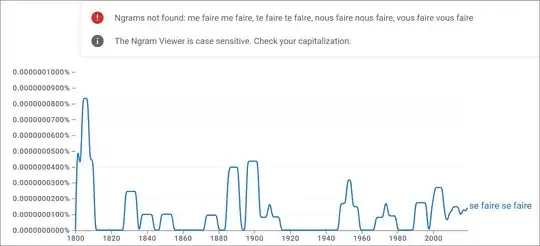
se faire se faire: all false positives
Therefore there is apparently an anomaly in the language. This is resolved by the claim that we are dealing with an idiom.
The verb 'faire', glossary of idioms - Page 119 - Léon Paul Blouët · 1876) Faire faire du mauvais sang à quelqu'un , to weary
https://www.google.com/search?q=%22faire%20faire%20du%20mauvais%22&tbm=bks&lr=lang_fr
The correct sentence should then be as follows.
- Je ne t’en avais pas parlé ne voulant pas te faire faire de mauvais sang. (which might not be quite satisfying to the systematic mind, I agree; the feeling of anomaly seeps in and perdures.)


