Pretty specific, I know. But what's the difference? Are there different connotations?
Asked
Active
Viewed 9.4k times
43


-
5Chouette is used as "cool" before the word cool was used in France (or perhaps Belgium). – Feb 13 '13 at 08:23
1 Answers
80
Both are usually translated in English as "owls". They are subcategories of the strigidae family (birds of prey), set apart based on their appearance. Both encompass many species and even genera. It is actually fairly easy to see the difference between the two.
A "hibou" is what most people will translate "owl" as. A lot of people will also usually call a "chouette" a "hibou", sometimes thinking the former is the female of the latter. It is not the case.
Taken from the French Wikipedia entry on "chouette": "La chouette se distingue du hibou par l'absence d'aigrettes sur la tête".
So "hiboux" are the ones which have egrets on their heads, such as this:
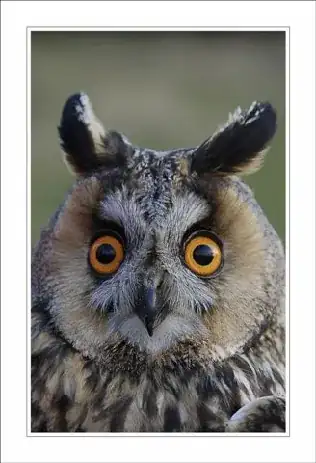
And "chouettes" are the ones that don't, like this:
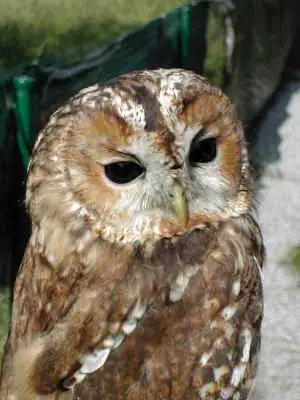
On a side note, "chouette" is also often used as an interjection or an adjective, to express feelings of awesomeness, joy, or overall approval.
It can also be used (mostly in Quebec) as a term of endearment for a girl or woman, be it girlfriend/wife, daughter or friend.

Kareen
- 12,247
- 4
- 48
- 82
-
11A better answer is hard to imagine... Clear, complete, concise, and illustrated. Wow. – Romain Valeri Jun 19 '12 at 23:24
-
6I will add to this, that at least a large minority of contemporary French speakers can't tell the difference either... one of my daughter's books is about some baby "chouettes". The illustrations depict a family of "hiboux". This might be similar to the way that most anglophones don't have a clue about the difference between a hare and a rabbit. – Samuel Lisi Jun 20 '12 at 13:46
-
4Not sure I'd call anyone "chouette". Is that more local to Quebec? I'd use it as an adjective, though, mostly to refer to things, as being nice. – Bruno Jun 20 '12 at 22:33
-
5@SamuelLisi, I don't think you'd find many francophones being able to tell the difference between a "lièvre" and a "lapin" either (apart from the taste perhaps :-) ). Here the distinction is that they are the same word in English, so confusion is inevitable unless you talk about a specific type of owl. The distinction between turtles and tortoises would be a fairer comparison in French perhaps. – Bruno Jun 20 '12 at 22:44
-
@Bruno It's possible that it is. It can be difficult to know what people use or don't use elsewhere! – Kareen Jun 21 '12 at 01:10
-
That answer is really good thank you! In songs and poems would la chouette ever be used to mean both a good thing and an owl, for instance saying "La chouette s'est évanouie" to mean both "the owl has vanished" and "the good has vanished" (or the good times are over), or would this not make sense? – Sep 10 '13 at 15:46
-
@Stephen: Chouette is here preceded by an article, so it is used as a noun here. The chouette used for “good things” is only used as an adjective (and usually not as epithet). You are encouraged to ask new questions with the Ask Question link at the top of the page. – Stéphane Gimenez Sep 10 '13 at 15:50
-
2@Kareen that first picture is actually really quite funny. – temporary_user_name Dec 05 '15 at 18:44
-
1@Aerovistae I know! I was just looking at that yesterday. That owl sure is surprised at being shown as example. Derp. – Kareen Dec 06 '15 at 07:41
-