What a neat, thoughtful question. In my writings, I've only ever used therefore, thereby, and therein (with the expression "Therein lies the problem.") I think it's the same for many other average Joes :) I wouldn't consider someone who employs the other ones when talking "insane," just quite quaint (in a good way).
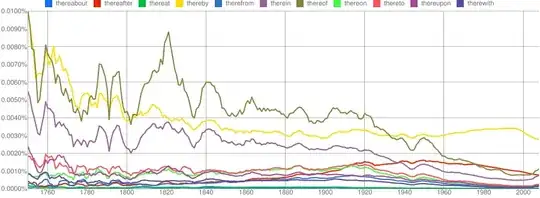
Google Ngram colourfully conveys that, while most its siblings have been steadily obsolescing for the past three centuries, thereby stablized to a comfy plateau in the mid-19th century and only in the last decade does it show a minimal amount of decline.
Thereof used to be quite a favour among writers but is now even less common than thereto, which itself is pretty rare but had seen a resurgence in use in the '50s.
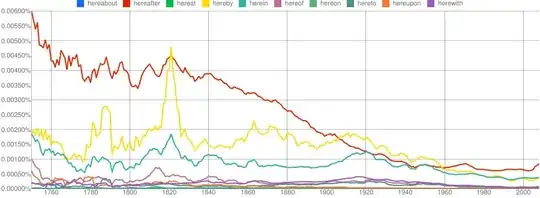
It's only logical to compare this cohort to their vis-à-vis: The "here-" adverbs. Even the most popular hereafter has always been much less prevalent than even thereof. (Note the extra zero to right of the decimal point on the y-axis.) The Here Family is even more formal and archaic, as a whole, than the Theres.
So you were right-on in your assumptions. Last productive since centuries ago, (t)here + prep. are now very limited constructions. They're once-thriving dynasties that mostly came into existence in between the 9th and 11th centuries, just before Old English began to evolve into Chaucer's Middle English.
The last progenies to the families were therefrom (1250s), hereat (1550s) and herefrom (1590s), which all practically died out a couple of centuries after invented, as people started to slice these concise words into separate and more flexible units or simply opted for other prepositions altogether, as indicated by the Oxford Engl. Dict. Moribound, they survive on linguistic respirators such as officialese and legalisms.


