When a user finishes an order on my website, what's the correct way?
- Your order is now complete.
- Your order is now completed.
When a user finishes an order on my website, what's the correct way?
- Your order is now complete.
- Your order is now completed.
I prefer "Your order is complete"; the "now" doesn't add anything. The second sentence uses a present-tense verb with a past-tense adjective.

Completed in the phrase is completed is used as an adjective, in the same way of warmed in one is warmed by a stove for visitors.
Searching for is completed and is complete in the Corpus of Contemporary American, I get the following data (the chart reports the frequency per million of those phrases).
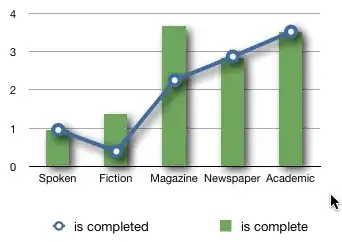
Looking for is now completed, and is now complete, I get the following data:

To make a comparison, this is the data I get when searching for was completed, and was complete:
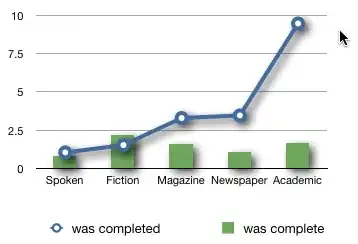
Looking at these charts, I can say that:

The second sentence is absolutely right. It is the Passive Voice. In the first sentence it is the Active Voice. I think it's correct, too. But I like the other version more..
The finished product will be ready and available after two weeks have passed. It will be completed in two weeks. The finished product will be ready and available after two weeks have passed.
OR
The product will be worked on during a period of two weeks, making it finished, ready, and available at the end of the two-week period.
In the first case, you are allowing for the possibility that work on the product may not start until 10, 11, maybe 12 days after you utter the statement.
In the second case, you may be saying the same thing as in the first case, OR, you may be saying that work on the product will be carried on during the entire two-week period.


