38

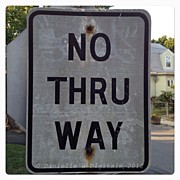
I've been told that in American English, sometimes words ending in -ough are written -u: for example thru instead of through.

Is this correct English, or is it simply a common error?
If it is correct, what are the rules for this spelling?

StoneyB on hiatus
  • 175,127
  • 14
  • 260
  • 461
gerrit
  • 4,705
  • 7
  • 32
  • 55
  • 2
    There's another -ough class that wouldn't be shortened to -u -- place names ending in -borough, often shortened to -boro. (It's amusing to see at times, by the side of the road, adjacent signs with the different spellings; one such pair is in North Attleboro/o, Massachusetts.) – barbara beeton Feb 03 '13 at 21:30

5 Answers5

23

As a speaker of American English, I would understand what was meant by thru for through, but I would find it very informal. The Oxford Dictionary entry supports this, saying that it is:

chiefly North American; informal spelling of through.

The rule, however, isn't that words ending in -ough are shortened to -u, but instead in very informal writing the last vowel sound of a word is used instead of the proper ending. This gives through → thru because of the final "oo" sound, but also abbreviated forms though → tho or although → altho because they end in "oh" (as in "cold").

20

"Thru" is correct (however very informal, not a very good idea, and only used when space is at a real premium — e.g. road signs, technical drawings) English, but -u is not a shortened way of -ough except in words that derivate from through (e.g. breakthrough).

From memory, I can recall although, enough etc. where -ough can't be replaced by -u (althu, enu etc.), since in those words -ough doesn't have a /u/ sound. (However, although can be shortened to altho, as noted in a comment — however, Wiktionary and other dictionaries register it, noting that it's quite informal.)

Renan
  • 3,863
  • 22
  • 33
  • 11
    N.b.: Merriam-Webster calls it an "informal simplification" so it should be avoided in any formal writing. I would only ever use it for texts. – Ryan Haber Jan 23 '13 at 21:42
  • 6
    +1 The reason why though and enough can't be written thu* and enu* is obviously that they are not pronounced /u/, unlike through. I can't think of any other very common words ending on -ough and pronounced -/u/. // You might want to stress a little more that spelling thru is a really bad idea nearly everywhere, including most of the Internet, e-mails, school, etc. People may think, "oh, I'm not writing to my professor, so it's informal", whereas "informal" in linguistics is sometimes a bit of a euphemism for what others call "bad spelling, ignorant, wrong", as it is in this case. – Cerberus Jan 24 '13 at 02:38
  • 3
    "Although" is shortened to "altho." – Flimzy Jan 24 '13 at 19:19
  • To piggy-back on what @Cerberus said, even tho you can't substitute a -u for words like rough or tough, you still can use a very similar phonetic shorthand, like ruff and tuff. Again, though, this kind of shorthand can work well for gimmicky marketing purposes, but should be avoided in more formal contexts. – J.R. Jan 25 '13 at 10:59
  • 2
    I've never seen altho. Bad recommendation. VERY informal, only for internet chat, I would say. – temporary_user_name Feb 03 '13 at 19:19
  • 4
    No, I’m afraid this is the wrong answer: thru is *not* an admissible substitute for through in Standard English. – tchrist Feb 10 '13 at 01:36
5

Shortenings you are more or less likely to see for "-ough" (most are, as previously noted, considered at best very informal and at worst a severe case of bad spelling):

  1. through, breakthrough → u
  2. cough → off
  3. enough → uf
  4. tough, rough, slough (verb) → uff
  5. slough (noun) → ew/ue
  6. borough, though, although, thorough → o
  7. furlough → ow (as in "low")
  8. plough → ow (as in "how"; "plow" is now the common spelling)
  9. hiccough → up ("hiccup" is now the common spelling)

A couple of "ough" words are never shortened due to either the word's low frequency, variability of pronunciation, or to any replacement being a collision with another word: sough, dough, brough, bough, trough.

Hellion
  • 18,753
  • 3
  • 49
  • 80
4

Thru is a very informal spelling that is never used in print or school. Through is probably not the best way to spell it in textspeak, because textspeak avoids long traditional spellings.

But in formal and semi-formal (anything but the most informal) you should avoid using such simplifications unless you are in a place where you've seen others use it. For example, if you use thru here at ELL, it won't be considered a misspelling but will definitely be considered too informal.

Mitch
  • 1,961
  • 18
  • 27
1

It is worth noting that "thru" is a valid (and indeed, common) spelling only in American English. In British English it is an incorrect spelling, and students in Britain would expect to lose marks in exams for using it.

Matt
  • 11,820
  • 1
  • 31
  • 54
  • 2
    Students in America would have similar expectations, at least in my experience. –  Feb 03 '13 at 09:23
  • Not sure what you mean by "valid" and "incorrect" here. Macmillan has this note: an informal way of writing 'through'. This is sometimes used in newspapers and very informal American writing, but it is not generally accepted in British English. In other words, U.S. teachers wouldn't consider this variant a correct way to spell it on a test, either, even if one might see it on a street sign. – J.R. Feb 03 '13 at 18:57
  • By invalid, I mean that students writing "thru" for "through" in England is not normal shorthand, and would be considered a form of illiteracy in British English, rather than an acceptable abbreviation in American English; the only exceptions being for "texting" (where artificial abbreviations reign supreme) or in imported phrases such as a "Drive-Thru". – Matt Feb 04 '13 at 19:41
  • 2
    It is not admissible in American writing, either, and more than lite is. – tchrist Feb 10 '13 at 01:38
  • But thru and lite are very common in American corporate branding. Using these forms in British English only occurs when one is trying to affect an Americanism or make fun of that habit. – toandfro Jan 12 '14 at 23:42