8

be (all) the better for something

meaning: to improve as a result of something

e.g. Their performance will be all the better for a little extra practice.

I would word it just like this, "Their performance will be better for a little extra practice.". or "Their performance will be better with a little extra practice."

Is my adaption OK? Any nuances suggested?

Kinzle B
  • 7,105
  • 27
  • 87
  • 143

4 Answers4

3

There is an important difference of nuance, which the dictionary omits. The version with “all the better” suggests that the benefit is unexpected, or was not previously considered by the listener.

A well-known example of this phrase is in the fairy tale Little Red Riding Hood, when Little Red Riding Hood meets the wolf, who has dressed himself as her grandmother. Little Red Riding Hood is a little surprised at her “grandmother’s” appearance:

“Oh, grandmother! What big ears you have!” said Little Red Riding Hood.

All the better to hear you with, my child,” said the wolf.

“But grandmother, what big eyes you have!” said Little Red Riding Hood.

All the better to see you with, my child,” said the wolf.

“But grandmother, what large hands you have!” said Little Red Riding Hood.

All the better to hug you with, my child,” said the wolf.

“Oh but grandmother, what big teeth you have!” said Little Red Riding Hood.

All the better to eat you with!” said the wolf, who then jumped out of bed and ate up Little Red Riding Hood.

I think most native speakers today hear an echo of this scene from Little Red Riding Hood whenever they hear “all the better”. You could understand it as “Yes, but when you consider everything, that only makes the result better, not worse.”

Here’s a situation similar to your example but where “all the better” is natural:

“Oh no, the bus has broken down! The team will have to walk home. It’s five miles! We’ll be too tired to play on Sunday.”

“Your performance will be all the better for a little more exercise.”

You wouldn’t normally say “all the better” just to mean that getting some exercise will improve your performance. Here are some straightforward ways to say that, without the mixed overtones of “all the better”:

A little extra practice will improve their performance.

A little extra practice will make their performance better.

Their performance will be better because of a little extra practice.

Ben Kovitz
  • 27,566
  • 3
  • 53
  • 109
  • 1
    I absolutely disagree with a point here. You say that "most native speakers hear an echo of this scene from Little Red Ridding Hood whenever they hear "all the better". This is not true, as that phrase is used in many contexts that are not at all related to that story and do not conjure any such image, association, or connotation. I elaborate further in my answer below. – CoolHandLouis Feb 25 '15 at 10:17
  • @CoolHandLouis Maybe you're taking that too literally. I don't mean that people necessarily hear sinister overtones (though that can happen, if you say "All the better to X with"). I mean that the meaning is anchored by the wolf's usage: a fact is given, and "all the better" reframes it, introducing an unexpected benefit. Also, I think since the phrase is so salient in a fairy tale, today it has a slightly archaic connotation. The echoes of a concrete example are complex, hard to fully define, and provide unpredictable opportunities for evocation and variation in new contexts. – Ben Kovitz Feb 25 '15 at 10:31
  • This answer really struck me as a strict rule. That's why I don't know how to relate it to the other answers. (I don't see such echoes in them. Ben might explain this a little bit and it'll help more :-) But anyway it's a very good one. @CoolHandLouis – Kinzle B Feb 25 '15 at 10:31
  • @KinzleB Well, it's not! :) Generally, I don't think any strict rule defining a word or phrase's meaning is going to be correct. Seeking or providing strict, final rules is a hopeless quest, sure to confuse and mislead. When we use words, we vary their usage in other contexts to point out or cook up something in the present context, which has never existed before, asking our listener to thoughtfully play along. It's all echoes and variations, not strict rules! The way you learn a language is by learning (roughly) the same reference points that the natives have, not memorizing rules. – Ben Kovitz Feb 25 '15 at 10:42
  • Yep, that's a point! The only missing part of your answer, I suppose, is an API to the other two. :) Their examples didn't seem to effect such an echo in my mind. @BenKovitz – Kinzle B Feb 25 '15 at 10:52
  • @KinzleB The other answers attempt to explain the phrase abstractly or with rules. Here's an example to show how hopeless it is to expect that to tell you all aspects of a phrase's meaning. A Chinese friend told me once that 香港 sounds very good in Mandarin; it means "good-smelling place for ships". I laughed! How can that sound good? Later, I realized that "fragrant harbor" sounds good in English, too. Sure, try and explain every aspect and use of "fragrant", "good-smelling", or "all the better"! It can't be done. But an example can get you in sync with how natives perceive it. – Ben Kovitz Feb 25 '15 at 10:54
  • @KinzleB Regarding an API for the other answers: I figure that any reader will soon forget the other answers, and indeed all the abstract parts of my answer. I chose the strategy of giving you a strong, well-known example. Abstract descriptions fade in minutes; a good example echoes in the mind for a lifetime. You don't have a rule any more than natives do. But now you have an example that helps your mind perceive the phrase the way natives do. – Ben Kovitz Feb 25 '15 at 11:01
  • I agree. A NBA star named "Derrick Rose" may have nothing to do with derricks or roses. But your explanation might cause some to think nothing of the other answers, which indeed also provided some insights. @BenKovitz – Kinzle B Feb 25 '15 at 11:01
  • @KinzleB I do think that it's a wonderful thing that SE provides multiple answers, and all stay up. Each answerer gives you a different perspective. Hopefully, by comparing several, you get a fair idea of how natives perceive whatever the question is about. (I hate to see people accept when only one answer has been given, even if it's a good one. That's why I keep linking to this.) – Ben Kovitz Feb 25 '15 at 11:06
  • I really appreciate your way of explaining things. It's very intuitive and straightfoward. Few could do it better. If such method could be fully absorbed into language teaching, it would make language learning accessible to everyone. :) – Kinzle B Feb 25 '15 at 11:14
  • @KinzleB SE usually discourages thank-yous, but I very much appreciate this one! (The last few days of grad school have been very unpleasant.) I think most parents instinctively teach their children this way, but schooling often seems to shut off common sense in favor of memorizing and reciting rules. I'm very glad to hear that the appeal to example and common sense rather than "data", authorities, and official rules has reached at least one reader. – Ben Kovitz Feb 25 '15 at 22:10
  • @KinzleB I've seen very little in the EFL world that takes the approach of giving you the common experiences of natives. Latin, on the other hand, has this excellent book. It teaches Latin through a storyline about a Roman family, including a lot about the children's experience. It even includes a slave reciting bedtime stories to a child, and the child begging for more! There's even a chapter about school where a child objects that the spelling doesn't match the pronunciation, and a dinner party where the best-known Latin poems get recited. – Ben Kovitz Feb 25 '15 at 22:12
  • @KinzleB Speaking of common experience with bedtime stories, Little Red Riding Hood might be around 2000 years old. Its strong influence in English probably derives partly from its inherent appeal as a story, and the fact that when you say "All the better to eat you with!", you usually making a clawing motion with your arms, eliciting a little scream of fright from the child. This is memorable for the child, and it reinforces the "all the better" construction in the parent's mind, too. – Ben Kovitz Feb 25 '15 at 22:14
2

So, of the two sentences you provided, the second seems to me more natural-sounding (using 'better with' rather than 'better for'). They both do have almost the same meaning as the sample sentence. I see a very slight difference, though.

Their performance will be all the better for a little extra practice.

In this sentence, to focus is on the benefit of practice. To me, it says that while the performance they are working on is good, there is no downside to putting in the extra time. The practice will make it even better.

Their performance will be better with a little extra practice.

It would really depend on how someone said this sentence, but you could be saying that the performance needs some work. It's not great right now, but it will be better with a little extra practice.

Do you see the difference? The first one seems more positive with regards to the current state of the performance. They both give the same message about extra practice, though - it will lead to a better performance.

It is very subtle, though, and I'm curious to see whether other native speakers perceive a difference here.

michelle
  • 2,229
  • 12
  • 13
  • Yep, I see. The intensifier 'all' does the trick. :) – Kinzle B Feb 11 '15 at 16:42
  • 2
    @michelle You raise an interesting point about the nuance of "all the" that I missed. I agree that it does seem that removing "all the" removes a sense that the performance was already good (either a bad or a good performance could be made better, but it seems unlikely that a bad performance would be made "all the" better). The OED definition of "all the" is simply "emphasizing the extent or degree of the change or effect described", but I do feel that there is a nuance not captured there. – Matthew W Feb 11 '15 at 16:42
2

Yes, both of your rephrasings are okay. Of the two, I would recommend "with" over "for".

"All the better for" is a common phrase, but it is not really idiomatic--the words mean in the phrase what they mean alone. "All the" is simply an intensifier ("all the more tired", "all the richer", "all the lighter"). "For" in this sense means "by reason of", or "resulting from". So you can simply drop the "all the". However, while that use of "for" is not uncommon, it is probably less common than the "for the purpose of" meaning, with which it could be confused in this case. ("All the" prevents that confusion because it is a common phrase.) (It's only a slight problem: its pretty clear from context that you don't mean "the performance would serve a better purpose as practice", but it could cause a reader to hesitate.)

Using "with", as I suggest, does not specifically mean that "practice" is the cause of the "better performance", but the meaning would be clear from the context.

Matthew W
  • 2,188
  • 12
  • 23
1

This answer was posted after the main answer was selected correct.


There have been many good points made in other answers, but they tend to be fragmented and coincide with misleading statements. In this answer, I attempt to cull the nuggets of value and dispel some errors.

  • @BenKovitz provided some good points. "[All the better] suggests that the benefit is unexpected, or was not previously considered by the listener." The iconic example of this is when one exclaims, "All the better!" (Person 1: "I don't want to go to the game, it's raining." Person 2: "All the better! There won't be any traffic and no lines at the concession stands and restrooms!") However, this connotation is not always the case.
  • As @BenKovitz suggested, the literary reference to Little Red Ridding Hood is often used for effect and sometimes it can be made unintentionally. Such usage is mostly associated with sentences containing (especially beginning) "all the better to...". But that connotation is certainly not ubiquitous. Consider, "That's the sound of a summer pops concert. All the better if it happens under the stars." (From, Summer Arts Guide 2012: Go Outdoors for the Arts.)
  • @michelle provided a point in a specific case (elaborated by MatthewW): Their performance will be all the better for a little extra practice. implies that their performance is already good; the statement would not be said about a bad performance. The following would be comical: "Person 1: How are you holding up? Person 2: I'm fine thank you. But I'd be all the better for a little anti-venom for this cobra bite."
  • @MatthewW makes many good points, but states those points in some misleading ways. The main point is that "all the X for Y" is an idiomatic phrase in which "all the" acts as an intensifier. For example, "You're all the richer for having friends." is more emphatic than "You're richer for having friends." But @MatthewW incorrectly ascribes this as a non-idiomatic usage with words having their straight, denotation meanings (which is not true). Compare with the denotative, non-idiomatic use of these words, "All the richer people have a different socio-economic world view." (Not the best sentence construction, but it demonstrates the words in their denotative sense.)

I'll further add the following points.

  • The use of all the better is an idiomatic phrase in the informal register of English. Use of it puts a sentence into an informal register. This can be good or bad, depending on the situation. The ability to use informal constructs in their proper context signals language proficiency. (Conversely, using a formal register when an informal register is more appropriate can be counter-productive.)
  • Your alternative sentences are your attempts at wording the sentence in the English that you have learned, which is (probably) a formal register and mostly devoid of these not-very-common informal idioms. Such attempts to convert a sentence to a formal register may run into problems if you limit yourself to the original sentence constructs, which may contain some informal aspects. Original: "Their performance will be better with a little extra practice." Here, "with a little extra" is informal. Suppose you're just in the audience and you think their performance is good, but they need more practice. In the formal register, you might say to someone just that: "Their performance is good, but they need a little more practice." If you're commenting on their need to improve only a small amount (informal: "a little bit"): "Their performance will be better when they have just a little more practice."
  • The use of "all the better" is also used in some (informal) situations as a rhetorical device to make a statement more convincing: If the theater is saved, all the better for the arts in this city.

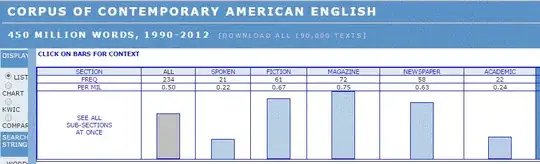
  • The use of this phrase is somewhat stilted/forced as an expression in speech. Here's a screen shot from COCA for "all the better":
    enter image description here
    It's not common in academic writing because it's usage is informal, but it's used even less in spoken language! (This could be biased based on the way COCA collects spoken language.) I haven't looked too deeply at the results, but it's also interesting (odd) that usage in fiction, presumably much of which is dialog, is also significantly higher than spoken language.

CoolHandLouis
  • 8,336
  • 2
  • 25
  • 40
  • @michelle - You might be interested in this Answer, which provides some critique on your answer. – CoolHandLouis Feb 25 '15 at 08:31
  • @MatthewW - You might be interested in this Answer, which provides some critique on your answer. – CoolHandLouis Feb 25 '15 at 08:32
  • My answer addresses whether "all the better for" has a nuance beyond the dictionary definition. It's not intended as a rule that fully translates uses of "all the better". I'm generally skeptical of attempts to circumscribe all uses of anything. Instead, my answer tries to provide a cultural landmark that most native speakers recognize, to give a sense of the phrase's meaning and usage. The meaning can certainly vary. Clearly, though, my answer suggested to you that it was an absolute rule; others might think so, too. Any suggestions for a deft way to counter that interpretation? – Ben Kovitz Feb 25 '15 at 09:30
  • @BenKovitz, thanks for feedback! 2 suggestions 1) Sentence that gives rule-like impression: "I think most native speakers today hear... whenever they hear...". 2) Right after 1st paragraph, "A well-known example...". This is a garden-path conceptual-flow The flow suggests your giving an example of the prior paragraph. This conceptually lingers even afterwards. Also, your 3-part discussion of Little Red (intro, example, expo) is a large part of the answer in terms of size, and perhaps disproportionate to it's importance. May I edit and you can review/change as desired? – CoolHandLouis Feb 25 '15 at 09:53
  • I think I'd prefer to leave it, though I certainly like to see competing answers, like yours. "Most natives speakers today hear an echo, ..." I chose that word word to suggest that it's not a rule, it's an influential reference point. I intentionally made the Little Red Riding Hood scene dominate the answer, because I want it to echo in the reader's mind as it does in native speakers' minds. I figure if you have that, then when you come across "All the better if it happens under the stars", you'll understand with no trouble. It's an add-on, it's an improvement, it's unexpected, you get it. – Ben Kovitz Feb 25 '15 at 10:05
  • BTW, are you sure "all the better" is informal? It doesn't come across that way to me. To me, to sounds just a wee bit archaic, though still alive in modern English. Would you say "all the better" would be inappropriate in a presidential speech or a funeral eulogy? "Samuel's trip to Paris was ultimately canceled and he never went. All the better, though, because he had learned only a little of a most vulgar dialect of French when he lived in Quebec." – Ben Kovitz Feb 25 '15 at 10:22