Zounds, good point! I guess the world is flat after all!
But okay, seriously, the writer has given a good and accurate argument why it should be possible to tell whether the world is round or flat by making observations on the ocean or a sufficiently large sea. But as far as the quoted page goes, he doesn't cite any experimental results to prove anything, one way or the other. To say, "I can imagine an experiment which would prove my theory correct" is a long way from "I have conducted this experiment and the results actually did prove my theory correct."
In fact, making observations across an ocean or large sea is one of the easiest proofs that the world is round. It was observed in the days of sailing ships that as a "tall ship" sailed away, the last thing you would see was the top of its sails. Look across a sufficiently large sea today and, no matter how clear the skies, etc, you cannot see the opposite shore. Get the most powerful telescope available and you still can't see the opposite shore.
One could argue that you can't see the far shore because of haze rather than curvature. You could resolve that by observing what you CAN see: at long distances, where you can barely see the far shore, do you just see the top of mountains or tall buildings? Or do you see the whole mountain or building but very hazy? (Okay, I haven't done that experiment, so maybe I'm just a dupe of the round-Earth conspiracy.)
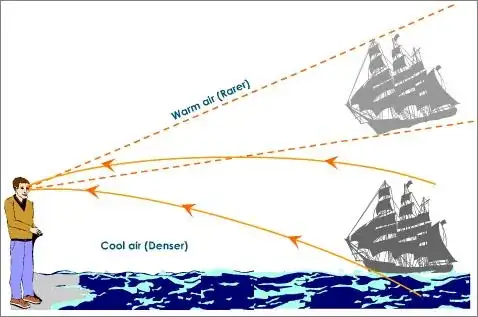
Yes, as others have noted, refraction and optical illusions add extra complexity. That's why in general, one experiment is not sufficient to prove or disprove a theory.
Of course there are other ways to demonstrate that the Earth is round. Like, in ancient Egypt, Ptolemy measured the circumference of the Earth by measuring the lengths of shadows at different latitudes.