13

What is the scientific reason for the majestic sights of the northern and southern lights, otherwise known as Auroras near the magnetic poles, and why do the northern lights differ from the southern lights?
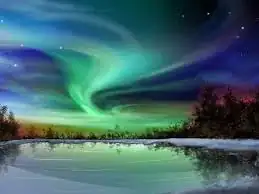
enter image description here

Kenshin
  • 7,576
  • 12
  • 42
  • 81
  • 2
    I'm not able to find any sources for the difference between the auroras except the location, do you have some? Resources Aurora Borealis or Northern Lights and Aurora on wikipedia – bummi Apr 16 '14 at 08:45
  • 2
    Do they differ? I'm curious now.... :-) – Semidiurnal Simon Apr 16 '14 at 08:54
  • The wikipedia page goes into a lot of depth about why and how auroras happen, and also the causes of some of the differences (e.g. colours). There probably isn't much point in answering this question as it stands, as it would just be a copy and paste from wikipedia. Is there a way you feel like you could modify your question to make it more useful to the site? – naught101 Apr 16 '14 at 10:49
  • @naught101, I didn't realize that we can't ask questions that already have an answer elsewhere on the internet. That's a great plan for an answer rate below the 90% required to get this site out of beta. Perhaps a good answer will nicely summarize what is written on the wikipedia article. – Kenshin Apr 16 '14 at 10:55
  • 3
    @mew, see http://blog.stackoverflow.com/2011/02/are-some-questions-too-simple/. I'm not sure about this, but I kinda feel like early on, we should be focussing on questions that bring people to the site (because the answer is here), rather than take them away (because the answer is just a link to elsewhere, or has more interesting, easy to read detail at the link). – naught101 Apr 16 '14 at 11:03
  • @naught101, we shouldn't just link to wikipedia. I'm sure wikipedia isn't the only source, and I'm sure it isn't the best source on this topic. Instead one should look at a variety of sources such as the internet, and textbooks to compose an answer to my question. I'm not going to accept an answer that just links to wikipedia and we should not upvote those answers. – Kenshin Apr 16 '14 at 11:04
  • 1
    IMHO the problem is with questions that can be fully and completely answered with a copy/paste from Wikipedia. See my meta question here: http://meta.earthscience.stackexchange.com/questions/34/level-of-the-questions-so-far If we ask and answer questions in private beta that are not of interest to experts, we will set the tone of the site at a "popular science" level and not get the experts that we want to stay with the site and grow it. – Semidiurnal Simon Apr 16 '14 at 11:36
  • @SimonW, private beta has a maximum of about 200 experts. I understand your problem, but try and understand mine. I have committed to many proposals and very few have ever made it past this private beta stage because of these ideals and because noone answers the questions. If we ask hard questions, we won't get much answers, and our site will be taken down within the week because of a lack of answers being provided. – Kenshin Apr 16 '14 at 11:45
  • @Mew Hmm, interesting. This is my first private beta, but... that wasn't the understanding that I got from the blurb that was issued, which was all about "setting the tone" of what the site would become. But, I understand your point :-) – Semidiurnal Simon Apr 16 '14 at 12:08
  • @SimonW, the last private beta I was in last week shut down after 4 days, despite lots of questions, but not enough answers. It's a tough process. – Kenshin Apr 16 '14 at 12:11

2 Answers2

3

Straight from wikipedia:

Auroras are associated with the solar wind, a flow of ions continuously flowing outward from the Sun. The Earth's magnetic field traps these particles, many of which travel toward the poles where they are accelerated toward Earth. Collisions between these ions and atmospheric atoms and molecules cause energy releases in the form of auroras appearing in large circles around the poles. Auroras are more frequent and brighter during the intense phase of the solar cycle when coronal mass ejections increase the intensity of the solar wind.

Auroras result from emissions of photons in the Earth's upper atmosphere, above 80 km (50 mi), from ionized nitrogen molecules regaining an electron, and oxygen atoms and nitrogen molecules returning from an excited state to ground state. They are ionized or excited by the collision of solar wind and magnetospheric particles being funneled down and accelerated along the Earth's magnetic field lines; excitation energy is lost by the emission of a photon, or by collision with another atom or molecule:

  • oxygen emissions: green or brownish-red, depending on the amount of energy absorbed.

  • nitrogen emissions: blue or red; blue if the atom regains an electron after it has been ionized, red if returning to ground state from an excited state.

Oxygen is unusual in terms of its return to ground state: it can take three quarters of a second to emit green light and up to two minutes to emit red. Collisions with other atoms or molecules absorb the excitation energy and prevent emission. Because the very top of the atmosphere has a higher percentage of oxygen and is sparsely distributed such collisions are rare enough to allow time for oxygen to emit red. Collisions become more frequent progressing down into the atmosphere, so that red emissions do not have time to happen, and eventually even green light emissions are prevented.

This is why there is a color differential with altitude; at high altitude oxygen red dominates, then oxygen green and nitrogen blue/red, then finally nitrogen blue/red when collisions prevent oxygen from emitting anything. Green is the most common of all auroras. Behind it is pink, a mixture of light green and red, followed by pure red, yellow (a mixture of red and green), and finally, pure blue.

naught101
  • 5,425
  • 2
  • 31
  • 68
  • Thanks naught, but as I said I am not going to choose an answer that is just copied from wikipedia. I would rather this be a site that people come to instead of wikipedia for better synthesized answers, than merely another copycat site. – Kenshin Apr 16 '14 at 11:10
  • 2
    Fair enough, but I doubt there are many other references that put it as succinctly, and if it's already written, why bother re-writing it? – naught101 Apr 16 '14 at 11:11
0

The Auroras are formed because a reconnection in the magnetic field. Particles are emitted by the Sun and collide with our magnetic field. This collision generates effects in the ionosphere. You can read more about it in these links:

http://www.atoptics.co.uk/highsky/auror2.htm

http://mrx.pppl.gov/Physics/physics.html

dIOGO
  • 32
  • 1
  • 1
    Hi dlOGO. It's discouraged to just give links in Stackexchange answers. Could you consider summarising the content of the links? Thanks. – Semidiurnal Simon Apr 16 '14 at 18:21
  • This answer is incorrect. The reason is not that they collide with the magnetic field (in fact, they don't, but are merely deflected by it), but they collide with the upper atmosphere. The answer also doesn't explain how that causes visible aurorae. – gerrit Apr 17 '14 at 03:12