United Nations geoscheme
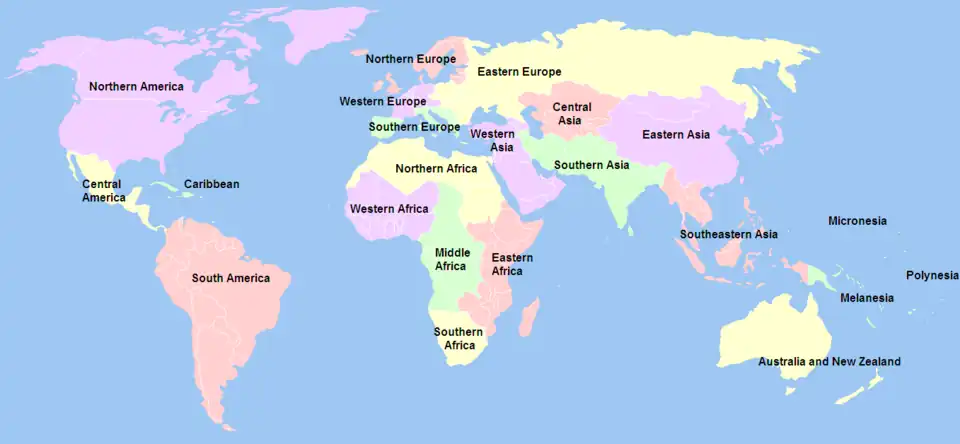
The United Nations geoscheme is a system that divides 248 countries and territories in the world into six continental regions, 22 geographical subregions, and two intermediary regions.[1] It was devised by the United Nations Statistics Division (UNSD) based on the M49 coding classification.[2] The creators note that "the assignment of countries or areas to specific groupings is for statistical convenience and does not imply any assumption regarding political or other affiliation of countries or territories".[2]
The UNSD geoscheme was created for statistical analysis and consists of macro-geographical regions arranged to the extent possible according to continents.[2] Within each region, smaller geographical subregions and sometimes intermediary regions contain countries and territories. Countries and territories are also grouped non-geographically into selected economic and other sets, such as the landlocked developing countries, the least developed countries, and the Small Island Developing States.
Antarctica does not comprise any geographical subregions or country-level areas.
The UNSD geoscheme does not set a standard for the entire United Nations System, and it often differs from geographical definitions used by the autonomous United Nations specialized agencies for their own organizational convenience. For instance, the UNSD includes Cyprus and Georgia in Western Asia, yet the United Nations Industrial Development Organization and UNESCO include them in Europe.[3][4] This statistical definition also differs from United Nations Regional Groups.
Alternative groupings include the World Bank regional classification,[5] CIA World Factbook regions and Internet Corporation for Assigned Names and Numbers Geographic Regions.[6][7][8]
Maps
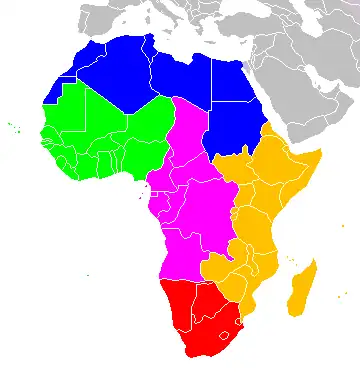
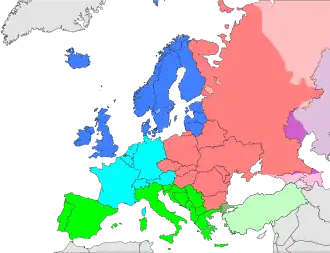
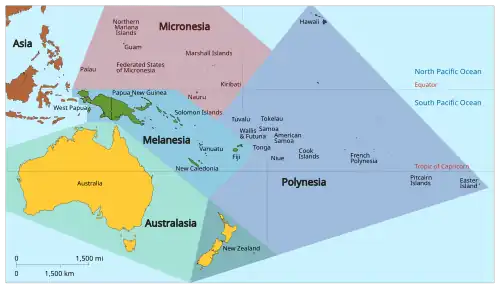
Africa
Northern Africa
 Algeria
 Egypt
Egypt Libya
Libya Morocco
 Sudan
Sudan Tunisia
 Western Sahara
Sub-Saharan Africa
Eastern Africa
 British Indian Ocean Territory
 Burundi
 Comoros
 Djibouti
 Eritrea
 Ethiopia
 French Southern Territories
 Kenya
Kenya Madagascar
 Malawi
 Mauritius
.svg.png) Mayotte
Mayotte Mozambique
.svg.png) Réunion
Réunion Rwanda
 Seychelles
 Somalia
 South Sudan
 Uganda
 United Republic of Tanzania
 Zambia
 Zimbabwe
Middle Africa
 Angola
 Cameroon
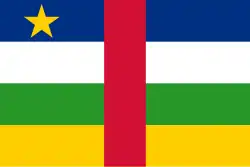 Central African Republic
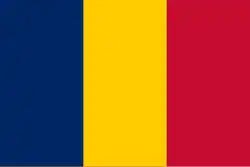 Chad
Chad Congo
Congo Democratic Republic of the Congo
 Equatorial Guinea
 Gabon
Gabon Sao Tome and Principe
Southern Africa
 Botswana
 Eswatini
 Lesotho
 Namibia
 South Africa
Western Africa
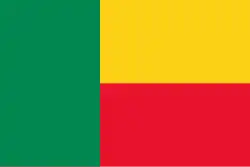 Benin
Benin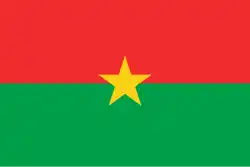 Burkina Faso
 Cabo Verde
 Côte d'Ivoire
 Gambia
 Ghana
Ghana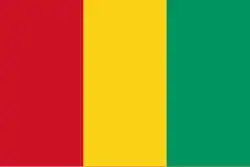 Guinea
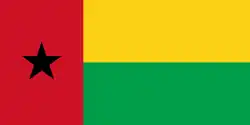 Guinea-Bissau
 Liberia
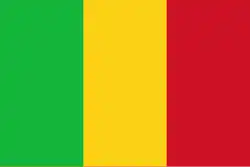 Mali
Mali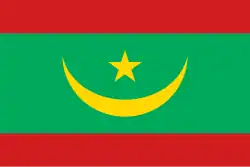 Mauritania
 Niger
Niger Nigeria
 Saint Helena, Ascension and Tristan da Cunha
 Saint Helena
 Ascension Island
 Tristan da Cunha
 Senegal
 Sierra Leone
.svg.png) Togo
Togo
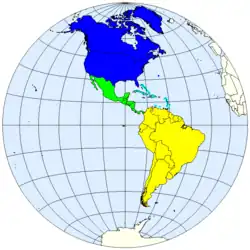
Americas
Latin America and the Caribbean
Caribbean
 Anguilla[a]
 Antigua and Barbuda
 Aruba[b]
 Bahamas
 Barbados
- Bonaire, Sint Eustatius and Saba[c]
 Bonaire
 Sint Eustatius
 Saba
Saba
 British Virgin Islands[a]
 Cayman Islands[a]
 Cuba
Cuba Curaçao[b]
 Dominica
 Dominican Republic
 Grenada
.svg.png) Guadeloupe[d]
Guadeloupe[d] Haiti
Haiti Jamaica
 Martinique[d]
 Montserrat[a]
 Puerto Rico[e]
.svg.png) Saint Barthélemy[f]
Saint Barthélemy[f] Saint Kitts and Nevis
 Saint Lucia
 Saint Martin (French part)[f]
 Saint Vincent and the Grenadines
 Sint Maarten (Dutch part)[b]
 Trinidad and Tobago
 Turks and Caicos Islands[a]
 United States Virgin Islands[g]
Central America
 Belize
 Costa Rica
 El Salvador
 Guatemala
 Honduras
 Mexico
 Nicaragua
 Panama
South America






Northern America
.svg.png)

Asia
Central Asia
 Kazakhstan
 Kyrgyzstan
 Tajikistan
 Turkmenistan
 Uzbekistan
Eastern Asia
 China
China China, Hong Kong Special Administrative Region
 China, Macao Special Administrative Region
 Democratic People's Republic of Korea
 Japan
Japan Mongolia
 Republic of Korea
Note on Taiwan
Several institutions and research papers using classification schemes based on the UN geoscheme include Taiwan separately in their divisions of Eastern Asia.
- The Unicode CLDR's "Territory Containment (UN M.49)" includes Taiwan in its presentation of the UN M.49.[9]
- The public domain map data set Natural Earth has metadata in the fields named "region_un" and "subregion" for Taiwan.
- The regional split recommended by Lloyd's of London for Eastern Asia (UN statistical divisions of Eastern Asia) contains Taiwan.[10]
- Based on the United Nations statistical divisions, the APRICOT (conference) includes Taiwan in East Asia.[11]
- Studying Website Usability in Asia, Ather Nawaz and Torkil Clemmensen select Asian countries on the basis of United Nations statistical divisions, and Taiwan is also included.[12]
- Taiwan is also included in the UN Geoscheme of Eastern Asia in one systematic review on attention deficit hyperactivity disorder.[13]
Northern Asia
This subregion covers the entire geographical region of Siberia. Since this region as a whole falls under the transcontinental country of Russia, for statistical convenience, Russia is assigned under Eastern Europe by the UNSD, including both European Russia and Asian Russia under a single subregion. Hence there is no geopolitical entity that is currently grouped under Northern Asia.
South-eastern Asia
This subregion covers the geographical regions of Indochinese Peninsula and Malay Archipelago, covering the following geopolitical entities as a whole:
 Brunei Darussalam
 Cambodia
 Indonesia
 Lao People's Democratic Republic
 Malaysia
 Myanmar
 Philippines
 Singapore
 Thailand
 Timor-Leste
 Viet Nam
Southern Asia
This subregion covers the geographical regions spanning from the Iranian Plateau till the Indian subcontinent, covering the following geopolitical entities as a whole:
.svg.png) Afghanistan
Afghanistan Bangladesh
 Bhutan
 India
India Iran (Islamic Republic of)
 Maldives
 Nepal
Nepal Pakistan
 Sri Lanka
Western Asia
This subregion covers the geographical regions spanning from Anatolia, Caucasus, Levant, Mesopotamia till the Arabian Peninsula, covering the following geopolitical entities as a whole:
 Armenia
 Azerbaijan
 Bahrain
 Cyprus
 Georgia
 Iraq
Iraq Israel
 Jordan
 Kuwait
 Lebanon
 Oman
Oman Qatar
Qatar Saudi Arabia
 State of Palestine
.svg.png) Syrian Arab Republic
Syrian Arab Republic Turkey
 United Arab Emirates
 Yemen
Yemen
Europe
Eastern Europe
 Belarus
 Bulgaria
 Czechia
 Hungary
 Poland
 Republic of Moldova
 Romania
 Russian Federation†
 Slovakia
 Ukraine
† Although Russia is a transcontinental country covering Northern Asia as well, for statistical convenience, Russia is assigned under Eastern Europe by UNSD, including both European Russia and Siberian Russia under a single subregion.
Northern Europe
 Åland Islands
 Denmark
 Estonia
 Faroe Islands
 Finland
 Iceland
 Ireland
 Isle of Man
 Latvia
 Lithuania
 Norway
- Svalbard and Jan Mayen Islands
 Sweden
- United Kingdom of Great Britain and Northern Ireland
Southern Europe
 Albania
 Andorra
 Bosnia and Herzegovina
 Croatia
 Gibraltar
 Greece
.svg.png) Holy See
Holy See Italy
Italy Malta
Malta Montenegro
 North Macedonia
 Portugal
 San Marino
 Serbia
 Slovenia
 Spain
Spain
Western Europe
 Austria
.svg.png) Belgium
Belgium France
 Germany
 Liechtenstein
 Luxembourg
 Monaco
 Netherlands
.svg.png) Switzerland
Switzerland
Oceania
Australia and New Zealand
.svg.png) Australia
Australia New Zealand
 Norfolk Island
Melanesia
 Fiji
Fiji New Caledonia
 Papua New Guinea
 Solomon Islands
 Vanuatu
Micronesia
 Kiribati
 Marshall Islands
 Micronesia (Federated States of)
 Nauru
Nauru Northern Mariana Islands
 Palau
Palau
Polynesia
 American Samoa
 Cook Islands
 French Polynesia
 Niue
Niue Pitcairn
 Samoa
Samoa Tokelau
 Tonga
Tonga Tuvalu
- Wallis and Futuna Islands
See also
- List of countries and territories by the United Nations geoscheme
- List of continents and continental subregions by population
- List of regions of Africa
- Regions of the African Union
- Regions of Europe
- List of regions of Latin America
Notes
- 1 2 3 4 5 6 7 8 British Overseas Territory
- 1 2 3 Part of the Dutch Caribbean and a constituent country within the Kingdom of the Netherlands
- ↑ Part of the Dutch Caribbean, the Caribbean Netherlands and a public body within the Kingdom of the Netherlands
- 1 2 3 An overseas department and region of France
- ↑ A commonwealth and unincorporated territory of the United States
- 1 2 3 An overseas collectivity of France
- ↑ An unincorporated and organized territory of the United States
- ↑ A dependency of Norway
- ↑ A constituent country within the Danish Realm
References
- ↑ UNSD: Standard country or area codes for statistical use (M49) – Recent changes – Footnote 13
- 1 2 3 "UNSD — Methodology". United Nations Statistics Division. Retrieved 2019-06-17.
- ↑ United Nations Industrial Organisation p. 14
- ↑ UNESCO, Europe and North America, Retrieved: 10 May 2016
- ↑ Katrin Elborgh-Woytek; Monique Newiak; Kalpana Kochhar; Stefania Fabrizio; Kangni Kpodar; Philippe Wingender; Benedict J. Clements; Gerd Schwartz (20 September 2013). Women, Work, and the Economy:Macroeconomic Gains from Gender Equity. International Monetary Fund. p. 7. ISBN 978-1-4843-9529-5.
Country groups are based on UN geoscheme and World Bank regional classification
- ↑ ICANN Geographic Regions
- ↑ ICANN Geographical Regions, Final Report by the ccNSO Regions Working Group, For Submission to the ICANN Board, 24 September 2007
- ↑ "World Bank Country and Lending Groups", the World Bank
- ↑ "Territory Containment (UN M.49)". unicode-org.github.io.
- ↑ "Geographical diversification and Solvency II: A proposal by Lloyd's".
- ↑ "Countries in APRICOT's Region".
- ↑ Website Usability in Asia 'from Within': An Overview of a Decade of Literature International Journal of Human-Computer Interaction, vol. 29, issue 4 (2013), pp. 256–273.
- ↑ Hodgkins, Paul; Arnold, L. Eugene; Shaw, Monica; Caci, Hervé; Kahle, Jennifer; Woods, Alisa G; Young, Susan (2012). "A Systematic Review of Global Publication Trends Regarding Long-Term Outcomes of ADHD". Frontiers in Psychiatry. 2: 84. doi:10.3389/fpsyt.2011.00084. ISSN 1664-0640. PMC 3260478. PMID 22279437.